Arctic Development (Coursera)

Offered by University of Alberta,
Arctic Development (Coursera)

Welcome to Arctic: Development! In this third in a series of Arctic MOOCs, brought to you by a unique partnership between the University of Alberta and UiT The Arctic University of Norway, we will be exploring regional development in a changing arctic. In this 4-week course, you will investigate the role that natural resources play across the Indigenous, Nordic, Russian and North American Arctics, different strategies for resource management in different regions, and how these affect community planning and development efforts in an increasingly populated part of the world.

Class Deals by MOOC List - Click here and see Coursera's Active Discounts, Deals, and Promo Codes.

We'll also see how climate change is dramatically impacting the Arctic, and examine a number of adaptations that different arctic communities are implementing to combat rapid, climate-influenced change.
By the end of this course, you will have an idea of the opportunities presented to and difficulties faced by members of northern communities, and gain an understanding of just what regional development looks like in a changing Arctic.

What You Will Learn

  • Gain an understanding of concepts in northern sustainability, geopolitics, resource management, planning and development.
  • Learn about the resilience of northern communities, and strategies/initiatives to combat a rapidly changing Arctic.
  • Gain an appreciation of regional planning in a changing Arctic

Syllabus

WEEK 1
Understanding the Arctic
Welcome to the first step of your journey in Arctic: Development! In this short, introductory module we'll cover the basics of the Arctic, northern sustainability, geopolitics, resource management and development. To do this, we'll first see how the region is usually viewed through the particular lens of "The Four Arctics". At the end of this module, you'll have the context and vocabulary to tackle some of the issues in resource management, community management, and development, covered in the rest of the course. When it's time to venture north, click on the first video to get started!

WEEK 2
Resource Management in the Arctic
Welcome back! Now that you have an understanding of the four Arctics and some of the basic concepts affecting development in these regions, it's time to deep-dive into resource management. In this module we'll first take stock of some of the renewable and non-renewable resources in the Arctic, and explore different resource management strategies employed in each of the four Arctics, encountering a number of "tragedy of the commons" case studies. Finally, you'll reflect upon the formation and function of the Arctic Council, and its role in resource management.

WEEK 3
Community Management in the Arctic
Now that we're aware of some of the resources in the Arctic and how they're managed, it's time to move on to the people that live there. In this module, we'll turn our attention to community planning and development efforts in an increasingly populated Arctic, and how communities in various Arctic regions form resilience to some of the unique problems faced in these regions.

WEEK 4
Development in a Changing Arctic
If you're reading this, you've reached the very last module of the course- congratulations! Our previous three modules have given us the background needed to finally tackle the largest question posed in the course: what does development look like in a changing Arctic? In this module, we'll see how climate change is impacting the Arctic, and examine a number of structural and non-structural adaptations that different arctic communities are implementing. Finally, we will look at the strategies and policies directing and maintaining development across the four Arctics in the face of immense environmental change.

Go to Class
MOOC List is learner-supported. When you buy through links on our site, we may earn an affiliate commission.

Related Courses

Wind resources for renewable energies (Coursera) Coursera
École Polytechnique

Wind resources for renewable energies (Coursera)

The main goal of this course is to get the necessary knowledge on atmospheric and fluid dynamics in order to quantify the wind resource of a local or regional area. We’ll learn about basic meteorology, the specific dynamics of turbulent boundary layers and some standard techniques to estimate wind resources regardless of the type of turbine used or the level of efficiency achieved.

Jun 15th 2026
4 Weeks
The Cycle: Management of Successful Arts and Cultural Organizations (Coursera) Coursera
University of Maryland, College Park

The Cycle: Management of Successful Arts and Cultural Organizations (Coursera)

What makes a successful arts and cultural organization? Led by DeVos Institute Chairman Michael M. Kaiser and President Brett Egan, this course will introduce you to a management theory called the Cycle which supports thriving arts and cultural organizations. Learning from our work with managers from over 80 countries around the world, the DeVos Institute developed the Cycle as a simple, but powerful tool to assist managers in their effort to respond to an increasingly complex environment and propel their institutions to excellence.

Jun 15th 2026
5-12 Weeks
Introduction to Faecal Sludge Management (Coursera) Coursera
École Polytechnique Fédérale de Lausanne

Introduction to Faecal Sludge Management (Coursera)

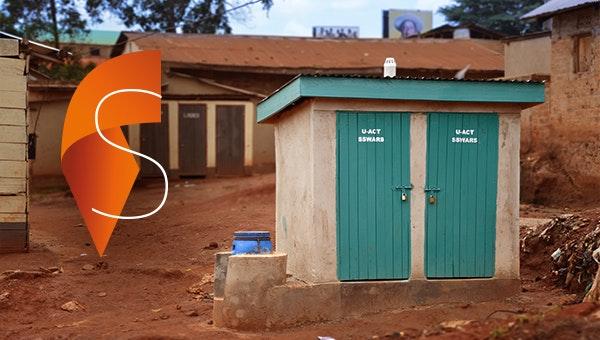
Do you want learn how to apply concepts of sustainable faecal sludge management (FSM) on a city-wide scale? This course starts with an overview of what faecal sludge is and an introduces you to the engineering fundamentals and required information for the design and selection of technologies. Sanitation solutions are prone to failure if an integrated planning approach that includes stakeholder involvement and the development of appropriate institutional, management and financial arrangements is not implemented.

Jun 15th 2026
5-12 Weeks
Politics and Economics of International Energy (Coursera) Coursera
Sciences Po

Politics and Economics of International Energy (Coursera)

Energy issues have always been important in international relations, but in recent years may have become even more important than in the past due to the widespread awareness of existing limits to energy sources and negative climate impacts. The course discusses global trends in energy consumption and production, various available scenarios for potential developments in the coming decades, the availability of oil reserves and the evolution of the oil industry.

Jun 15th 2026
5-12 Weeks
Wood Science: Beyond Building (Coursera) Coursera
West Virginia University

Wood Science: Beyond Building (Coursera)

The central question of this course: “why study wood?” If “why study wood” is the question, one answer would be that it is the only raw material available to us that is truly renewable in human life span terms. Wood is as important to society today as it ever was, despite the development of many man-made substitute materials, changing resource availability, and the changing needs of society.

Jun 15th 2026
4 Weeks
Becoming a changemaker: Introduction to Social Innovation (Coursera) Coursera
University of Cape Town

Becoming a changemaker: Introduction to Social Innovation (Coursera)

This free 6 week course is for anyone who wants to make a difference. Whether you are already familiar with the field of social innovation or social entrepreneurship, working for an organization that wants to increase its social impact, or just starting out, this course will take you on a journey of exploring the complex problems that surround us and how to start thinking about solutions.

Jun 15th 2026
5-12 Weeks
Ecosystem Services: a Method for Sustainable Development (Coursera) Coursera
University of Geneva

Ecosystem Services: a Method for Sustainable Development (Coursera)

Ecosystem services are a way of thinking about – and evaluating – the goods and services provided by nature that contribute to the well-being of humans. This MOOC will cover scientific (technical), economic, and socio-political dimensions of the concept through a mix of theory, case-studies, interviews with specialists and a serious-game.

Jun 15th 2026
5-12 Weeks
More on Change and Sustainability (Coursera) Coursera
University of Colorado System

More on Change and Sustainability (Coursera)

This is Class 2 of the MOOC Specialization, Become a Sustainable Business Change Agent. In this class you will learn more change agent skills and hear from people who have made changes in their organizations. You will also learn more about green design and sustainability reporting. The skills from this class will help improve products and services in your company or help the company issue its first, or an improved sustainability report.

Jun 15th 2026
5-12 Weeks
Greening the Economy: Lessons from Scandinavia (Coursera) Coursera
Lund University

Greening the Economy: Lessons from Scandinavia (Coursera)

How can we live a good life on one planet with over seven billion people? This course will explore greening the economy on four levels – individual, business, city, and nation. We will look at the relationships between these levels and give many practical examples of the complexities and solutions across the levels. Scandinavia, a pioneering place advancing sustainability and combating climate change, is a unique starting point for learning about greening the economy. We will learn from many initiatives attempted in Scandinavia since the 1970s, which are all potentially helpful and useful for other countries and contexts.

Jun 15th 2026
5-12 Weeks
Capstone: Creating A Sustainability Proposal (Coursera) Coursera
University of Colorado System

Capstone: Creating A Sustainability Proposal (Coursera)

Congratulations on reaching the Capstone Class of the Become a Sustainable Business Change Agent specialization. The class will help you apply material from the previous three classes. We have developed a case about a hypothetical ski resort that offers lots of opportunities to develop sustainability recommendations. A second option is do develop a proposal for a change in your company or organization. Or you can do both the case and your own proposal.

Jun 15th 2026
3 Weeks
Silicon Thin Film Solar Cells (Coursera) Coursera
École Polytechnique

Silicon Thin Film Solar Cells (Coursera)

This course consists of a general presentation of solar cells based on silicon thin films. It is the third MOOC of the photovoltaic series of Ecole polytechnique on Coursera. The general aspects of the photovoltaic field are treated in "Photovoltaic Solar Energy". And the detailed description of the crystalline silicon solar cells can be found in "Physics of Silicon Solar Cells".

Jun 15th 2026
3 Weeks