EdX

Sustainable Agriculture (edX)

Sustainable Agriculture (edX)

Comprehension of: methods for sustainable development of agricultural systems; strategies for conservation of various resources necessary for agriculture like water, soil, etc; the significance of concepts like pest management, technology usage, and advantages thereof and; various ways for getting better yield in Agriculture.

Class Deals by MOOC List - Click here and see EdX's Active Discounts, Deals, and Promo Codes.

Many estimates indicate that the world population is going to reach 9.6 billion by 2050. This implies that food production is required to increase by 70% in order to meet the demand of such a huge population. Therefore, it is becoming very essential to take serious reforms in the agricultural sector to ensure that the food system is ready to meet the challenges of a burgeoning world population. Thus, the goal of sustainable agriculture is to feed expanding population while farming in an ecologically sound and regenerative way.
Hardships like droughts and inadequacy/scarcity of inputs essential for Agriculture, necessitate sustainable agriculture in long run. Despite the fact that contemporary agriculture generates massive amount of output within a harvest season, several devastating risks are witnessed which require sustainable farming practices for their mitigation.
This course explains various methods of sustainable agriculture to meet the aforesaid objectives necessary for many countries. It discusses various aspects pertaining to different farming systems in order to increase food production substantially to meet the demand of growing population. It also describes ecological farming practices based on scientific innovations for producing healthy foods.

What you'll learn

  • Primary objectives/goals and concept of sustainable agriculture
  • Farming systems, and components thereof and integrated farming system
  • Various irrigation methods and sustainable water management
  • Concepts of Polyculture, inter-cropping, and crop rotation
  • Concepts of Hydroponics and Aquaponics and their significance.
  • Benefits of encouraging combined agricultural and forest production system in the name of “Agroforestry”
  • Significance and advantages of Organic farming
  • Importance of technology in Sustainable Agriculture, and Precision farming.

Concepts of vermicomposting, pest management, cover crops, mulching etc., ***

Syllabus

Week 1

  • Overview of Sustainable Agriculture
  • Farming systems & Integrated farming systems

Week 2

  • Irrigation, water management including Rainwater harvesting
  • Polyculture, inter- cropping and crop rotation
  • Precision farming
  • Organic farming & Biodynamic farming

Week 3

  • Vermicomposting
  • Hydroponics and Aquaponics

Week 4

  • Agroforestry and food forests
  • Integrated and Natural pest management
  • Cover crops, Mulching and manual weed control

Go to Class
MOOC List is learner-supported. When you buy through links on our site, we may earn an affiliate commission.

Related Courses

Minerals and Mining in a Sustainable World (edX) EdX
University of Queensland,UQx

Minerals and Mining in a Sustainable World (edX)

This course provides learners with an overview of the role of minerals in society, the history of the sustainable development agenda, and the emerging focus on the relationship between mineral development and the Sustainable Development Goals. What is the role of mining in a sustainable world? What challenges lie ahead, and how is the mining industry responding to meet our demand for minerals as well as our expectations of a sustainable future?

Self Paced
Self-Paced
Water Works: Activating Heritage for Sustainable Development (edX) EdX
Delft University of Technology,DelftX

Water Works: Activating Heritage for Sustainable Development (edX)

Address contemporary challenges from a socio-spatial and cultural perspective, and activate water heritage for decision-making in water management. Water has served and sustained societies throughout history. Understanding the complex and diverse water systems of the past is key to devising sustainable development for the future with regard to socioeconomic structures, policies, and cultures. Today, past systems form the framework for preservation and reuse as well as for new proposals.

Self Paced
Self-Paced
Nitrogen: A Global Challenge (edX) EdX
University of Edinburgh,EdinburghX

Nitrogen: A Global Challenge (edX)

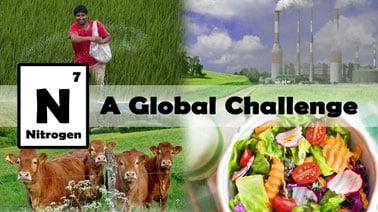
Learn about the global nitrogen challenge, how nitrogen has helped human civilization to develop, and how its misuse now threatens us. It’s a perfect storm. Limited food, water and energy unequally spread between an expanding population, and a warming climate as the bitter icing on the cake. In all these global challenges nitrogen has a leading role to play. Here you will learn just how hard-wired into all of human civilisation nitrogen is, and whether the future will see it as our quiet savior or the toxic villain of the piece.

Self Paced
Self-Paced
One Planet, One Ocean (edX) EdX
SDGAcademyX,SDG Academy

One Planet, One Ocean (edX)

A holistic view of how the ocean functions, how human interactions with the ocean can be understood, and what solutions are available to support both sustainable use and stewardship of our blue planet. Is the ocean the real final frontier? Humans have a greater understanding of the surface of the moon than they do of the depths of these waters.

Self Paced
Self-Paced
Sustainable Corporate Financing: Application (edX) EdX
ZHAWx,ZHAW Zurich University of Applied Sciences

Sustainable Corporate Financing: Application (edX)

The course “Sustainable Corporate Financing – Applications” emphasizes sustainability from the perspectives of equity, debt, and bank financing. Participants will gain in-depth insights on which financing options and considerations apply in the respective fields of action (exclusion, ESG integration, transition, and sustainability solutions) previously elaborated in the foundation course. In addition, this course will elaborate on the question, of how specific financing solutions can contribute to closing the SDG financing gap.

Self Paced
Self-Paced