Children are our future – so how do we give them the best beginning for a happy and healthy life? What does a successful early childhood care program look like? How has a child’s brain developed at the age of 3? How does nutrition impact the future well-being of a child into adulthood?
Class Deals by MOOC List - Click here and see EdX's Active Discounts, Deals, and Promo Codes.
Learn the answers to these questions and more in "The Best Start in Life: Early Childhood Development for Sustainable Development". With leading experts in the field – hailing from Harvard University, New York University and UNICEF, among other institutions – we’ll explore how neuroscience, sociology, anthropology and other studies have influenced our understanding of early childhood development.
This course is for:
- Graduate students and advanced undergraduate students in international development, teaching, nursing and medicine, and other fields who are interested in the key concepts and practices in early childhood development
- Teachers, healthcare professionals and other practitioners interested in the societal and biological factors impacting the children they support
- Sustainable development practitioners who want to understand the lifecycle of needs and support necessary to help children globally, including those who work for international aid organizations and nonprofits in the realms of poverty, nutrition and education
What you'll learn
- All about the brain: how neurological makeup affects children’s development
- The intersection of childcare, education and other programming with policies at the national level and beyond
- Case studies: how factors such as forced migration impact a child’s future
Syllabus
Module 1: Introduction
Early Childhood Development for Sustainable Development
The State of the World's Children
How Brain Architecture Develops
The Impact of Adversity & Toxic Stress
Resilience & How to Foster It
Module 2: Child Development: Prenatal to Age 3
Development in Culture & Context
Physical Development
Cognitive Development and Perception
Language Development
Social Development
Emotional Development & Temperament
Module 3: Child Development: Ages 3 to 8
Physical Development
Cognitive Development & Executive Function
Language
Socio-emotional Development
Module 4: Tour of ECD Programs and Sectors Part I
Introduction to Multi-sector Aspects
Health Programs
Nutrition & Parenting Programs
Module 5: Tour of ECD Programs and Sectors Part 2
Social Protection Programs
Early Care & Education Programs
Child Protection Programs
Module 6: Communities and Situations of Conflict and Migration
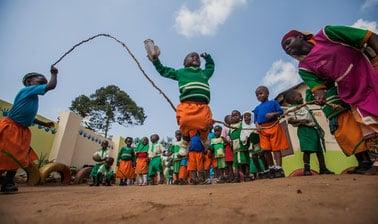
Uganda Case Study
Community Based Programs
Conflict & Migration
Module 7: From Programs to Policies
How is Policy Created?
Quality, Governance & Sustainability
Financing ECD Policies
Module 8: The Future: Innovations and Growth
Innovation in ECD
Innovation from Around the World
Conclusion: The Future of ECD