As the world’s population continues to rise toward an expected 10 billion citizens by 2050, it is imperative that business practices change to ensure a high quality of life is possible for all of us, both human and non-human. Today’s learners are very aware of this. Moreover, they are highly motivated and have the extraordinary capacity to create a future that provides both economic success and a more enduring, resilient, and sustainable planet. If you are one of these learners, then Sustainability and the Circular Economy is a course for you.
Class Deals by MOOC List - Click here and see Coursera's Active Discounts, Deals, and Promo Codes.
Sustainability and the Circular Economy is the first course in the Applied Sustainability for Technical Managers specialization. It aims to provide learners with the strategies and tools to realize their vision by integrating sustainability into everyday life, and in the companies where they work.
The course opens with an examination of climate change and human impact on the environment, and the opportunities created for innovative solutions that drive real change. We then explore the sources of many of our environmental challenges, and the need to transition to a zero-carbon energy future.
A sustainable future is more than just renewable energy, as we need to pay attention to our ever-growing desire for products that add value to our lives. Therefore, the course explores how we’re electrifying transportation, making our homes more energy efficient, eating more sustainable food grown with regenerative agricultural practices, and wearing clothes designed to last and made from more natural materials using fair and equitable labor.
It is important to recognize that many of the 10 billion global citizens will want the same products and lifestyles as citizens in wealthier industrialized nations. Yet products require materials - and our current extractive approach to resources will not meet this burgeoning demand. The course concludes with an overview of the Circular Economy, an innovative way of decoupling such economic growth from traditional resource extraction.
Sustainability and the Circular Economy provides the foundation for the next two courses in the Applied Sustainability specialization.
What you'll learn
- Understand the reasons for climate change and its ramifications.
- Explain how power is generated today, and its associated impact on global warming.
- Recognize how sustainability applies to transportation, homes and cities, food and fashion.
- Describe the principles of the Circular Economy, and how the Butterfly Diagram can be used in product design.
Syllabus
Global Challenges and Some Good News
Welcome to Sustainability and the Circular Economy! This first module introduces the course and how it operates. It then exposes you to the major challenges facing the world today, such as climate change, ocean acidification, biodiversity loss, plastic pollution and social inequity. We capture this with a discussion of planetary boundaries (Rockstrom) and the concept of the Anthropocene. The module ends on a high note with people and organizations that are making real change possible.
Sustainability Defined and How We Got Here
This module introduces the classic definition of sustainability and sustainable development (Brundtland Commission), along with contemporary concepts of regenerative and restorative practices. We discuss the IPAT equation as a means of providing a macro-view of environmental impacts as a function of population and affluence. The UN Sustainable Development Goals are covered, with a view to how business can impact these in a positive way. The module concludes with an overview of neoliberal economics and the resulting wealth inequality it led to, and a more positive, inclusive model proposed by Kate Raworth in her book, "Doughnut Economics".
The Science of Climate Change
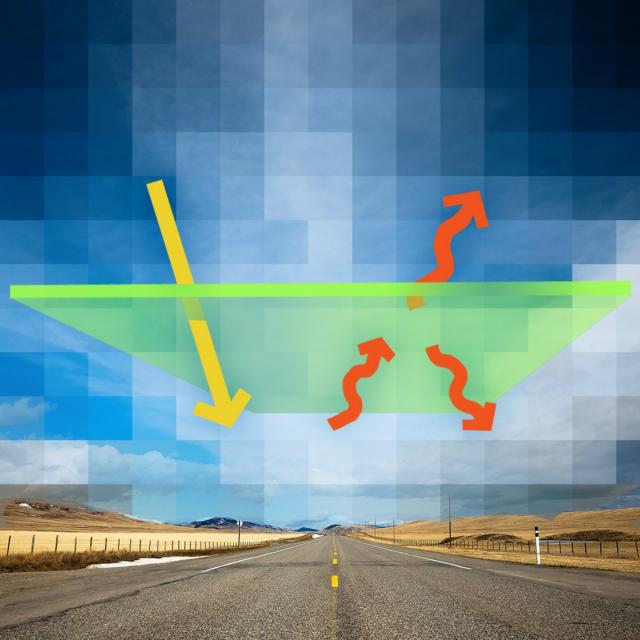
This module opens with an overview of the greenhouse effect resulting from greenhouse gases, both good and bad. We then illustrate from the Keeling Curve that GHGs are increasing and have been markedly since the dawn of the industrial revolution. We then discuss the relationship between GHGs and anthropogenic sources, meaning mostly fossil fuels, and the evidence linking the two. We cover the Carbon Dioxide Equivalent, and how one calculates it from GHG emissions and their respective global warming potentials (GWP). The Albedo Effect is then covered as a reinforcing mechanism to climate change. Finally, the module covers the Paris Accord and the need for change.
GHGs and Electric Power Generation
This module is all about conventional power generation using coal, natural gas and nuclear energy. The module begins with how coal, oil and natural gas are formed millions of years ago. We then discuss basic units of heat, power and energy, using both English and International units to communicate in a bilingual way. We dive deeper into nuclear energy, its pros and cons, and whether it should be part of a zero-carbon future. The module wraps up with a discussion of the UN's initiatives called Conference of Parties, or COP, and the resulting outcome of the Paris Climate Accord to limit global warming to 2.0o Celsius.
Sustainable Solutions in Daily Life
Now that you understand the global challenges facing all of us, this module showcases the emerging solutions demonstrating the value of sustainable products and to identify them. We cover the areas of transportation, noting the rapid transition to Electric Vehicles, and and developments in E-Planes. As billions of people across the globe migrate to the cities to live and work, there is considerable opportunity to design/redesign cities to be more livable, and this module highlights several successes across the world, including green building and retrofit techniques. We then explore sustainability in daily life, discussing the emerging area of Regenerative Agriculture, the process of growing more nutritious food with zero synthetic inputs, while benefitting the soil. How that food is distributed is changing as well, as consumers everywhere are paying attention not only to what they eat but who is providing it. The module then discusses the clothes that we wear, as consumers are becoming increasingly aware that what they put on their bodies is as important as what they put in their bodies. Apparel and the fashion industry are one of the greatest polluters of all industries, and consumers are demanding change. We wrap-up this module with a discussion of how Fast Fashion is giving way to a new model of Slow Fashion.
Introduction to the Circular Economy
In this final module, we transition from greenhouse gases, climate change and power generation to the product lifecycle, introducing the concept of the Circular Economy, and how it differs from today's linear economy. We begin with a brief overview of the linear economy, and how it is challenged to support 8 Billion people on the planet. We then show the three basic principles of the Circular Economy, and how it decouples economic growth from resource extraction. We emphasize the work of the Ellen MacArthur Foundation, going through the Circular Economy Butterfly Diagram in detail, with many examples highlighting how this is put into practice. We conclude with an overview of the recycling process, its successes and current challenges.