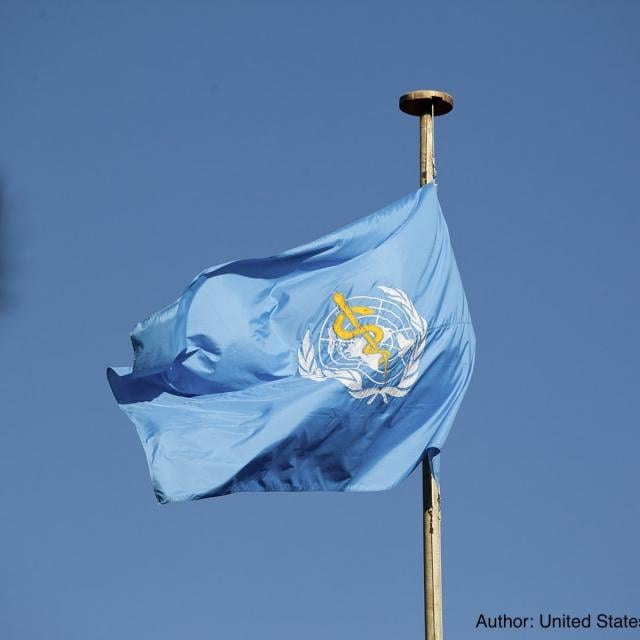
Welcome to the MOOC "Global Health Security, Solidarity and Sustainability through the International Health Regulations". We are very excited to have you on board and hope you will enjoy the course! In the coming 6 weeks, you will learn about the International Health Regulations (IHR), history of its creation and evolution, its major principles and implementation procedures, as well as challenges and future opportunities.
Class Deals by MOOC List - Click here and see Coursera's Active Discounts, Deals, and Promo Codes.
We will talk about lessons learned from the previous epidemics and environmental disasters, and discuss possible future health threats and ways to respond to them in an efficient and timely manner. The goal of this MOOC is not only to promote knowledge on the IHR among the general public but also to help international health practitioners advance its implementation, contributing to the achievement of Sustainable Development Goals.
Our MOOC «Global Health Security, Solidarity and Sustainability through the International Health Regulations» is highly transdisciplinary and involves prominent experts from more than 15 leading institutions worldwide, including academia, international organizations, and local governments. Along with traditional e-learning resources, it gives access to a highly innovative teaching tool - virtual Simulator IHR 3.0 - a serious game where you can practice managing health crises from different perspectives. No matter which country you come from, this MOOC is free and open for anyone interested in learning more about such a powerful legal mechanism as the IHR.
Every week, you will get access to a new Module which includes a series of video lectures, accompanied by a list of recommended readings to deepen your knowledge on the proposed topic. Every module will have a number of practice exercises, such as in-video questions and practice quizzes based on the video lectures and readings, and a graded quiz to sum up everything that you've learned. At the end of the course, you will be asked to take a graded final quiz that you will need to complete (as well as each Module's graded quizzes) in order to pass the course and earn a Certificate if you chose this option at enrolment.
We encourage you to use Discussion Prompts and forums to discuss the course material with fellow students enrolled in the MOOC. You can greatly contribute to the learning process by posting your questions, commenting, or sharing your personal experiences and examples from your countries.
This MOOC was produced jointly by the University of Geneva (Switzerland), Centre Virchow-Villermé for Public Health Paris-Berlin, Université Paris Descartes (France) and ANEO in close collaboration with the World Health Organization Headquarters (Geneva, Switzerland) and WHO Regional Office for the Eastern Mediterranean (Cairo, Egypt), with the financial aid of the Agence Nationale de la Recherche (France), UNIGE and WHO.
We wish you good luck with the MOOC and look forward to seeing you in our learning community!
What You Will Learn
- History and goals of the IHR,
-Rights and obligations of the States Parties and the WHO within the IHR;
-IHR achievements, strengths, weaknesses and challenges after more than 10 years of its implementation
Syllabus
WEEK 1
Introduction and course outline
The main objective of this Module is to explore the reasons behind the creation of this MOOC, its structure and the main topics covered. Using several real-world examples this Module introduces the main facets of the International Health Regulations (IHR) and controversies around it, and also presents the factors that motivated the countries to come together for the first time to discuss the issues of international public health, and the resulting documents that would later give birth to the first ever IHR.
WEEK 2
Historic perspectives. IHR Articles & Procedures
This Module presents the content of the 2005 revision of the IHR and the main factors that led to the need for this revision, such as major societal changes, globalization and expansion of travel and international exchanges of people, leading to emergence and re-emergence of health threats. This Module also walks the student through the IHR text and outlines its main elements: definitions, main principles and goals, as well as the mechanisms of assessment and notification of health events of potential concern.
WEEK 3
Intersectorality of the IHR - Part 1. Health threats covered by the IHR
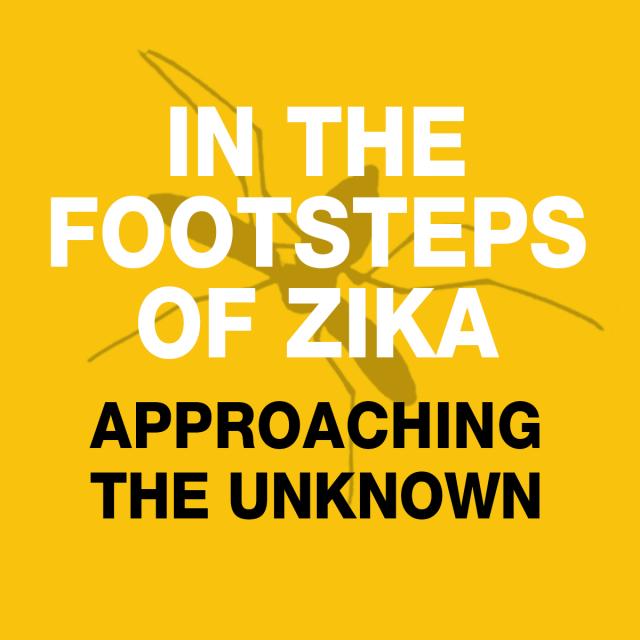
This and the following Module provide an introduction to the complex interconnectedness of public health, and the IHR specifically, with other sectors. More precisely, Module 3 focuses on the linkage between human health and animal health and possible future health threats. Students will get familiar with examples of situations in which the IHR has come into action to limit the effects of a health hazard, such as Zika virus, SARS or Ebola epidemics that were declared as public health emergencies of international concern (PHEIC), along with the H1N1 outbreak.
WEEK 4
Intersectorality of the IHR - Part 2. Mobility, trade and national security
Further exploring the aspect of intersectorality of the IHR, this Module will examine the effects that a public health event can potentially have on the global economy, travel and trade. It will define basic, additional and excessive public health measures that can be applied in case of an international health emergency, as well as specific documents that are necessary to ensure safety in international traffic and trade. This Module will also introduce the students to the issue of national security in the context of practical application of the IHR.
WEEK 5
National planning, monitoring and evaluation
In this Module, students will get familiar with the main mechanism of assessment of the IHR implementation progress - the IHR Monitoring Framework. Particular attention will be given to the Joint External Evaluation (JEE) process, as well as its final step - national planning. One of the units will introduce the concept of the IHR-PVS Bridging workshop that links together human and animal health. At the end of this Module, students will discover several real-life examples of daily activities of the National Focal Points that are responsible for the IHR implementation at the national level.
WEEK 6
Challenges in the IHR implementation. Ebola and the WHO reform
This Module provides a critical assessment of the global progress of the IHR implementation. It examines the main challenges that countries are facing while preparing for or during public health events, including possible violations of human rights. This Module also provides an extensive overview of the main reforms that were implemented inside the WHO after the Ebola epidemic in Africa in 2014-2015, as well as steps forward that were taken by other actors at the international level.
WEEK 7
Conclusion and final quiz
Congratulations, you have successfully finished all the educational sections of our MOOC! We hope you enjoyed the teaching materials and were able to gain lots of valuable insights on how the International Health Regulations are implemented in real life and why it is so important to raise awareness on this issue. We would like to thank you for your active participation and conclude with a short video message, a final quiz on different aspects of the IHR covered throughout the course and a discussion prompt to reflect on the progress you made. Good luck and hope to see you again in our online learning community!