Statistics with SAS (Coursera)

Offered by SAS,
Statistics with SAS (Coursera)

This introductory course is for SAS software users who perform statistical analyses using SAS/STAT software. The focus is on t tests, ANOVA, and linear regression, and includes a brief introduction to logistic regression.

Class Deals by MOOC List - Click here and see Coursera's Active Discounts, Deals, and Promo Codes.

Syllabus

WEEK 1
Course Overview and Data Setup
In this module you learn about the course and the data you analyze in this course. Then you set up the data you need to do the practices in the course.
Introduction and Review of Concepts
In this module you learn about the models required to analyze different types of data and the difference between explanatory vs predictive modeling. Then you review fundamental statistical concepts, such as the sampling distribution of a mean, hypothesis testing, p-values, and confidence intervals. After reviewing these concepts, you apply one-sample and two-sample t tests to data to confirm or reject preconceived hypotheses.

WEEK 2
ANOVA and Regression
In this module you learn to use graphical tools that can help determine which predictors are likely or unlikely to be useful. Then you learn to augment these graphical explorations with correlation analyses that describe linear relationships between potential predictors and our response variable. After you determine potential predictors, tools like ANOVA and regression help you assess the quality of the relationship between the response and predictors.

WEEK 3
More Complex Linear Models
In this module you expand the one-way ANOVA model to a two-factor analysis of variance and then extend simple linear regression to multiple regression with two predictors. After you understand the concepts of two-way ANOVA and multiple linear regression with two predictors, you'll have the skills to fit and interpret models with many variables.
Model Building and Effect Selection
In this module you explore several tools for model selection. These tools help limit the number of candidate models so that you can choose an appropriate model that's based on your expertise and research priorities.

WEEK 4
Model Post-Fitting for Inference
In this module you learn to verify the assumptions of the model and diagnose problems that you encounter in linear regression. You learn to examine residuals, identify outliers that are numerically distant from the bulk of the data, and identify influential observations that unduly affect the regression model. Finally, you learn to diagnose collinearity to avoid inflated standard errors and parameter instability in the model.
Model Building for Scoring and Prediction
In this module you learn how to transition from inferential statistics to predictive modeling. Instead of using p-values, you learn about assessing models using honest assessment. After you choose the best performing model, you learn about ways to deploy the model to predict new data.

WEEK 5
Categorical Data Analysis
In this module you look for associations between predictors and a binary response using hypothesis tests. Then you build a logistic regression model and learn about how to characterize the relationship between the response and predictors. Finally, you learn how to use logistic regression to build a model, or classifier, to predict unknown cases.
Go to Class
MOOC List is learner-supported. When you buy through links on our site, we may earn an affiliate commission.

Related Courses

Practical Machine Learning on H2O (Coursera) Coursera
H2O.ai

Practical Machine Learning on H2O (Coursera)

In this course, we will learn all the core techniques needed to make effective use of H2O. Even if you have no prior experience of machine learning, even if your math is weak, by the end of this course you will be able to make machine learning models using a variety of algorithms. We will be using linear models, random forest, GBMs and of course deep learning, as well as some unsupervised learning algorithms.

Oct 12th 2026
5-12 Weeks
Materials Data Sciences and Informatics (Coursera) Coursera
Georgia Institute of Technology

Materials Data Sciences and Informatics (Coursera)

This course aims to provide a succinct overview of the emerging discipline of Materials Informatics at the intersection of materials science, computational science, and information science. Attention is drawn to specific opportunities afforded by this new field in accelerating materials development and deployment efforts.

Oct 5th 2026
5-12 Weeks
Introduction to Recommender Systems: Non-Personalized and Content-Based (Coursera) Coursera
University of Minnesota

Introduction to Recommender Systems: Non-Personalized and Content-Based (Coursera)

This course, which is designed to serve as the first course in the Recommender Systems specialization, introduces the concept of recommender systems, reviews several examples in detail, and leads you through non-personalized recommendation using summary statistics and product associations, basic stereotype-based or demographic recommendations, and content-based filtering recommendations.

Sep 28th 2026
4 Weeks
Practical Time Series Analysis (Coursera) Coursera
The State University of New York

Practical Time Series Analysis (Coursera)

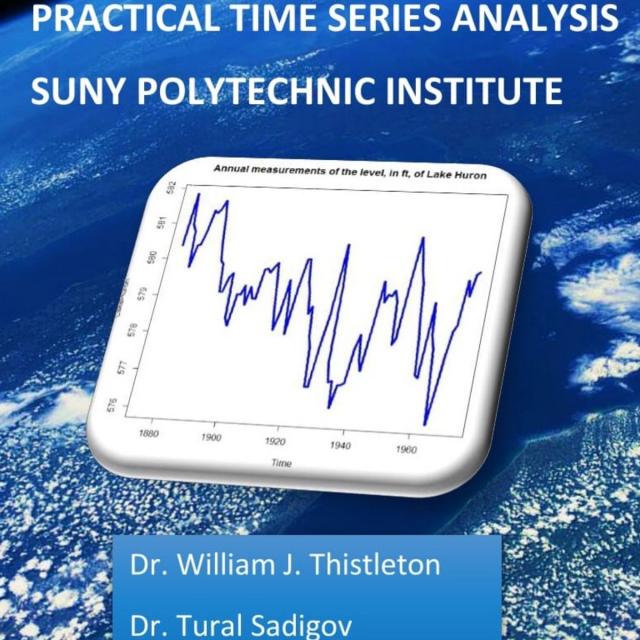
Many of us are "accidental" data analysts. We trained in the sciences, business, or engineering and then found ourselves confronted with data for which we have no formal analytic training. This course is designed for people with some technical competencies who would like more than a "cookbook" approach, but who still need to concentrate on the routine sorts of presentation and analysis that deepen the understanding of our professional topics.

Oct 5th 2026
5-12 Weeks
Basic Statistics (Coursera) Coursera
University of Amsterdam

Basic Statistics (Coursera)

Understanding statistics is essential to understand research in the social and behavioral sciences. In this course you will learn the basics of statistics; not just how to calculate them, but also how to evaluate them. This course will also prepare you for the next course in the specialization - the course Inferential Statistics. In the first part of the course we will discuss methods of descriptive statistics. You will learn what cases and variables are and how you can compute measures of central tendency (mean, median and mode) and dispersion (standard deviation and variance). Next, we discuss how to assess relationships between variables, and we introduce the concepts correlation and regression.

Sep 28th 2026
5-12 Weeks
Managerial Accounting: Tools for Facilitating and Guiding Business Decisions (Coursera) Coursera
University of Illinois at Urbana-Champaign

Managerial Accounting: Tools for Facilitating and Guiding Business Decisions (Coursera)

In this course, you will explore how to use accounting to allocate resources and incentivize manager and employee behaviors in using these resources. You will also learn how financial and non-financial accounting information facilitates strategic performance measurement and how to integrate this information to continuously improve strategy.

Sep 28th 2026
4 Weeks
Experimentation for Improvement (Coursera) Coursera
McMaster University

Experimentation for Improvement (Coursera)

We are always using experiments to improve our lives, our community, and our work. Are you doing it efficiently? Or are you (incorrectly) changing one thing at a time and hoping for the best? In this course, you will learn how to plan efficient experiments - testing with many variables. Our goal is to find the best results using only a few experiments. A key part of the course is how to optimize a system.

Oct 12th 2026
5-12 Weeks
Introduction to Statistics (Coursera) Coursera
Stanford University

Introduction to Statistics (Coursera)

Stanford's "Introduction to Statistics" teaches you statistical thinking concepts that are essential for learning from data and communicating insights. By the end of the course, you will be able to perform exploratory data analysis, understand key principles of sampling, and select appropriate tests of significance for multiple contexts. You will gain the foundational skills that prepare you to pursue more advanced topics in statistical thinking and machine learning.

Oct 5th 2026
5-12 Weeks
Estatística não-paramétrica para a tomada de decisão (Coursera) Coursera
Universidade de São Paulo, Brasil

Estatística não-paramétrica para a tomada de decisão (Coursera)

Os testes estatísticos não-paramétricos são métodos que têm maior relevância nas ciências sociais aplicadas, pois permitem trabalhar com pequenas amostras ou amostras das quais não se tenha certeza de que sejam provenientes de população com distribuição normal, assumindo poucas hipóteses sobre a distribuição de probabilidade da população.

Oct 5th 2026
4 Weeks
Mercadeo analítico (Coursera) Coursera
University of Virginia

Mercadeo analítico (Coursera)

Las organizaciones grandes y pequeñas están inundadas de datos sobre las elecciones de los consumidores. Pero esa riqueza de información no siempre se traduce en mejores decisiones. Saber cómo interpretar los datos es el desafío, y se espera que los mercadólogos en particular usen cada vez más la analítica para informar y justificar sus decisiones. El mercadeo analítico permite que los mercadólogos midan, gestionen y analicen el rendimiento de las actividades de mercadeo para maximizar su eficacia y optimizar el retorno de la inversión (Return On Investment, ROI).

Oct 12th 2026
5-12 Weeks