Probability and Statistics: To p or not to p? (Coursera)

Offered by University of London,
Probability and Statistics: To p or not to p? (Coursera)

We live in an uncertain and complex world, yet we continually have to make decisions in the present with uncertain future outcomes. Indeed, we should be on the look-out for "black swans" - low-probability high-impact events. To study, or not to study? To invest, or not to invest? To marry, or not to marry?

Class Deals by MOOC List - Click here and see Coursera's Active Discounts, Deals, and Promo Codes.

While uncertainty makes decision-making difficult, it does at least make life exciting! If the entire future was known in advance, there would never be an element of surprise. Whether a good future or a bad future, it would be a known future.
In this course we consider many useful tools to deal with uncertainty and help us to make informed (and hence better) decisions - essential skills for a lifetime of good decision-making.
Key topics include quantifying uncertainty with probability, descriptive statistics, point and interval estimation of means and proportions, the basics of hypothesis testing, and a selection of multivariate applications of key terms and concepts seen throughout the course.

Syllabus

WEEK 1: Dealing with Uncertainty and Complexity in a Chaotic World
WEEK 2: Quantifying Uncertainty With Probability
WEEK 3: Describing The World The Statistical Way
WEEK 4: On Your Marks, Get Set, Infer!
WEEK 5: To p Or Not To p?
WEEK 6: Applications


Go to Class
MOOC List is learner-supported. When you buy through links on our site, we may earn an affiliate commission.

Related Courses

Uncertainty and Research (Coursera) Coursera
Johns Hopkins University

Uncertainty and Research (Coursera)

This course teaches the fundamentals of scientific research. We approach the research process as a means of systematically reducing uncertainty and demonstrate how conducting a scientific investigation can be posed as an exercise in Bayesian uncertainty quantification. We begin by exploring the scientific landscape to understand the different types of research, where they are conducted, how they are supported, and why each of these types of research is important.

Aug 3rd 2026
5-12 Weeks
Materials Data Sciences and Informatics (Coursera) Coursera
Georgia Institute of Technology

Materials Data Sciences and Informatics (Coursera)

This course aims to provide a succinct overview of the emerging discipline of Materials Informatics at the intersection of materials science, computational science, and information science. Attention is drawn to specific opportunities afforded by this new field in accelerating materials development and deployment efforts.

Aug 10th 2026
5-12 Weeks
Programación en Python (Coursera) Coursera
Universidad de los Andes

Programación en Python (Coursera)

¡Te damos la bienvenida al curso de Programación en Python de la Universidad de los Andes! El propósito de este curso es ofrecerte un ambiente interactivo para que desarrolles tus habilidades de pensamiento computacional, aprendas a programar en el lenguaje Python y te entrenes en la resolución de problemas utilizando un computador. La estrategia pedagógica empleada es el aprendizaje activo basado en casos.

Aug 3rd 2026
4 Weeks
Global Impact: Multiculturalism (Coursera) Coursera
University of Illinois at Urbana-Champaign

Global Impact: Multiculturalism (Coursera)

This course embarks on the journey of understanding multicultural marketing's essentials. It elaborates on how culture influences consumer behavior and decision-making, and it explores the roles of multicultural consumer segments, generational and regional subcultures. The course imparts knowledge of various advertising strategies tailored for multicultural markets and discusses concepts like bilingual use, frame-switching, and communication channels' significance.

Aug 10th 2026
4 Weeks
Statistical Inference and Hypothesis Testing in Data Science Applications (Coursera) Coursera
University of Colorado Boulder

Statistical Inference and Hypothesis Testing in Data Science Applications (Coursera)

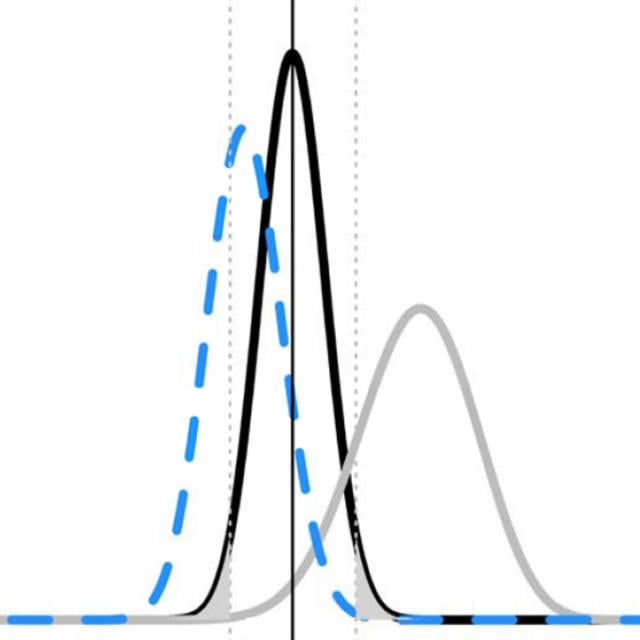
This course will focus on theory and implementation of hypothesis testing, especially as it relates to applications in data science. Students will learn to use hypothesis tests to make informed decisions from data. Special attention will be given to the general logic of hypothesis testing, error and error rates, power, simulation, and the correct computation and interpretation of p-values. Attention will also be given to the misuse of testing concepts, especially p-values, and the ethical implications of such misuse.

Aug 10th 2026
5-12 Weeks
Practical Time Series Analysis (Coursera) Coursera
The State University of New York

Practical Time Series Analysis (Coursera)

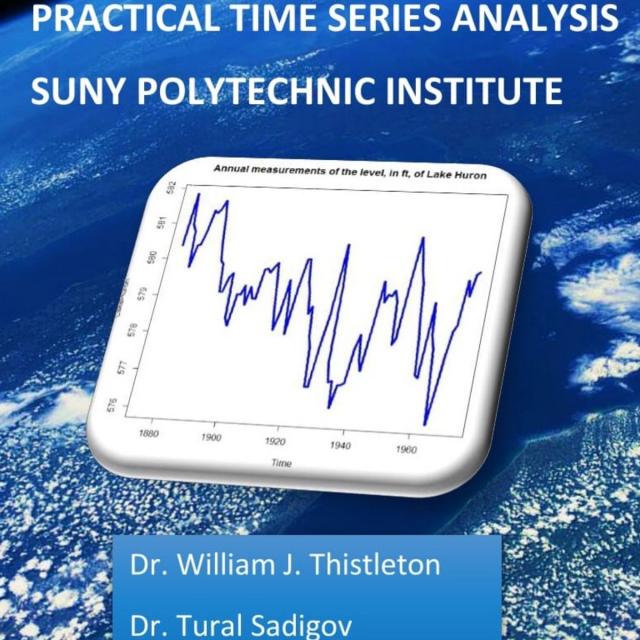
Many of us are "accidental" data analysts. We trained in the sciences, business, or engineering and then found ourselves confronted with data for which we have no formal analytic training. This course is designed for people with some technical competencies who would like more than a "cookbook" approach, but who still need to concentrate on the routine sorts of presentation and analysis that deepen the understanding of our professional topics.

Aug 10th 2026
5-12 Weeks
Basic Statistics (Coursera) Coursera
University of Amsterdam

Basic Statistics (Coursera)

Understanding statistics is essential to understand research in the social and behavioral sciences. In this course you will learn the basics of statistics; not just how to calculate them, but also how to evaluate them. This course will also prepare you for the next course in the specialization - the course Inferential Statistics. In the first part of the course we will discuss methods of descriptive statistics. You will learn what cases and variables are and how you can compute measures of central tendency (mean, median and mode) and dispersion (standard deviation and variance). Next, we discuss how to assess relationships between variables, and we introduce the concepts correlation and regression.

Aug 3rd 2026
5-12 Weeks
Understanding Clinical Research: Behind the Statistics (Coursera) Coursera
University of Cape Town

Understanding Clinical Research: Behind the Statistics (Coursera)

If you’ve ever skipped over`the results section of a medical paper because terms like “confidence interval” or “p-value” go over your head, then you’re in the right place. You may be a clinical practitioner reading research articles to keep up-to-date with developments in your field or a medical student wondering how to approach your own research. Greater confidence in understanding statistical analysis and the results can benefit both working professionals and those undertaking research themselves.

Aug 3rd 2026
5-12 Weeks
Narrative Economics (Coursera) Coursera
Yale University

Narrative Economics (Coursera)

This course, Narrative Economics, is relatively short and proposes a simple concept: we need to incorporate the contagion of narratives into our economic theory. You can think of narratives as stories that shape public beliefs, which in turn influence our decision making. Understanding how people arrived at certain decisions in the past can aid our understanding of the economy today and improve our forecasts of the future.

Aug 10th 2026
4 Weeks
Improving your statistical inferences (Coursera) Coursera
Eindhoven University of Technology

Improving your statistical inferences (Coursera)

This course aims to help you to draw better statistical inferences from empirical research. First, we will discuss how to correctly interpret p-values, effect sizes, confidence intervals, Bayes Factors, and likelihood ratios, and how these statistics answer different questions you might be interested in. Then, you will learn how to design experiments where the false positive rate is controlled, and how to decide upon the sample size for your study, for example in order to achieve high statistical power.

Aug 10th 2026
5-12 Weeks
Estadística y probabilidad (Coursera) Coursera
Universidad Nacional Autónoma de México

Estadística y probabilidad (Coursera)

En este curso podrás apoyar tu formación en temas de estadística y probabilidad I. Más allá de que encuentres aquí un apoyo para lograr una calificación, el curso busca ayudarte a que adquieras los aprendizajes que comprenden temas de estadística descriptiva, datos bivariados y probabilidad, los cuales te serán de utilidad en tu paso por la licenciatura y en tu vida profesional.

Aug 3rd 2026
4 Weeks
Probabilistic Graphical Models 1: Representation (Coursera) Coursera
Stanford University

Probabilistic Graphical Models 1: Representation (Coursera)

Probabilistic graphical models (PGMs) are a rich framework for encoding probability distributions over complex domains: joint (multivariate) distributions over large numbers of random variables that interact with each other. These representations sit at the intersection of statistics and computer science, relying on concepts from probability theory, graph algorithms, machine learning, and more. They are the basis for the state-of-the-art methods in a wide variety of applications, such as medical diagnosis, image understanding, speech recognition, natural language processing, and many, many more. They are also a foundational tool in formulating many machine learning problems.

Aug 3rd 2026
5-12 Weeks