The Skin, Bones, and Muscles (Coursera)

Offered by MedCerts,
The Skin, Bones, and Muscles (Coursera)

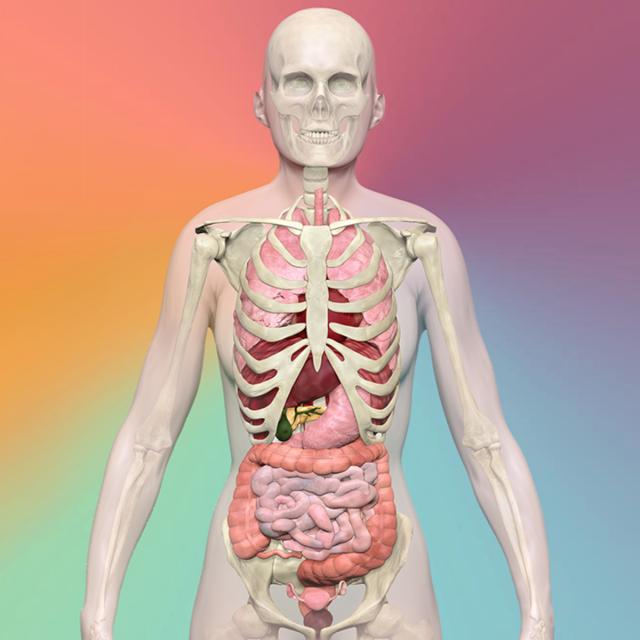
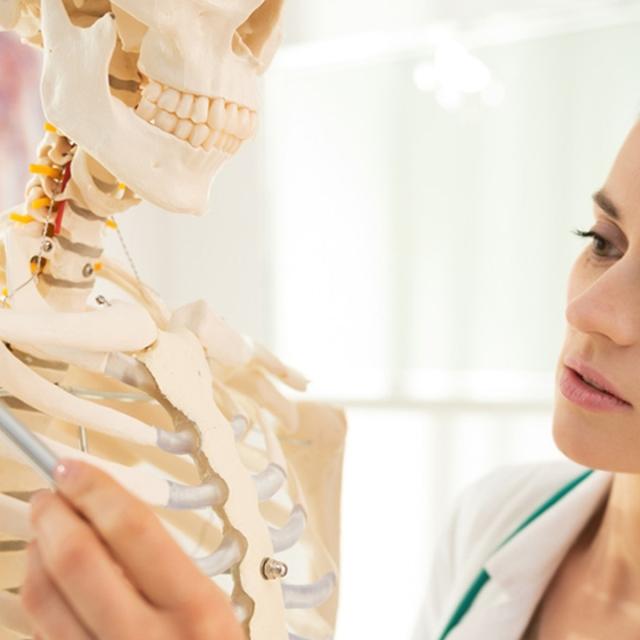
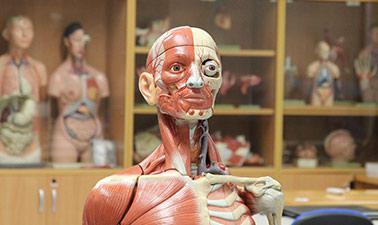
In this course on The Skin, Bones, and Muscles, you will learn about the wonderful diversity of the integumentary, skeletal, and muscular systems and the medical language that is used to describe these systems. Throughout each Lesson, the roots of terms are explained to help students understand how medical terminology works in healthcare and to increase their knowledge and understanding of the material discussed.

Class Deals by MOOC List - Click here and see Coursera's Active Discounts, Deals, and Promo Codes.

This course will provide you with a better understanding and working knowledge of medicine that is required for understanding of medical records used for multiple purposes and job duties in the medical field. Lessons include: Integumentary System, Skeletal System, and Muscular System.
Course 2 of 5 in the Human Anatomy and Medical Terminology Fundamentals Specialization.

What You Will Learn

  • Recognize the structure and function of the integumentary, skeletal, and muscular systems
  • Gain an understanding of the medical language related to the integumentary, skeletal, and muscular systems
  • Discuss major diseases of the integumentary, skeletal, and muscular systems, as well as related symptoms
Go to Class
MOOC List is learner-supported. When you buy through links on our site, we may earn an affiliate commission.

Related Courses

The Musculoskeletal System: the Science of Staying Active into Old Age (FutureLearn) FutureLearn
The University of Sheffield

The Musculoskeletal System: the Science of Staying Active into Old Age (FutureLearn)

Demystify the ageing Demystify the ageing process and learn how our everyday behaviours are likely to affect our long-term musculoskeletal health. On this course, you’ll learn why our bones, joints and muscles function less well as we age, and discover how best to live well as we get older.

Available now
3 Weeks
Movement Capabilities Depend on Neuromuscular Properties (Coursera) Coursera
University of Colorado Boulder

Movement Capabilities Depend on Neuromuscular Properties (Coursera)

Movement Capabilities Depend on Neuromuscular Properties is the third course of the specialization "Science of Movement". Get ready to delve into the fascinating world of how our neuromuscular properties shape our movement capabilities in various contexts. In this course, we will explore the intricate association between our nervous system and muscles, and how they work together to determine our physical performance, adaptability, and recovery.

Sep 14th 2026
4 Weeks
Understanding Medical Research: Your Facebook Friend is Wrong (Coursera) Coursera
Yale University

Understanding Medical Research: Your Facebook Friend is Wrong (Coursera)

How can you tell if the bold headlines seen on social media are truly touting the next big thing or if the article isn't worth the paper it's printed on? Understanding Medical Studies, will provide you with the tools and skills you need to critically interpret medical studies, and determine for yourself the difference between good and bad science. The course covers study-design, research methods, and statistical interpretation. It also delves into the dark side of medical research by covering fraud, biases, and common misinterpretations of data. Each lesson will highlight case-studies from real-world journal articles.

Oct 5th 2026
5-12 Weeks
Human Anatomy for Stroke (edX) EdX
The Hong Kong Polytechnic University,HKPolyUx

Human Anatomy for Stroke (edX)

The first MOOC to teach Human Anatomy from multiple healthcare professional perspectives through a case-based study of stroke. How is the human body structured? How are the different body systems interconnected with each other? If you are interested but layman to Human Anatomy, if you find the Human Anatomy textbooks are too difficult to read, or if you want to freshen up quickly your anatomy knowledge, this is the course for you.

Self Paced
Self-Paced
Statistical Shape Modelling: Computing the Human Anatomy (FutureLearn) FutureLearn
University of Basel

Statistical Shape Modelling: Computing the Human Anatomy (FutureLearn)

Learn the technology of modelling, as used in computational face recognition or in surgeries, with this free online course. Statistical shape models are one of the most important technologies in computer vision and medical image analysis. With this technology, the computer learns the characteristic shape variations of an object or organ. The model resulting from this analysis may then be used in implant design, image analysis, surgery planning and many other fields.

Feb 21st 2022
5-12 Weeks
How to Build Muscle and Lose Fat (Skillshare) Skillshare
Skillshare

How to Build Muscle and Lose Fat (Skillshare)

Looking to build muscle? Do you want to lose some fat? Then this course is perfect for you! In this course I'll go over (in depth) how to do both so that you can understand the principals and then apply them yourself for the rest of your life. It's about consistent progress! This course is all you need to reach your goals and continue progressing on your Fitness and Nutrition journey.

Self Paced
Self-Paced
Osteoarchaeology: The Truth in Our Bones (Coursera) Coursera
Leiden University

Osteoarchaeology: The Truth in Our Bones (Coursera)

This course is about what we can learn from examining the human skeleton, and how we can use this knowledge to reconstruct the lives of people who lived in the past. In archaeology and anthropology, human skeletal remains can provide unique insights into the past and the present; insights that cannot be gained otherwise.

May 15th 2023
5-12 Weeks
Medical Terminology II (Coursera) Coursera
Rice University

Medical Terminology II (Coursera)

This is the second course of the Medical Terminology specialization. It builds on the basic concepts of medical terminology with the introduction of new roots, terms, and abbreviations specific to the endocrine system (hormones). The body's transportation and defense systems (cardiovascular, blood, and lymphatic) will also be covered as well as the respiratory system (lungs).

Sep 21st 2026
4 Weeks
Anatomy & Physiology: Support & Movement (Coursera) Coursera
Rice University

Anatomy & Physiology: Support & Movement (Coursera)

The second course begins the systems-based approach to human anatomy and physiology at the organ, organ system, and organism level. Three major body systems related to support and movement will be explored in detail: the skeletal and muscular systems. Course material will cover both the structure (anatomy) and function (physiology) of each system with direct application to human development and disease.

Sep 21st 2026
4 Weeks
Movements Are Controlled By Muscle Forces (Coursera) Coursera
University of Colorado Boulder

Movements Are Controlled By Muscle Forces (Coursera)

Movements Are Controlled By Muscle Forces is the first course of the specialization "Science of Movement". In this course, we will delve into the mechanisms by which our nervous system communicates with our muscles, allowing us to perform a wide range of coordinated movements with precision. Whether you are a fitness enthusiast, a sports coach, a medical student, or simply curious about the inner workings of your body, this course will provide you with a comprehensive understanding of how the nervous system plays a vital role in enabling our muscles to produce movements.

Sep 21st 2026
4 Weeks