Singing Popular Music (Coursera)

Singing Popular Music (Coursera)

You've been studying the greats, working on improving your vocal skills, and building vocal technique. Now it's time to take the next step in your singing career to shine as a vocalist. Singing Popular Music provides you with the essential skills to define your own unique vocal style and sing healthfully. The course begins with devices to support and alter your sound including vowel quality, tone production, and breathing techniques.

Class Deals by MOOC List - Click here and see Coursera's Active Discounts, Deals, and Promo Codes.

From there, you will learn how to use techniques like mix voice and belting in contemporary singing styles. Then you'll take a cover song and make it your own. Upon successful completion of this course, you will be able to confidently and healthfully sing in your desired vocal style as well as understand how you can alter your singing to match other contemporary styles.

What You Will Learn

  • Identify and practice using appropriate breathing technique while singing.
  • Identify and practice using your head voice, mix voice, and chest voice while singing.
  • Learn healthy ways to perform powerful singing/belting.
  • Incorporate improvisation techniques in your singing style.

Course 2 of 4 in the The Singer Songwriter Specialization

Syllabus

WEEK 1
Welcome to Singing Popular Music!
Welcome to the course! Here we will cover all the details about the course and what you'll need to know to get the most out of your experience.
Vocal Styles and Tone Quality
Vocal style is shaped by language. How you interpret the meaning of the text and phrases impacts your artistry. The tone of your voice—which is essential to your style—is defined by the way you shape and pronounce vowels in words, while consonants give words rhythm. In this lesson we will discuss different vowel shapes and how devices such as vibrato, legato, and dynamics shape your sound. We will focus on gaining vocal self-awareness, practicing breathing techniques, and making style-appropriate choices.

WEEK 2
Mix Voice in Contemporary Singing
The mix voice vocal register or placement is a topic of much confusion. In this lesson, we will take a close look mix voice, how it can be helpful for you, and when to use it or not to use it. We will also continue to fine-tune the elements in your own style.

WEEK 3
Singing Powerful Styles
In this lesson, we'll take a close look at big singing, when you might use it, and how to do it safely. In today's musical landscape, belting is not required to be successful, but to be the best singer you can be, it is good to explore the full extent of your voice. That exploration includes singing with physical power. As we explore powerful singing, we'll look at what it is and what it is not. This method may be an important part of your sound, or ultimately you may decide that it's not for you. Either conclusion is fine artistically, depending on your chosen style and overall message.

WEEK 4
Developing Your Sound: Style Awareness and Integration
In this lesson, we'll focus on how to frame your music, genre-wise. We'll look at whether or not you want to include improvisation in your tune(s), and we'll discuss how to take a cover song and make it your own. Finally, you'll spend time demonstrating your vocal style by covering a song of your choice.
Go to Class
MOOC List is learner-supported. When you buy through links on our site, we may earn an affiliate commission.

Related Courses

Songwriting: Writing the Lyrics (Coursera) Coursera
Berklee College of Music

Songwriting: Writing the Lyrics (Coursera)

There’s a songwriter lurking somewhere inside you, peeking around corners, wondering if it’s safe to come out. Now it is. This course is an invitation to let your inner songwriter step into the sunlight. All it takes is a simple “yes” and you’ll be climbing that windy hill, marveling at the view. If you haven’t written any or many songs, this course will show you an efficient, effective process for tailoring songs to express your ideas and emotions. If you have, you’ll look at your process differently, taking control of aspects of the process you may have not noticed.

Nov 30th 2026
5-12 Weeks
Art and the Digital Transformation (Coursera) Coursera
Copenhagen Business School

Art and the Digital Transformation (Coursera)

More than two decades into the new millennium, it is difficult to envision a future in which digital technologies do not play a significant role. Digital technologies frequently make a lot of promises. However, in recent years, we have seen an increasing number of artists address fundamental issues of the Digital Transformation, such as surveillance, lack of representation, and digital illiteracy. Artists have demonstrated that, while digital technologies have the potential to support processes leading to greater equality, they are frequently viewed as perpetuating and even exacerbating inequalities.

Nov 30th 2026
5-12 Weeks
Jazz Improvisation (Coursera) Coursera
Berklee College of Music

Jazz Improvisation (Coursera)

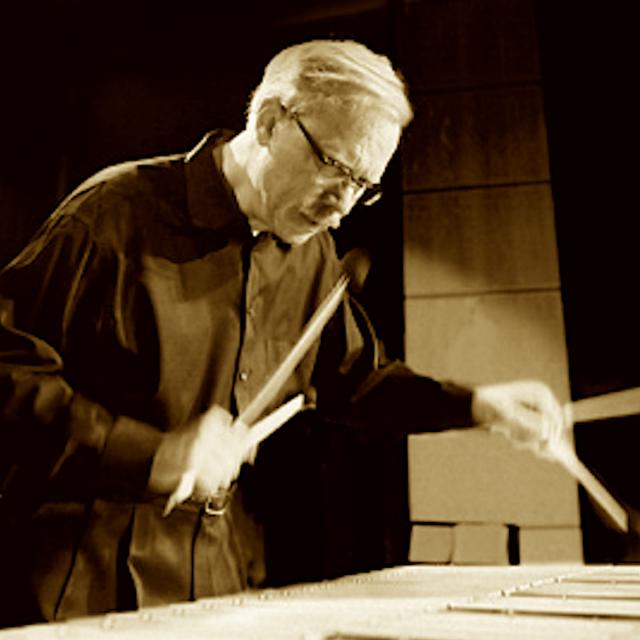
Learn the basic concepts of improvisation from Gary Burton, one of the most renowned improvisers in the jazz world, including the mental, melodic, and harmonic processes that contribute to the instinctive skills that an improviser puts to use when taking a solo. While many people are fans of jazz and understand that musicians are often “making up” the notes they are playing during a performance, most people—often including musicians, themselves, who are beginning to learn improvising—aren’t clear about what exact processes take place to enable this to happen. The purpose of this course is to introduce the basic concepts of modern improvisation and how to go about mastering the different musical and mental skills involved.

Nov 30th 2026
5-12 Weeks
Produção final do músico moderno (Coursera) Coursera
Berklee College of Music

Produção final do músico moderno (Coursera)

A indústria musical está passando por enormes mudanças e, por causa disso, os músicos precisam cada vez mais de habilidades em várias e diferentes áreas para ter sucesso. O objetivo da Especialização do Músico Moderno é oferecer aos alunos noções básicas sobre teoria e produção musical e composição e disponibilizar as ferramentas necessárias para escrever e produzir canções originais.

Nov 30th 2026
4 Weeks
Sharpened Visions: A Poetry Workshop (Coursera) Coursera
California Institute of the Arts

Sharpened Visions: A Poetry Workshop (Coursera)

Why just write poems when you can write better ones? This course is built on the notion that the most exciting writing begins after the first draft. It is specifically for folks who believe that writing poems just to express oneself is like using the Internet just for email. After all, poetry can change the way you and your readers think of the world and its inhabitants; it can break new ground for language; turn a blank sheet of paper into a teeming concert of voices and music.

Nov 23rd 2026
5-12 Weeks
Fundamentals of Audio and Music Engineering: Part 1 Musical Sound & Electronics (Coursera) Coursera
University of Rochester

Fundamentals of Audio and Music Engineering: Part 1 Musical Sound & Electronics (Coursera)

In this course students learn the basic concepts of acoustics and electronics and how they can applied to understand musical sound and make music with electronic instruments. Topics include: sound waves, musical sound, basic electronics, and applications of these basic principles in amplifiers and speaker design.

Nov 23rd 2026
5-12 Weeks
Words Spun Out of Images: Visual and Literary Culture in Nineteenth Century Japan (Coursera) Coursera
The University of Tokyo

Words Spun Out of Images: Visual and Literary Culture in Nineteenth Century Japan (Coursera)

In their ambition to capture “real life,” Japanese painters, poets, novelists and photographers of the nineteenth century collaborated in ways seldom explored by their European contemporaries. This course offers learners the chance to encounter and appreciate behavior, moral standards and some of the material conditions surrounding Japanese artists in the nineteenth century, in order to renew our assumptions about what artistic “realism” is and what it meant.

Nov 30th 2026
4 Weeks
Improvisación de jazz (Coursera) Coursera
Berklee College of Music

Improvisación de jazz (Coursera)

Aprenda los conceptos básicos de la improvisación con Gary Burton, uno de los improvisadores más reconocidos en el mundo del jazz, incluidos los procesos mentales, melódicos y armónicos que contribuyen a las habilidades instintivas que aplica un improvisador cuando realiza un solo.

Nov 30th 2026
5-12 Weeks
Exploring Beethoven's Piano Sonatas Part 4 (Coursera) Coursera
Curtis Institute of Music

Exploring Beethoven's Piano Sonatas Part 4 (Coursera)

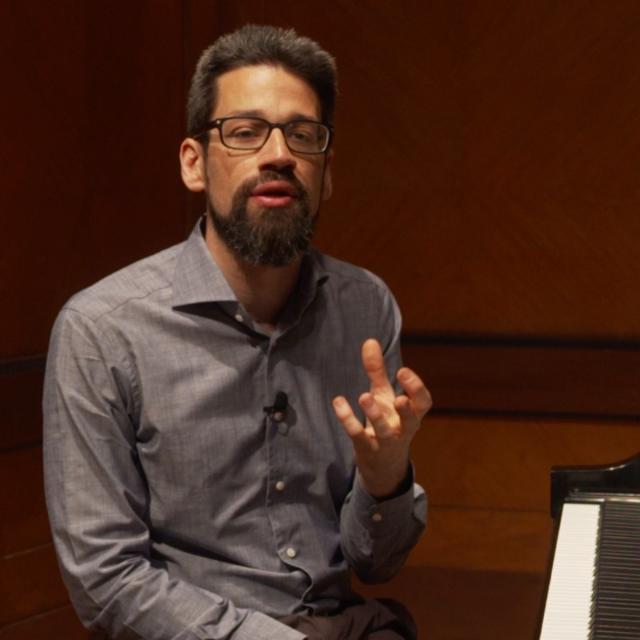
Please join us for Part 4 of Exploring Beethoven's Piano Sonatas course, taught by Curtis faculty member and extraordinary concert artist, Jonathan Biss. This course is new and contains separate sets of lectures and sonatas that we not previously discussed. Specifically, in Part 4, we will cover Beethoven's Piano Sonatas Op. 2, No. 2, Op. 10, No. 3, Op. 28 and Op. 110.

Dec 4th 2026
5-12 Weeks
The Cycle: Management of Successful Arts and Cultural Organizations (Coursera) Coursera
University of Maryland, College Park

The Cycle: Management of Successful Arts and Cultural Organizations (Coursera)

What makes a successful arts and cultural organization? Led by DeVos Institute Chairman Michael M. Kaiser and President Brett Egan, this course will introduce you to a management theory called the Cycle which supports thriving arts and cultural organizations. Learning from our work with managers from over 80 countries around the world, the DeVos Institute developed the Cycle as a simple, but powerful tool to assist managers in their effort to respond to an increasingly complex environment and propel their institutions to excellence.

Nov 30th 2026
5-12 Weeks
Fundamentals of Music Theory (Coursera) Coursera
University of Edinburgh

Fundamentals of Music Theory (Coursera)

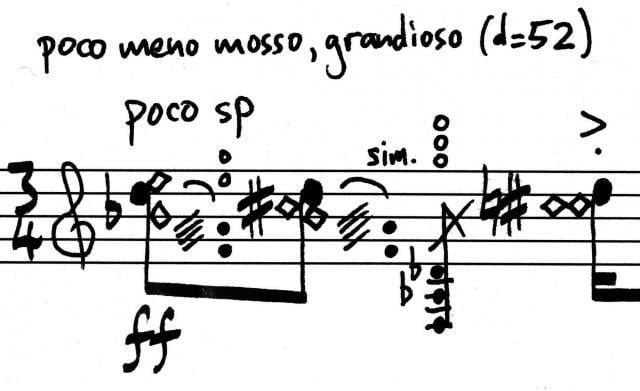
This course will introduce students to the theory of music, providing them with the skills needed to read and write Western music notation, as well as to understand, analyse, and listen informedly. It will cover material such as pitEli Appleby-Donaldches and scales, intervals, clefs, rhythm, form, meter, phrases and cadences, and basic harmony.

Nov 23rd 2026
5-12 Weeks
Music and Social Action (Coursera) Coursera
Yale University

Music and Social Action (Coursera)

What is a musician’s response to the condition of the world? Do musicians have an obligation and an opportunity to serve the needs of the world with their musicianship? At a time of crisis for the classical music profession, with a changing commercial landscape, a shrinking audience base, and a contraction in the number of professional orchestras, how does a young musician construct a career today? Are we looking at a dying art form or a moment of reinvigoration?

Nov 30th 2026
5-12 Weeks