Simulation and modeling of natural processes (Coursera)

Offered by University of Geneva,
Simulation and modeling of natural processes (Coursera)

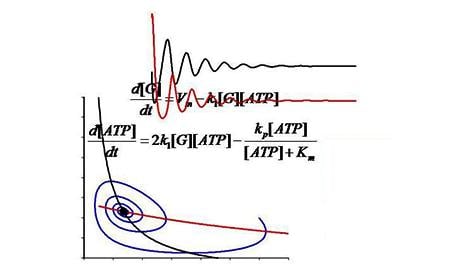
This course gives you an introduction to modeling methods and simulation tools for a wide range of natural phenomena. The different methodologies that will be presented here can be applied to very wide range of topics such as fluid motion, stellar dynamics, population evolution, ...

Class Deals by MOOC List - Click here and see Coursera's Active Discounts, Deals, and Promo Codes.

This course does not intend to go deeply into any numerical method or process and does not provide any recipe for the resolution of a particular problem.
It is rather a basic guideline towards different methodologies that can be applied to solve any kind of problem and help you pick the one best suited for you.
The assignments of this course will be made as practical as possible in order to allow you to actually create from scratch short programs that will solve simple problems. Although programming will be used extensively in this course we do not require any advanced programming experience in order to complete it.

Syllabus

WEEK 1
Introduction and general concepts
This module gives an overview of the course and presents the general ideas about modeling and simulation. An emphasis is given on ways to represent space and time from a conceptual point of view. An insight of modeling of complex systems is given with the simulation of the grothw and thrombosis of giant aneurysms. Finally, a first class of modeling approaches is presented: the Monte-Carlo methods.

WEEK 2
Introduction to programming with Python 3
This module intends to provide the most basic concepts of high performance computing used for modeling purposes. It also aims at teaching the basics of Python 3 which will be the programming language used for the quizzes in this course.

WEEK 3
Dynamical systems and numerical integration
Dynamical systems modeling is the principal method developed to study time-space dependent problems. It aims at translating a natural phenomenon into a mathematical set of equations. Once this basic step is performed the principal obstacle is the actual resolution of the obtained mathematical problem. Usually these equations do not possess an analytical solution and advanced numerical methods must be applied to solve them. In this module you will learn the basics of how to write mathematical equations representing natural phenomena and then how to numerically solve them.

WEEK 4
Cellular Automata
This module defines the concept of cellular automata by outlining the basic building blocks of this method. Then an insight of how to apply this technique to natural phenomena is given. Finally the lattice gas automata, a subclass of models used for fluid flows, is presented.

WEEK 5
Lattice Boltzmann modeling of fluid flow
This module provides an introduction to the lattice Boltzmann method, a powerful tool in computational fluid dynamics. The lesson is practice oriented and show, step by step, how to write a program for the lattice Boltzmann method. The program is used to showcase an interesting problem in fluid dynamics, the simulation of a vortex street behind an obstacle.

WEEK 6
Particles and point-like objects
A short review of classical mechanics, and of numerical methods used to integrate the equations of motions for many interacting particles is presented. The student will learn that the computational expense of resolving all interaction between particles poses a major obstacle to simulating such a system. Specific algorithms are presented to allow to cut down on computational expense, both for short-range and large-range forces. The module focuses in detail on the Barnes-Hut algorithm, a tree algorithm which is popular a popular approach to solve the N-Body problem.

WEEK 7
Introduction to Discrete Events Simulation
In this module, we will see an alternative approach to model systems which display a trivial behaviour most of the time, but which may change significantly under a sequence of discrete events. Initially developed to simulate queue theory systems (such as consumer waiting queue), the Discrete Event approach has been apply to a large variety of problems, such as traffic intersection modeling or volcanic hazard predictions.

WEEK 8
Agent based models
Agent Based Models (ABM) are used to model a complex system by decomposing it in small entities (agents) and by focusing on the relations between agents and with the environment. This approach is derived from artificial intelligence research and is currently used to model various systems such as pedestrian behaviour, social insects, biological cells, etc.

Go to Class
MOOC List is learner-supported. When you buy through links on our site, we may earn an affiliate commission.

Related Courses

Digitalisation in Aeronautics (Coursera) Coursera
Technische Universität München - TUM

Digitalisation in Aeronautics (Coursera)

The instructors of the online course "Digitalisation in Aeronautics" present a spectrum of different aviation research and application areas, exploring the impact of digitalisation in this specific field, including the effects of digitalisation in simulating the interaction of aircraft components, in overall aircraft development and related decision-making and in the communication channels used within aircraft. A broad and varied range of applications and digital solutions are explored in detail in the individual modules of this course.

Jul 27th 2026
4 Weeks
Design of Transmission Line: Modelling and Performance (Coursera) Coursera
L&T EduTech

Design of Transmission Line: Modelling and Performance (Coursera)

This course is designed to provide a detailed exploration of the critical elements involved in transmission lines' design, modeling, and performance assessment. By enrolling in this course, participants will not only gain theoretical knowledge but also practical skills that are directly applicable in the field of transmission line engineering. Whether you're a student aspiring to enter the industry or a professional seeking to deepen your expertise, this course offers a unique blend of theoretical insights and hands-on applications, equipping you with the tools to excel in this dynamic field.

Aug 10th 2026
3 Weeks
Mécanique Lagrangienne (Coursera) Coursera
École Polytechnique Fédérale de Lausanne

Mécanique Lagrangienne (Coursera)

Le formalisme de Lagrange permet une résolution efficace de problèmes complexes de mécanique. Il permet aussi d'apporter un éclairage plus fondamental sur les lois de conservation (théorème de Noether). A titre d'illustration de la méthode de Lagrange, on traitera le problème très important des oscillateurs harmoniques couplés, exprimé comme un problème de valeurs propres et de vecteurs propres. On termine avec un formalisme permettant d'analyser les résonances paramétriques, notion illustrée par l'expérience montrant la stabilité d'un pendule inversé forcé.

Aug 10th 2026
5-12 Weeks
Mastering Statics (Coursera) Coursera
The Hong Kong University of Science and Technology - HKUST

Mastering Statics (Coursera)

Statics is the most fundamental course in Mechanics. In this course, you will learn the conditions under which an object or a structure subjected to time-invariant (static) forces is in equilibrium - i.e. the conditions under which it remains stationary or moves with a constant velocity-. You will also learn how to calculate the reaction forces as well as the internal forces experienced throughout the structure so that later you can properly design and size the foundation and the members of the structure to assure the structure’s safety and serviceability.

Aug 10th 2026
5-12 Weeks
Global Warming I: The Science and Modeling of Climate Change (Coursera) Coursera
University of Chicago

Global Warming I: The Science and Modeling of Climate Change (Coursera)

This class describes the science of global warming and the forecast for humans’ impact on Earth’s climate. Intended for an audience without much scientific background but a healthy sense of curiosity, the class brings together insights and perspectives from physics, chemistry, biology, earth and atmospheric sciences, and even some economics—all based on a foundation of simple mathematics (algebra).

Jul 27th 2026
5-12 Weeks
The Analyze Phase for the 6 σ Black Belt (Coursera) Coursera
University System of Georgia

The Analyze Phase for the 6 σ Black Belt (Coursera)

This course is designed for professionals interested in learning the principles of Lean Sigma, the DMAIC process and DFSS. This course is number 5 of 8 in this specialization dealing with topics in the Analyze Phase of Six Sigma. Professionals with some completed coursework in statistics and a desire to drive continuous improvement within their organizations would find this course and the others in this specialization appealing. Method of assessment consists of several formative and summative quizzes and a multi-part peer reviewed project completion regiment.

Jul 27th 2026
5-12 Weeks
Introduction to Complexity Science (Coursera) Coursera
National University of Singapore

Introduction to Complexity Science (Coursera)

This course explores the features of complexity science. Our world is connected by an abundance of complex systems. Across all levels of organizations from physical, biological world to the social world, we may think of the connectivity between individual elements and how they interact and influence each other. For example, how humans transmit pandemics within a group, how cars interact in the traffic system and how networks connect in governmental organizations. Although these systems are diverse and different, they have surprisingly huge features in common.

Aug 10th 2026
5-12 Weeks
Quantitative Formal Modeling and Worst-Case Performance Analysis (Coursera) Coursera
EIT Digital

Quantitative Formal Modeling and Worst-Case Performance Analysis (Coursera)

Welcome to Quantitative Formal Modeling and Worst-Case Performance Analysis. In this course, you will learn about modeling and solving performance problems in a fashion popular in theoretical computer science, and generally train your abstract thinking skills. After finishing this course, you have learned to think about the behavior of systems in terms of token production and consumption, and you are able to formalize this thinking mathematically in terms of prefix orders and counting functions. You have learned about Petri-nets, about timing, and about scheduling of token consumption/production systems, and for the special class of Petri-nets known as single-rate dataflow graphs, you will know how to perform a worst-case analysis of basic performance metrics, like throughput, latency and buffering.

Jul 27th 2026
4 Weeks
Python Functions, Files, and Dictionaries (Coursera) Coursera
University of Michigan

Python Functions, Files, and Dictionaries (Coursera)

This course introduces the dictionary data structure and user-defined functions. You’ll learn about local and global variables, optional and keyword parameter-passing, named functions and lambda expressions. You’ll also learn about Python’s sorted function and how to control the order in which it sorts by passing in another function as an input.

Jul 27th 2026
5-12 Weeks
Healthy Urban systems Part 2 : Theories, models and tools (Coursera) Coursera
University of Lausanne

Healthy Urban systems Part 2 : Theories, models and tools (Coursera)

This MOOC is the second part (out of three parts) of the whole MOOC on Healthy Urban Systems. These PART II is very recommended (but not obliged) to take after the PART I and before the PART III. Once you understood the main concepts and visions of Urban Health, and the best practices of observation in PART I, you are ready to think about theories and to practice models for this PART II.

Jul 27th 2026
4 Weeks
Dynamical Modeling Methods for Systems Biology (Coursera) Coursera
Icahn School of Medicine at Mount Sinai

Dynamical Modeling Methods for Systems Biology (Coursera)

An introduction to dynamical modeling techniques used in contemporary Systems Biology research. We take a case-based approach to teach contemporary mathematical modeling techniques. The course is appropriate for advanced undergraduates and beginning graduate students. Lectures provide biological background and describe the development of both classical mathematical models and more recent representations of biological processes. The course will be useful for students who plan to use experimental techniques as their approach in the laboratory and employ computational modeling as a tool to draw deeper understanding of experiments.

Aug 10th 2026
5-12 Weeks
Mécanique de Newton (Coursera) Coursera
École Polytechnique Fédérale de Lausanne

Mécanique de Newton (Coursera)

À l’École Polytechnique Fédérale de Lausanne, un cours de mécanique fait partie de la formation de tous les futurs ingénieurs et scientifiques. Il a pour but de leur apprendre à transcrire sous forme mathématique un phénomène physique, afin de pouvoir en formuler une analyse raisonnée. Cette partie couvrira notamment la cinématique du point matériel, la balistique dans le champ de la pesanteur et l’oscillateur harmonique.

Aug 10th 2026
5-12 Weeks