Shale Gas and Fracking: the Politics and Science (FutureLearn)

Shale Gas and Fracking: the Politics and Science (FutureLearn)

Hear from all sides of the fracking debate with this free online course. Understand what shale gas is and why it divides opinion.

Class Deals by MOOC List - Click here and see FutureLearn's Active Discounts, Deals, and Promo Codes.

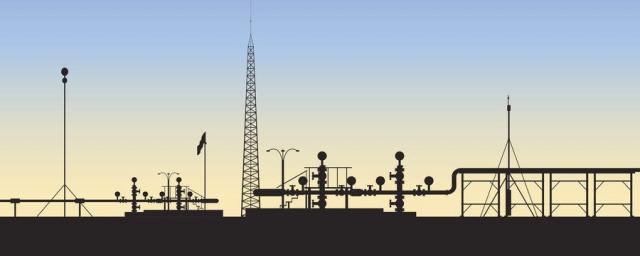
Shale gas is seen by many as a cheap, clean and plentiful source of energy; a low-carbon ‘game changer’ helping us meet the world’s rapidly growing demands for energy and offering greater energy security. Its rapid rise has not been without controversy, however. Earth tremors, surface and groundwater contamination, and the effects of fracking on human and animal health are all high profile concerns.

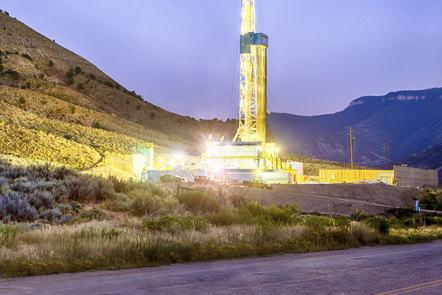
During this four-week course, we’ll study the politics, economics, and science of shale gas. We’ll examine how shale gas was formed, and how we extract it through hydraulic fracturing, or ‘fracking’. We will look at the impact of shale gas on energy markets and energy security.
We then move on to the environmental politics of shale. What are the local effects in terms of water contamination, seismic activity, and air pollution? What are the global effects? Does shale gas offer a ‘bridge’ to a low-carbon future, or would we be walking the plank?
Finally we look at the question of what the public thinks, an area where the University of Nottingham has particular expertise, having run a public opinion survey on shale gas since 2012. Why are the US and UK experiences so different? What do the public think of allowing unconventional gas to be developed?
At the end of the course you will have improved you understanding of the costs and benefits of shale gas, and you will have made your contribution to the public debate on this important topic.
Go to Class
MOOC List is learner-supported. When you buy through links on our site, we may earn an affiliate commission.

Related Courses

Thermodynamics in Energy Engineering (FutureLearn) FutureLearn
Hanyang University

Thermodynamics in Energy Engineering (FutureLearn)

Understand the basic thermodynamic principles widely used in many engineering fields: temperature, free energy and entropy. This free online course introduces the basic thermodynamic principles that are widely used in many engineering fields. It will prepare you for degree-level study, by helping you understand and apply thermodynamic fundamentals through real-world, problem-solving exercises.

No sessions available
5-12 Weeks
Photovoltaic solar energy (Coursera) Coursera
École Polytechnique

Photovoltaic solar energy (Coursera)

The course is an introduction to the photovoltaic (PV) applications in the general mix energetic context dominated by climate warming mitigation. The various uses of solar energy are firstly presented before a short description of the principle of the direct solar photon conversion into electricity (PV). The various PV technologies are reviewed in the current context dominated by crystalline silicon cells. The perspectives of the various technologies are then analysed in terms of R&D investments.

Aug 3rd 2026
3 Weeks
Comprendre l'écologie, pour une économie innovante (Coursera) Coursera
ESCP Europe

Comprendre l'écologie, pour une économie innovante (Coursera)

Conçu conjointement par le think-tank Ecolo-Ethik et ESCP Europe, ce MOOC se propose de vous aider à dépasser les idées reçues sur l’écologie, dans le souci d’une démarche ouverte et multiple. A ce titre, de grands experts reconnus interviendront pour illustrer, approfondir et enrichir les différentes thématiques.

Aug 3rd 2026
5-12 Weeks
Introduction to Thermodynamics (FutureLearn) FutureLearn
University of Hull

Introduction to Thermodynamics (FutureLearn)

Discover the laws of thermodynamics as you learn how to calculate chemical properties and predict chemical reactions. Get an introduction to thermodynamic properties and systems. Curious about thermodynamics or thinking about studying it at university? This short course from the University of Hull offers a short introduction to the fundamentals of thermodynamics – the branch of physics that deals with heat and its relation to energy.

Available now
3 Weeks
Marchés du Carbone : Examen des Politiques de l’UE pour l’Action Climatique Transnationale (FutureLearn) FutureLearn
European University Institute - EUI

Marchés du Carbone : Examen des Politiques de l’UE pour l’Action Climatique Transnationale (FutureLearn)

Explorez les politiques actuelles créées par l'UE, et évaluez leurs efficacités dans la promotion de l'action climatique mondiale. Comprendre et évaluer les mesures prises pour créer un cadre de politique climat. Alors que l’impact du changement climatique continue d’affecter notre planète, il est impératif que notre communauté mondiale se batte pour réduire ses émissions. Cependant, de nombreuses sociétés transnationales et États n’ont pas fait de changement pour réduire leur impact négatif sur la planète.

Apr 25th 2022
5-12 Weeks
New Energy Technologies: Energy Transition and Sustainable Development (FutureLearn) FutureLearn
Grenoble Ecole de Management

New Energy Technologies: Energy Transition and Sustainable Development (FutureLearn)

Explore the development of new energy technologies and discover key energy challenges with this online course. In a world facing pressing energy challenges, the need for alternative energy and new energy technologies has never been more pressing. This course explores the new and upcoming technologies that may help solve some of the world’s biggest energy challenges - examining them from both a business and technological perspective.

Self Paced
4 Weeks
Energy Harvesting (Coursera) Coursera
Sungkyunkwan University - SKKU

Energy Harvesting (Coursera)

Joining this course presents opportunity to learn about energy harvesting that refers to a technology that converts the energy discarded in our daily lives into useful electrical energy that we can use. As we all know, most of low-power electronics, such as remote sensors, are driven by batteries. However, even when it comes to long-lasting batteries, they face an issue that is a regular replacement. It can turn out to be costly as there are hundreds of sensors in remote locations.

Aug 10th 2026
4 Weeks
Carbon Markets: Examining EU Policies for Transnational Climate Action (FutureLearn) FutureLearn
European University Institute - EUI

Carbon Markets: Examining EU Policies for Transnational Climate Action (FutureLearn)

Explore the current policies being created by the EU and assess their efficacy in promoting global climate action. Understand and evaluate the steps taken to create a climate policy framework. As the impact of climate change continues to affect our planet, it’s imperative that our global community fights to reduce their emissions and live sustainably.

Feb 28th 2022
5-12 Weeks
Understanding Biological Energy (FutureLearn) FutureLearn
Royal Holloway, University of London

Understanding Biological Energy (FutureLearn)

Get an introduction to energy and explore how humans and other living things obtain and use their biological energy sources. Discover applications of biological energy, from human energy to photosynthesis. On this course, you’ll learn what energy actually is and how living things acquire and convert it.

Self Paced
4 Weeks
Politics and Economics of International Energy (Coursera) Coursera
Sciences Po

Politics and Economics of International Energy (Coursera)

Energy issues have always been important in international relations, but in recent years may have become even more important than in the past due to the widespread awareness of existing limits to energy sources and negative climate impacts. The course discusses global trends in energy consumption and production, various available scenarios for potential developments in the coming decades, the availability of oil reserves and the evolution of the oil industry.

Aug 10th 2026
5-12 Weeks
From the Big Bang to Dark Energy (Coursera) Coursera
The University of Tokyo

From the Big Bang to Dark Energy (Coursera)

We have learned a lot recently about how the Universe evolved in 13.7 billion years since the Big Bang. More than 80% of matter in the Universe is mysterious Dark Matter, which made stars and galaxies to form. The newly discovered Higgs-boson became frozen into the Universe a trillionth of a second after the Big Bang and brought order to the Universe.

Aug 10th 2026
4 Weeks