RESEARCH METHODOLOGIES-Systematic Literature Review (UPV)

RESEARCH METHODOLOGIES-Systematic Literature Review (UPV)

The course is offered in standalone mode or self-paced. This means that will be open continuously so you can do it at your own pace. On the other hand teachers participate somewhat less monitoring post, still you have support on their part but it may take more to answer your questions.

Learning Outcomes:
Create and follow a protocol for literature review. (Both in the case of writing a theoretical framework or a systematic review)

PREREQUISITES
Basic English skills for searching in scientific databases.
Course documentation is mainly in English. (Video transcripts are available in English and Spanish but audio recordings are in Spanish)
It is recommended to have access to SCOPUS or Web of Knowledge subscription through their schools or workcenters or personal subscription (this course does not create a subscription to these services for students) otherwise you can only use Google Scholar. It is also necessary that students open an account with Mendeley (at least in the free version) and the desktop application will be installed.

Go to Class
MOOC List is learner-supported. When you buy through links on our site, we may earn an affiliate commission.

Related Courses

Get Interactive: Practical Teaching with Technology (Coursera) Coursera
University of London,Bloomsbury Learning Environment

Get Interactive: Practical Teaching with Technology (Coursera)

This course is designed to help you create dynamic, interactive online courses through the use of multimedia tools, student collaboration opportunities, and formative assessment and feedback. Each week we will focus on a particular topic: Using multimedia for teaching and learning; Encouraging student collaboration; Formative assessment and feedback.

Aug 9th 2026
3 Weeks
Aboriginal Worldviews and Education (Coursera) Coursera
University of Toronto

Aboriginal Worldviews and Education (Coursera)

Intended for both Aboriginal and non-Aboriginal learners, this course will explore indigenous ways of knowing and how they can benefit all students. Topics include historical, social, and political issues in Aboriginal education; terminology; cultural, spiritual and philosophical themes in Aboriginal worldviews; and how Aboriginal worldviews can inform professional programs and practices, including but not limited to the field of education.

Aug 10th 2026
5-12 Weeks
Inclusive Online Teaching Teach-Out (Coursera) Coursera
Johns Hopkins University

Inclusive Online Teaching Teach-Out (Coursera)

In this course, higher education faculty will examine students’ barriers to learning, including unconscious bias, physical impairments, and lack of motivation. Participants will explore and discuss how inclusive pedagogy and Universal Design for Learning (UDL) can help to address those barriers and improve student learning outcomes.

Aug 10th 2026
2 Weeks
Critical Thinking Skills for University Success (Coursera) Coursera
The University of Sydney

Critical Thinking Skills for University Success (Coursera)

In this course, you will learn how to develop your Critical Thinking Skills to help you achieve success in your university studies. After completing this course, you will be able to: 1. Use critical thinking and argumentation in university contexts to improve academic results ; 2. Understand the importance and function of critical thinking in academic culture ; 3. Use a variety of thinking tools to improve critical thinking ; 4. Identify types of argument, and bias within arguments, in order to better evaluate the strength of arguments; 5. Use evidence to support claims in arguments ; 6. Apply critical thinking and argumentation to real world problems and issues

Aug 10th 2026
5-12 Weeks
ICT in Primary Education: Transforming children's learning across the curriculum (Coursera) Coursera
University of London

ICT in Primary Education: Transforming children's learning across the curriculum (Coursera)

Why and how are teachers integrating ICT (Information and Communication Technology) into primary education? In this course we analyse examples from schools in different parts of the world, and bring professional teachers, headteachers and policymakers together to share their best ideas and inspiring stories. The materials in the course are based on studies carried out for the UNESCO Institute of IT in Education, Moscow.

Aug 10th 2026
5-12 Weeks
ADHD: Everyday Strategies for Elementary Students (Coursera) Coursera
University at Buffalo,The State University of New York

ADHD: Everyday Strategies for Elementary Students (Coursera)

This course will provide an overview of ADHD diagnosis and treatment. Course participants can expect to learn about ADHD as a developmental disorder that begins early in childhood, and participants will also learn about evidence-based approaches for diagnosing ADHD. Following that, two evidence-based treatment approaches (the Daily Report Card and Parenting Strategies) will be introduced. (Note these course activities are informational and are not intended to replace working with a licensed/trained professional).

Aug 3rd 2026
4 Weeks
Overcoming Dyslexia (Coursera) Coursera
Yale University

Overcoming Dyslexia (Coursera)

Dyslexia is everywhere, touching so many children and adults, and while science has made extraordinary progress in understanding and clarifying the condition, this incredible powerful knowledge rarely reaches those who most need to know and would greatly benefit from it. Our goal is to change all this with the Coursera you are about to view, produced by Dr. Sally Shaywitz, the Audrey G. Ratner Professor in Learning Development, both the leading scientist studying dyslexia and the most devoted advocate for helping those who are dyslexic.

Aug 8th 2026
5-12 Weeks
Diversity and Inclusion in Education (Coursera) Coursera
University of Glasgow

Diversity and Inclusion in Education (Coursera)

Student diversity is becoming the rule rather than the exception in education systems across the world. Students bring to classroom different characteristics such as ability and disability, socio-economic background, race, ethnicity, and cultural background, beliefs and religion, and gender characteristics. The United Nations’ Sustainable Development Goal 4 aims to ensure inclusive and equitable quality education and promote lifelong learning opportunities for all (United Nations, 2015).

Aug 10th 2026
4 Weeks
社会调查与研究方法 (上)Methodologies in Social Research (Part I) (Coursera) Coursera
Peking University

社会调查与研究方法 (上)Methodologies in Social Research (Part I) (Coursera)

社会调查与研究方法,首先,是一套观察社会现象、测量社会现象的工具;其次,是一套分析和运用社会现象数据的科学方法;最高境界,则是一套针对社会、经济、教育、政治、法律、管理、公共卫生、新闻报道等人类的生产与生活现象,进行科学沟通的思维逻辑与表达方式。

Aug 10th 2026
5-12 Weeks
Social Norms, Social Change I (Coursera) Coursera
University of Pennsylvania

Social Norms, Social Change I (Coursera)

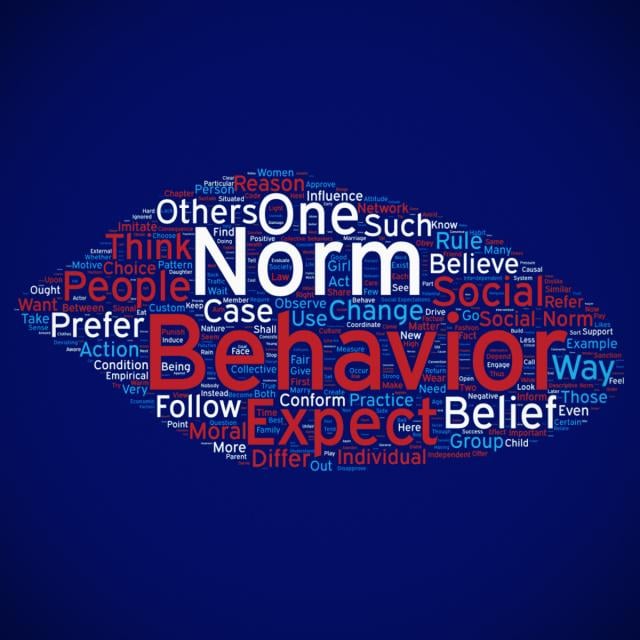
This is a course on social norms, the rules that glue societies together. It teaches how to diagnose social norms, and how to distinguish them from other social constructs, like customs or conventions. These distinctions are crucial for effective policy interventions aimed to create new, beneficial norms or eliminate harmful ones. The course teaches how to measure social norms and the expectations that support them, and how to decide whether they cause specific behaviors.

Aug 3rd 2026
4 Weeks