Razonamiento artificial (Coursera)

Razonamiento artificial (Coursera)

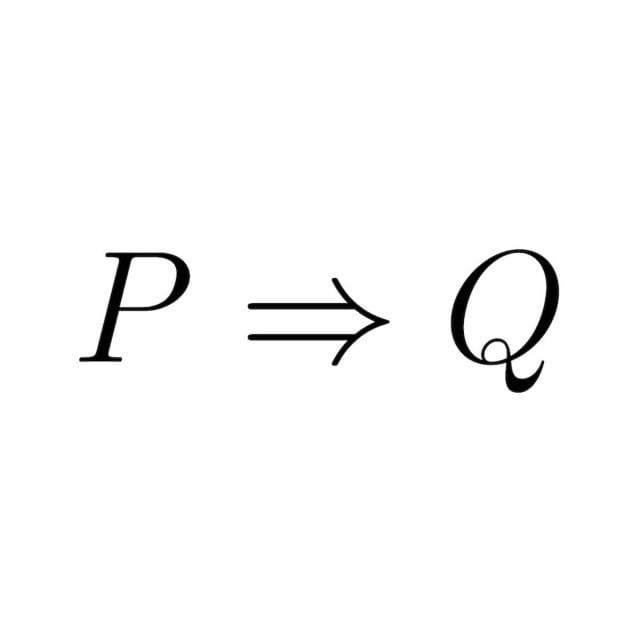
El razonamiento formal juega un papel importante en la inteligencia artificial. Hay dos maneras principales de formalizar razonamiento: una que enfatiza la deducción (lógica), y otra que enfatiza la incertidumbre (teoría de la probabilidad). En este curso vamos a cubrir una introducción tanto a la lógica (vamos a cubrir tres lógicas) como a la teoría de la probabilidad (vamos a cubrir tres modelos gráficos probabilísticos).

Class Deals by MOOC List - Click here and see Coursera's Active Discounts, Deals, and Promo Codes.

Course 2 of 9 in the Introducción a la inteligencia artificial Specialization.

Syllabus

WEEK 1
Lógica proposicional
En este módulo de razonamiento lógico podrás familiarizarte con la lógica proposicional. Verás una primera manera de formalizar razonamiento y los problemas NP-completos, que son arquetípicos en inteligencia artificial.

WEEK 2
Lógica proposicional parte 2
En este módulo de razonamiento lógico podrás familiarizarte con la lógica proposicional. Verás una primera manera de formalizar razonamiento y los problemas NP-completos, que son arquetípicos en inteligencia artificial.

WEEK 3
Lógica temporal y Lógica de predicados
En este módulo de razonamiento lógico podrás familiarizarte con la lógica temporal para entender los conceptos básicos de los "verificadores de modelos" y con la lógica de predicados para sentar las bases de varias técnicas de inteligencia artificial.

WEEK 4
Teoría de la probabilidad
En este módulo de razonamiento probabilístico estarás familiarizado con dos modelos gráficos probabilísticos: las redes bayesianas y las cadenas de Markov.

WEEK 5
Teoría de la probabilidad (parte 2)
En este módulo de razonamiento probabilístico estarás familiarizado con un modelo gráfico probabilístico: los procesos de decisión de Markov.


WEEK 6
Teoría de la probabilidad (parte 3)
En este módulo de razonamiento probabilístico estarás familiarizado con un modelo gráfico probabilístico: los procesos de decisión de Markov.

Go to Class
MOOC List is learner-supported. When you buy through links on our site, we may earn an affiliate commission.

Related Courses

Machine Learning Rapid Prototyping with IBM Watson Studio (Coursera) Coursera
IBM

Machine Learning Rapid Prototyping with IBM Watson Studio (Coursera)

An emerging trend in AI is the availability of technologies in which automation is used to select a best-fit model, perform feature engineering and improve model performance via hyperparameter optimization. This automation will provide rapid-prototyping of models and allow the Data Scientist to focus their efforts on applying domain knowledge to fine-tune models. This course will take the learner through the creation of an end-to-end automated pipeline built by Watson Studio’s AutoAI experiment tool, explaining the underlying technology at work as developed by IBM Research.

Aug 17th 2026
4 Weeks
An Introduction to Logic for Computer Science (Coursera) Coursera
University of Leeds

An Introduction to Logic for Computer Science (Coursera)

Logic plays a fundamental role in computer science. This course is designed to equip you with a solid understanding of the fundamental principles of logic and their relevance in the field of computer science. In this course, you'll explore proposition logic and discover its practical applications in problem-solving, algorithm design, and the development of intelligent systems. By engaging in hands-on exercises, exploring real-world examples, and participating in discussions, you'll develop strong logical reasoning and critical thinking skills.

Aug 24th 2026
2 Weeks
Introduction to TensorFlow for Artificial Intelligence, Machine Learning, and Deep Learning (Coursera) Coursera
DeepLearning.AI

Introduction to TensorFlow for Artificial Intelligence, Machine Learning, and Deep Learning (Coursera)

If you are a software developer who wants to build scalable AI-powered algorithms, you need to understand how to use the tools to build them. This course is part of the upcoming Machine Learning in Tensorflow Specialization and will teach you best practices for using TensorFlow, a popular open-source framework for machine learning.

Aug 17th 2026
4 Weeks
Developing AI Applications on Azure (Coursera) Coursera
LearnQuest

Developing AI Applications on Azure (Coursera)

This course introduces the concepts of Artificial Intelligence and Machine learning. We'll discuss machine learning types and tasks, and machine learning algorithms. You'll explore Python as a popular programming language for machine learning solutions, including using some scientific ecosystem packages which will help you implement machine learning.

Aug 24th 2026
5-12 Weeks
Exam Prep AI-102: Microsoft Azure AI Engineer Associate (Coursera) Coursera
Whizlabs

Exam Prep AI-102: Microsoft Azure AI Engineer Associate (Coursera)

The AI-102: Designing and Implementing a Microsoft Azure AI Solution certification exam tests the candidate’s experience and knowledge of the AI solutions that make the most of Azure Cognitive Services and Azure services. In addition, the exam also tests the candidate's ability to implement this knowledge by participating in all phases of AI solutions development—from defining requirements, and design to development, deployment, integration, maintenance, performance tuning, and monitoring.

Aug 24th 2026
5-12 Weeks
Introduction to Digital Transformation (Coursera) Coursera
Siemens

Introduction to Digital Transformation (Coursera)

This course is primarily for professionals, college students, and advanced high school students who are interested in driving the digital transformation by integrating automation, software, and cutting-edge technologies. This course represents a foundational introduction to Digital Transformation, appropriate for learners with a basic familiarity with common business terms and concepts and an interest in digital technology.

Aug 24th 2026
5-12 Weeks
Exploring AI Possibilities (Coursera) Coursera
Fred Hutchinson Cancer Center

Exploring AI Possibilities (Coursera)

This course on Exploring AI Possibilities for Decision Makers explores the growing use of AI across disciplines and its potential benefits and challenges. The course covers necessary context, such as discussing what AI is, how it works, and key definitions in AI. Through exploring the many AI possibilities at your fingertips, you will build leadership skills for helping your business or community work more efficiently, creatively, and ethically.

Aug 24th 2026
1 Week
Business Considerations for 5G with Edge, IoT, and AI (Coursera) Coursera
EDUCBA

Business Considerations for 5G with Edge, IoT, and AI (Coursera)

By completing this course, learners will be equipped with the knowledge and skills necessary to navigate the complex landscape of 5G technology and its intersection with edge computing, IoT, and AI. They will gain a comprehensive understanding of how these technologies converge to drive business innovation and success in the digital age. Real-world case studies and practical insights will enable participants to apply their learning directly to their organizations, fostering a competitive advantage in the rapidly evolving marketplace.

Aug 24th 2026
2 Weeks
AI-Driven Attribution Testing (Coursera) Coursera
Board Infinity

AI-Driven Attribution Testing (Coursera)

Welcome to AI-Driven Attribution Testing course an engaging and comprehensive course designed to guide you through the fundamental concepts and practical applications of attribution testing powered by artificial intelligence. This course is most suitable for marketers, data analysts, data scientists, and business leaders who aim to leverage data-driven insights for decision-making. It's also beneficial for students and professionals with a keen interest in the convergence of AI, data analysis, and marketing.

Aug 24th 2026
2 Weeks
Inteligência Artificial para Logística (Coursera) Coursera
FIA Business School

Inteligência Artificial para Logística (Coursera)

Nossas boas-vindas ao Curso Inteligência Artificial para Logística. Neste curso, você aprenderá sobre os processos de planejamento logístico, seu escopo de atuação e sua integração com as demais áreas da empresa, e como as novas tecnologias de inteligência artificial e internet das coisas podem ampliar a eficiência e a geração de valor para a empresa.

Aug 17th 2026
4 Weeks