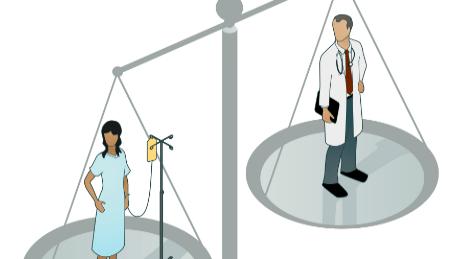
Rationing and Allocating Scarce Medical Resources (Coursera)

Rationing and Allocating Scarce Medical Resources (Coursera)

This course will explore the complex challenges of allocating scarce medical resources at both the micro and macro level. Students will learn the theories behind allocation and use modern examples to explore how society makes the difficult decisions that arise when there is not enough to go around.

Class Deals by MOOC List - Click here and see Coursera's Active Discounts, Deals, and Promo Codes.

You have one liver but three patients are awaiting a liver transplant. Who should get the liver? What criteria should be used to select the recipient? Is it fair to give it to an alcoholic? These are some of the questions that arise in the context of rationing and allocating scarce health care resources among particular individuals. These are called micro-allocation decisions. There are also macro-allocation decisions that focus on how health care systems distribute resources across populations. Using the cases of organs for transplantation, the rationing for vaccines in a flu pandemic, and oncology drug shortages, the course will critically examine alternative theories for allocating scarce resources among individuals. Using both the need to establish priorities for global health aid and to define an essential benefit package for health insurance, the course will critically examine diverse theories for macro-allocation from cost-effectiveness analysis to age-based rationing to accountability for reasonableness.

Note: This course is currently not available.

Related Courses

Antimicrobial resistance - theory and methods (Coursera) Coursera
Technical University of Denmark - DTU

Antimicrobial resistance - theory and methods (Coursera)

The course will cover the topics related to antimicrobial resistance with basic definitions and overview on antimicrobials their use and the emergence and spread of resistance. The course will guide you through the concepts and the importance of resistance spread and dissemination and how that happens. It will show you how bacteria become resistant and which mechanisms they might use for this. And as part of the course you will also receive some training in methods for antimicrobial susceptibility testing (AST) and detection of specific resistance in the microbiological laboratories with the basic methods available and with focus on the obtention of good quality results which can be interpreted and used for different purposes.

Jun 29th 2026
5-12 Weeks
Guided Imagery (Coursera) Coursera
University of Minnesota

Guided Imagery (Coursera)

In this course, you will learn how you can use imagery and imagery interventions to help with symptom management and healing, as well as to enhance overall health and wellbeing. You will experience a variety of imagery interventions and evaluate how they might be helpful in providing relief or enhancing quality of life.

Jul 1st 2026
5-12 Weeks
Understanding the Brain: The Neurobiology of Everyday Life (Coursera) Coursera
University of Chicago

Understanding the Brain: The Neurobiology of Everyday Life (Coursera)

Learn how the nervous system produces behavior, how we use our brain every day, and how neuroscience can explain the common problems afflicting people today. We will study functional human neuroanatomy and neuronal communication, and then use this information to understand how we perceive the outside world, move our bodies voluntarily, stay alive, and play well with others.

Jun 29th 2026
5-12 Weeks
Understanding Cancer Metastasis (Coursera) Coursera
Johns Hopkins University

Understanding Cancer Metastasis (Coursera)

Over 500,000 people in the United States and over 8 million people worldwide are dying from cancer every year. As people live longer, the incidence of cancer is rising worldwide, and the disease is expected to strike over 20 million people annually by 2030. Everyone has been, or will be touched by cancer in some way during their lifetime. Thanks to years of dedication and commitment to research we’ve made enormous advances in the prevention and treatment of cancer, But there is still a lot of work to be done. In this course, physicians and scientists at the Johns Hopkins School of Medicine explain how cancer spreads or metastasizes.

Jun 29th 2026
3 Weeks
Planning a Patient Safety or Quality Improvement Project (Patient Safety III) (Coursera) Coursera
Johns Hopkins University

Planning a Patient Safety or Quality Improvement Project (Patient Safety III) (Coursera)

This course provides students with a set of tools and methodologies to plan and initiate a Problem Solving or Quality Improvement project. The first module presents methods for selecting, scoping and structuring a project before it is even initiated. It also introduces the project classifications of implementation and discovery. The second module describes the A3 problem solving methodology and the tool itself. Further in that same module, the student is shown tools to identify problems in flow, defects, and waste and to discover causes, brainstorm, and prioritize interventions. Module 3 shows a methodology within the implementation class. These methods are designed to overcome emotional and organizational barriers to translating evidence-based interventions into practice. The fourth and last module looks at one more way to approach improvement projects in the discovery class. These tools are specifically for new, out-of-the-box design thinking.

Jun 29th 2026
4 Weeks
Public Involvement in Research (Coursera) Coursera
Imperial College London

Public Involvement in Research (Coursera)

This course focuses on participatory approaches in research, known as 'public involvement' in the UK. You'll specifically, consider why citizens and patients would be involved in research and explore participatory approaches across and within the research cycle in more detail, diving into questions such as: What kinds of participation can be undertaken at each of the 7 stages of the cycle? How can you utilise participation in research? What examples of using participatory approaches exist in research?

Jul 1st 2026
4 Weeks
Writing in the Sciences (Coursera) Coursera
Stanford University

Writing in the Sciences (Coursera)

This course teaches scientists to become more effective writers, using practical examples and exercises. Topics include: principles of good writing, tricks for writing faster and with less anxiety, the format of a scientific manuscript, peer review, grant writing, ethical issues in scientific publication, and writing for general audiences.

Jun 29th 2026
5-12 Weeks
Systems Science and Obesity (Coursera) Coursera
Johns Hopkins University

Systems Science and Obesity (Coursera)

Systems science has been instrumental in breaking new scientific ground in diverse fields such as meteorology, engineering and decision analysis. However, it is just beginning to impact public health. This seminar is designed to introduce students to basic tools of theory building and data analysis in systems science and to apply those tools to better understand the obesity epidemic in human populations.

Jun 29th 2026
4 Weeks
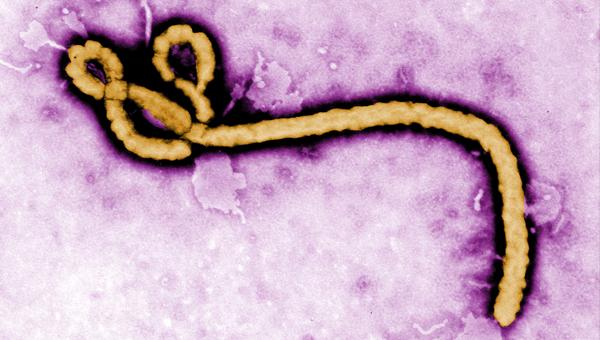
Ebola: Essential knowledge for health professionals (Coursera) Coursera
University of Amsterdam,Universiteit Utrecht

Ebola: Essential knowledge for health professionals (Coursera)

March 2014 marked the starting point of the largest outbreak of Ebola virus disease in history. Although the disease seems to be on a decrease, we are not there yet and new outbreaks will surely emerge. New efforts to combat the outbreak are necessary. This is why we developed this online course about Ebola, targeted at health professionals across the world. In this course you will cover the fundamental knowledge any health professional should have with expected or confirmed cases or a general interest in the Ebola disease.

Jun 29th 2026
5-12 Weeks
Understanding Obesity (Coursera) Coursera
University of Edinburgh

Understanding Obesity (Coursera)

In this course, we’ll look at the facts and misconceptions around obesity and discuss key physiological and psychological concepts around the brain’s control of appetite and body weight. We’ll consider the biological and environmental pressures that make it easy to gain weight (and hard to lose it!). Most importantly, we'll give you the opportunity to reflect on your own knowledge and assumptions around the subject.

Jun 29th 2026
4 Weeks