FUN

Problèmes Energétiques Globaux (FUN)

Offered by Mines ParisTech,
Problèmes Energétiques Globaux (FUN)

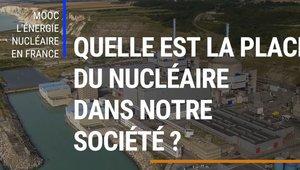
Après le succès de la première session du MOOC Problèmes Énergétiques Globaux, qui a réuni près de 9000 inscrits et dont le taux de réussite à l'examen final a été de 81 %, toute l'équipe pédagogique du MOOC est heureuse de vous retrouver sur la plateforme FUN pour l'ouverture d'une seconde session. Nous espérons qu'elle vous permettra, par le biais de ressources et d'activités variées, d'acquérir ou d'enrichir vos connaissances sur l'énergie

L'énergie étant un vaste domaine qui peut être abordé sous des angles multiples, l'approche retenue est de commencer par donner une base technique sur l'énergie, et donc l'offre d'énergie, dépendante des ressources et des filières technologiques disponibles, avant de s'intéresser à la demande, c'est-à-dire aux dimensions macro et socio-économiques, puis d'aborder les grandes questions mondiales relatives à l'énergie, et enfin de terminer par l'étude des principales questions qui se posent aujourd'hui dans ce secteur.

Comme lors de la première session, cette session 2 cherche à fournir une base de réflexion sur l'ensemble des problèmes énergétiques. A la fin de ce cours, vous aurez étudié les principales problématiques, présentes et futures, existant dans le domaine de l'énergie.

Plan et programme du cours

Le MOOC se déroule sur 6 semaines
Semaine 1/A : Présentation générale
Semaine 1/B : Les Filières énergétiques
Semaine 2 : Liens entre énergie et économie
Semaine 3 : Les aspects géopolitiques
Semaine 4 : Les politiques énergétiques
Semaine 5 : Les aspects environnementaux
Semaine 6 : Perspectives
Go to Class
MOOC List is learner-supported. When you buy through links on our site, we may earn an affiliate commission.

Related Courses

Outsmarting intermittency (Coursera) Coursera
École Polytechnique

Outsmarting intermittency (Coursera)

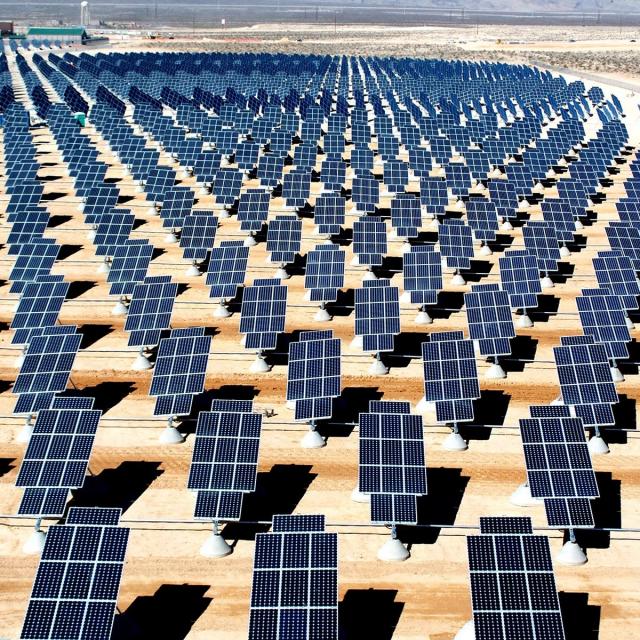
Solar and wind offer clean and renewable ways to produce large amounts of electricity. They have boomed over the last few years, evolving from an eco-daydream to a major market and showing unprecedented growth rates. Yet, installing solar panels and wind turbines is by no means the end of the story. The electrical grid, which connects production means to the end-users’ sockets, is not a simple electron pipe. It is the beating heart of our electricity system and ensures its stability. Solar and wind raise specific challenges for the grid, and these challenges will have to be tackled if we want to deploy larger amounts of renewable sources.

Sep 28th 2026
4 Weeks
Défis énergétiques et risques sanitaires dans les transports (FUN) FUN
le cnam

Défis énergétiques et risques sanitaires dans les transports (FUN)

Savez-vous comment fonctionne un moteur de voiture ou d'avion ? Pensez-vous qu'un moteur à essence pollue moins qu'un moteur diesel ? Croyez-vous que le respect de l'environnement passe par les voitures électriques ? Qu'en est-il de l'avion, du train, du bateau ? Ce Mooc labellisé "COP22" traite toutes ces questions. Il aborde les défis énergétiques et sanitaires à relever dans le domaine des transports : la nécessité d'améliorer l'efficacité énergétique des systèmes de production d'énergie, l'impact des émissions de polluants sur la santé, le déséquilibre climatique ...

No sessions available
5-12 Weeks
Greening the Economy: Sustainable Cities (Coursera) Coursera
Lund University

Greening the Economy: Sustainable Cities (Coursera)

How can we shape urban development towards sustainable and prosperous futures? This course will explore sustainable cities as engines for greening the economy. We place cities in the context of sustainable urban transformation and climate change. Sustainable urban transformation refers to structural transformation processes – multi-dimensional and radical change – that can effectively direct urban development towards ambitious sustainability and climate goals. We will connect the key trends of urbanization, decarbonisation and sustainability.

Sep 28th 2026
5-12 Weeks
Física: Vectores, Trabajo y Energía (Coursera) Coursera
Tecnológico de Monterrey

Física: Vectores, Trabajo y Energía (Coursera)

Este curso provee al estudiante con conceptos y herramientas matemáticas para modelar problemas en física, que al aplicar podrá enfrentar con éxito los cursos de física universitarios. Así pues, la filosofía de este curso consiste en cubrir temas conceptuales relativos a la Física y desarrollar tu capacidad de aprender y aplicarlos en tu vida profesional.

Sep 14th 2026
5-12 Weeks
Introduction to solar cells (Coursera) Coursera
Technical University of Denmark - DTU

Introduction to solar cells (Coursera)

How do solar cells work, why do we need, and how can we measure their efficiency? These are just some of the questions Introduction to solar cells tackles. Whether you are looking for general insight in this green technology or your ambition is to pursue a career in solar, “Introduction to Solar Cells” is an excellent starting point. The course is a tour through the fundamental disciplines including solar cell history, why we need solar energy, how solar cells produce power, and how they work. During the course we cover mono- and multi-crystalline solar cells, thin film solar cells, and new emerging technologies.

Sep 21st 2026
5-12 Weeks
Ash-Related Operational Challenges in Energy Utilization of Sustainable Fuels (Coursera) Coursera
Technical University of Denmark - DTU

Ash-Related Operational Challenges in Energy Utilization of Sustainable Fuels (Coursera)

The basic idea behind this MOOC, is to present recent data on fuel characterization, slagging, fouling, corrosion, and trace element transformations, in a course that can be readily provided for students and industry people. This ensures understanding and application of the research, and provides the students and industry with a forum for discussion of the very latest research results, as well as feedback from industry to the research group at DTU, on important new research subjects in the field.

Sep 21st 2026
5-12 Weeks
Sustainability of Social-Ecological Systems: the Nexus between Water, Energy and Food (Coursera) Coursera
Universitat Autònoma de Barcelona

Sustainability of Social-Ecological Systems: the Nexus between Water, Energy and Food (Coursera)

In this course you will become familiar with the ideas of the water-energy-food nexus and transdisciplinary thinking. You will learn to see your community or country as a complex social-ecological system and to describe its water, energy and food metabolism in the form of a pattern, as well as to map the categories of social actors.

Sep 14th 2026
5-12 Weeks
Mechanics: Motion, Forces, Energy and Gravity, from Particles to Planets (Coursera) Coursera
UNSW Sydney - University of New South Wales

Mechanics: Motion, Forces, Energy and Gravity, from Particles to Planets (Coursera)

Most of the phenomena in the world around you are, at the fundamental level, based on physics, and much of physics is based on mechanics. Mechanics begins by quantifying motion, and then explaining it in terms of forces, energy and momentum. This allows us to analyse the operation of many familiar phenomena around us, but also the mechanics of planets, stars and galaxies.

Sep 14th 2026
5-12 Weeks
21st Century Energy Transition: how do we make it work? (Coursera) Coursera
University of Alberta

21st Century Energy Transition: how do we make it work? (Coursera)

Affordable, abundant and reliable energy is fundamental to human well-being and prosperity. For the past 150 years, more and more people have gained access to energy, primarily in the form of fossil fuels – coal, petroleum and natural gas. But now, even while half of humanity cannot access adequate energy supplies, we are beginning a profound transition to more diverse energy sources. Climate change, environmental sustainability, and energy poverty are all important – and sometimes conflicting – drivers as we strive to supply more energy to more people with fewer negative impacts on Earth’s environments.

Sep 28th 2026
5-12 Weeks