Physics I ECE classical mechanics 8.01 (WMA)

Offered by MIT,
Physics I ECE classical mechanics 8.01 (WMA)

This course features lecture notes, problem sets with solutions, exams with solutions, links to related resources, and a complete set of videotaped lectures. The 35 video lectures by Professor Lewin, were recorded on the MIT campus during the Fall of 1999. Prof. Lewin is well-known at MIT and beyond for his dynamic and engaging lecture style.

Lesson content

Introduction & Syllabus
Lec 1 Powers of Ten
Lec 2 1D Kinematics - Speed - Velocity - Acceleration
Lec 3 Vectors - Dot Products - Cross Products - 3D Kinematics
Lec 4 3D Kinematics - Free Falling Reference Frames
Lec 5 Circular Motion - Centrifuges Moving - Reference Frames - Perceived Gravity
Lec 6 Newton's Laws
Lec 7 Weight - Perceived Gravity - Weightlessness Free Fall - Zero Gravity in Orbit (misnomer)
Lec 8 Friction
Lec 9 Exam Review
Lec 10 Hooke's Law - Springs - Simple Harmonic Motion - Pendulum - Small Angle Approximation
Lec 11 work,, etc.
Lec 12 Non-Conservative Forces - Resistive Forces - Air Drag - Terminal Velocity
Lec 13 Potential Energy - Energy Considerations to Derive Simple Harmonic Motion
Lec 14 Escape Velocities etc.
Lec 15 Momentum - Conservation of Momentum - Center of Mass
Lec 16 Collisions - Elastic and Inelastic - Center of Mass Frame of Reference
Lec 17 Impulse - Rockets
Lec 18 Exam Review
Lec 19 Rotating Rigid Bodies misc.
Lec 20 Rotating Rigid Bodies misc.
Lec 21 Torques - Oscillating Bodies - Hoops
Lec 22 Kepler's Laws - Elliptical Orbits - Satellites - Change of Orbits - Ham Sandwich
Lec 23 Doppler Effect - Binary Stars - Neutron Stars and Black Holes
Lec 24 Rolling Motion - Gyroscopes - VERY NON-INTUITIVE
Lec 25 Static Equilibrium - Stability - Rope Walker
Lec 26 Elasticity - Young's Modulus
Lec 27 Fluid Mechanics etc.
Lec 28 Hydrostatics misc.
Lec 29 Exam Review
Lec 30 Simple Harmonic Oscillations - Energy Considerations - Torsional Pendulum
Lec 31 Forced Oscillations - Normal Modes - Resonance - Natural Frequencies - Musical Instruments
Lec 32 Heat - Thermal Expansion
Lec 33 Kinetic Gas Theory misc.
Lec 34 The Wonderful Quantum World - Breakdown of Classical Mechanics
Lec 35 Farewell Special - High-energy Astrophysics
Note: This course is currently not available.

Related Courses

Mécanique de Newton (Coursera) Coursera
École Polytechnique Fédérale de Lausanne

Mécanique de Newton (Coursera)

À l’École Polytechnique Fédérale de Lausanne, un cours de mécanique fait partie de la formation de tous les futurs ingénieurs et scientifiques. Il a pour but de leur apprendre à transcrire sous forme mathématique un phénomène physique, afin de pouvoir en formuler une analyse raisonnée. Cette partie couvrira notamment la cinématique du point matériel, la balistique dans le champ de la pesanteur et l’oscillateur harmonique.

Nov 30th 2026
5-12 Weeks
Physics 101 - Forces and Kinematics (Coursera) Coursera
Rice University

Physics 101 - Forces and Kinematics (Coursera)

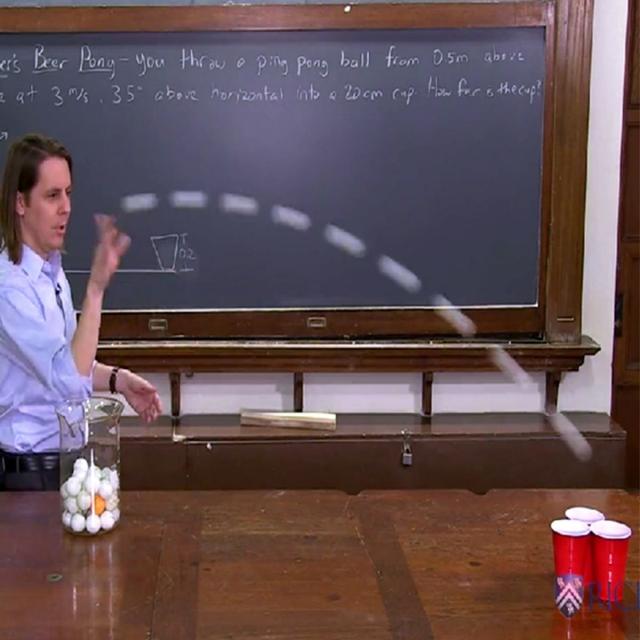
This course serves as an introduction to the physics of force and motion. Upon completion, learners will have an understanding of how mathematical laws and conservation principles describe the motions and interactions of objects all around us. They will gain experience in solving physics problems with tools such as graphical analysis, algebra, vector analysis, and calculus.

Nov 16th 2026
4 Weeks
Understanding Modern Physics III: Simplicity and Complexity (Coursera) Coursera
The Hong Kong University of Science and Technology - HKUST

Understanding Modern Physics III: Simplicity and Complexity (Coursera)

The 20th century was known as the century of physics. In the past 120 years, concepts such as space, time, energy, entropy and particles were understood to much deeper levels. New paradigms of thinking such as relativity and quantum mechanics emerged. This course is the third course in the Understanding Modern Physics series, which covers an introduction to action principle, fundamental particle physics, entropy & information and complexity.

Nov 30th 2026
4 Weeks
Nanotechnology and Nanosensors, Part 1 (Coursera) Coursera
Technion - Israel Institute of Technology

Nanotechnology and Nanosensors, Part 1 (Coursera)

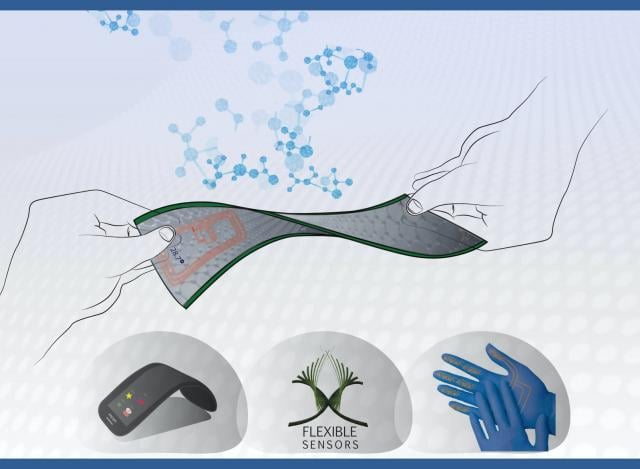
Nanotechnology and nanosensors are broad, interdisciplinary areas that encompass (bio)chemistry, physics, biology, materials science, electrical engineering and more. The present course will provide a survey on some of the fundamental principles behind nanotechnology and nanomaterials and their vital role in novel sensing properties and applications. The course will discuss interesting interdisciplinary scientific and engineering knowledge at the nanoscale to understand fundamental physical differences at the nanosensors.

Nov 30th 2026
5-12 Weeks
Global Warming I: The Science and Modeling of Climate Change (Coursera) Coursera
University of Chicago

Global Warming I: The Science and Modeling of Climate Change (Coursera)

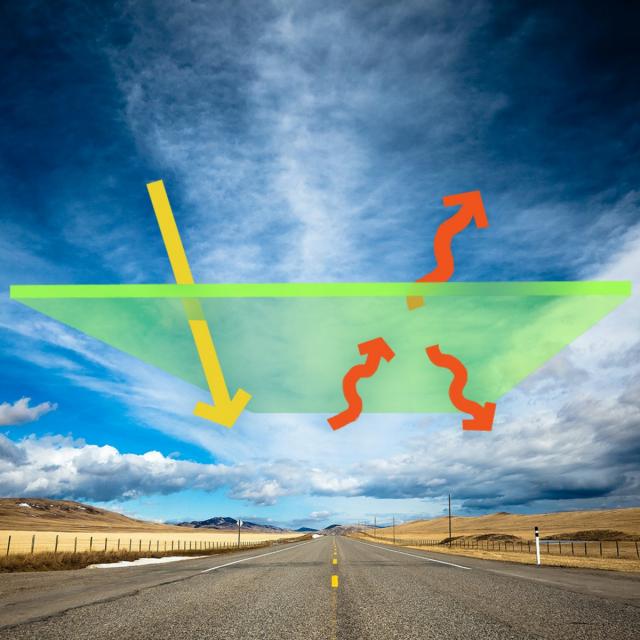
This class describes the science of global warming and the forecast for humans’ impact on Earth’s climate. Intended for an audience without much scientific background but a healthy sense of curiosity, the class brings together insights and perspectives from physics, chemistry, biology, earth and atmospheric sciences, and even some economics—all based on a foundation of simple mathematics (algebra).

Nov 16th 2026
5-12 Weeks
Advanced Engineering Systems in Motion: Dynamics of Three Dimensional (3D) Motion (Coursera) Coursera
Georgia Institute of Technology

Advanced Engineering Systems in Motion: Dynamics of Three Dimensional (3D) Motion (Coursera)

This course is an advanced study of bodies in motion as applied to engineering systems and structures. We will study the dynamics of rigid bodies in 3D motion. This will consist of both the kinematics and kinetics of motion. Kinematics deals with the geometrical aspects of motion describing position, velocity, and acceleration, all as a function of time. Kinetics is the study of forces acting on these bodies and how it affects their motion.

Nov 30th 2026
5-12 Weeks
Fundamentals of Fluid-Solid Interactions (Coursera) Coursera
École Polytechnique

Fundamentals of Fluid-Solid Interactions (Coursera)

What is fluid-solid interactions ? It is what happens when the motions of a fluid and of a solid are somehow coupled. This happens all the time, around you when leaves flutter in the wind, inside you when your heart beats, above you when wings of a plane vibrate, under the sea... The idea behind this MOOC is to give you the basic tools to be able to predict and eventually mitigate things called flutter, galloping, sloshing, vortex-induced vibrations, added mass, to cite a few. We are going to consider any possible domains of applications such as civil engineering, aerospace engineering, nuclear engineering , ocean engineering, biomechanics and even food processing !

Nov 30th 2026
5-12 Weeks
Particle Physics: an Introduction (Coursera) Coursera
University of Geneva

Particle Physics: an Introduction (Coursera)

This course introduces you to subatomic physics, i.e. the physics of nuclei and particles. More specifically, the following questions are addressed: What are the concepts of particle physics and how are they implemented?; What are the properties of atomic nuclei and how can one use them?; How does one accelerate and detect particles and measure their properties?; What does one learn from particle reactions at high energies and particle decays?; How do electromagnetic interactions work and how can one use them?; How do strong interactions work and why are they difficult to understand?; How do weak interactions work and why are they so special?; What is the mass of objects at the subatomic level and how does the Higgs boson intervene?; How does one search for new phenomena beyond the known ones?; What can one learn from particle physics concerning astrophysics and the Universe as a whole?

Nov 30th 2026
5-12 Weeks