The Music of American English Pronunciation (Coursera)

The Music of American English Pronunciation (Coursera)

In this third course of The Pronunciation of American English specialization, you will learn and practice the "music" of American English, the features of pronunciation such as stress, rhythm, and intonation that will help improve your listening comprehension as well as your ability to communicate more clearly. Each week you will receive practical advice from successful English learners and practice an effective technique called shadowing to improve your pronunciation of the musical features of English.

Class Deals by MOOC List - Click here and see Coursera's Active Discounts, Deals, and Promo Codes.

You will also have opportunities to record yourself and to respond to the recordings of other learners.
Only learners who pay for the course will be able to take the graded quizzes or submit assignments for feedback. The free version provides access to the lectures and practice activities only.
Course 3 of 4 in the The Pronunciation of American English Specialization.

Syllabus

WEEK 1
Welcome
Welcome to The Music of American English Pronunciation! In this course, you’ll move beyond individual consonant and vowel sounds and learn about things like syllable stress, intonation, and linking. These give English its characteristic “music,” and they’re a big help in making your pronunciation sound more natural and understandable. Learning about these things will also improve your listening skill and make it easier for you to understand English when it’s spoken at a normal speed. Good luck in practicing the music of American English Pronunciation!
Syllables and Word Stress

WEEK 2
Thought Groups, Rhythm, and Reduced Words

WEEK 3
Connected Speech

WEEK 4
Sentence Focus and Intonation
Go to Class
MOOC List is learner-supported. When you buy through links on our site, we may earn an affiliate commission.

Related Courses

Exploring Beethoven's Piano Sonatas (Coursera) Coursera
Curtis Institute of Music

Exploring Beethoven's Piano Sonatas (Coursera)

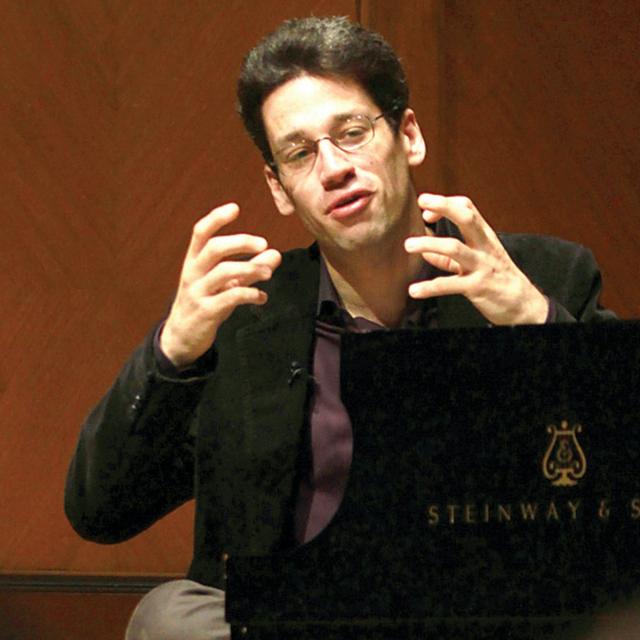
Our relationship to Beethoven is a deep and paradoxical one. For many musicians, he represents a kind of holy grail: His music has an intensity, rigor, and profundity which keep us in its thrall, and it is perhaps unequalled in the interpretive, technical, and even spiritual challenges it poses to performers. At the same time, Beethoven’s music is casually familiar to millions of people who do not attend concerts or consider themselves musically inclined. Two hundred years after his death, he is everywhere in the culture, yet still represents its summit. This course takes an inside-out look at the 32 piano sonatas from the point of view of a performer.

Sep 28th 2026
5-12 Weeks
Arranging for Songwriters (Coursera) Coursera
Berklee College of Music

Arranging for Songwriters (Coursera)

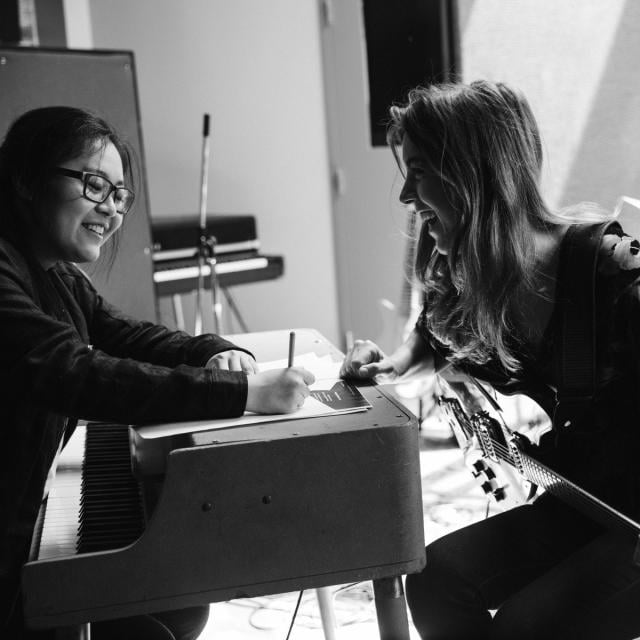
You've created a song. You wrote the lyrics, decided on the melody, and maybe even recorded a simple demo. Now what? If you have a basic knowledge of how to use a digital audio workstation (DAW) and are passionate about being a songwriter, this course will help you take your song from a simple recording on your phone to a fully arranged song ready for the recording studio.

Oct 5th 2026
4 Weeks
Teoria Musical (Coursera) Coursera
Berklee College of Music

Teoria Musical (Coursera)

Explore os elementos básicos que compoem a música, desenvolva sua percepção, tire músicas de ouvido, e aprenda a ler e escrever usando notação musical. Procuramos criar um curso que unisse a cultura e música brasileira com técnicas de aprendizado de solfejo e leitura rítmica. Você fará parte de uma aula de Percepção Musical ("Ear Training") na Berklee College of Music, cantando e praticando com outros alunos e interagindo com os vídeos. Além disso, você terá acesso a material para praticar, como faixas de acompanhamento e partituras.

Oct 5th 2026
5-12 Weeks
History of Rock, Part One (Coursera) Coursera
University of Rochester

History of Rock, Part One (Coursera)

This course, part 1 of a 2-course sequence, examines the history of rock, primarily as it unfolded in the United States, from the days before rock (pre-1955) to the end of the 1960s. This course covers the music of Elvis Presley, Chuck Berry, Phil Spector, Bob Dylan, the Beatles, the Rolling Stones, Jimi Hendrix, Cream, and many more artists, with an emphasis both on cultural context and on the music itself. We will also explore how developments in the music business and in technology helped shape the ways in which styles developed.

Sep 28th 2026
5-12 Weeks
Jazz Improvisation (Coursera) Coursera
Berklee College of Music

Jazz Improvisation (Coursera)

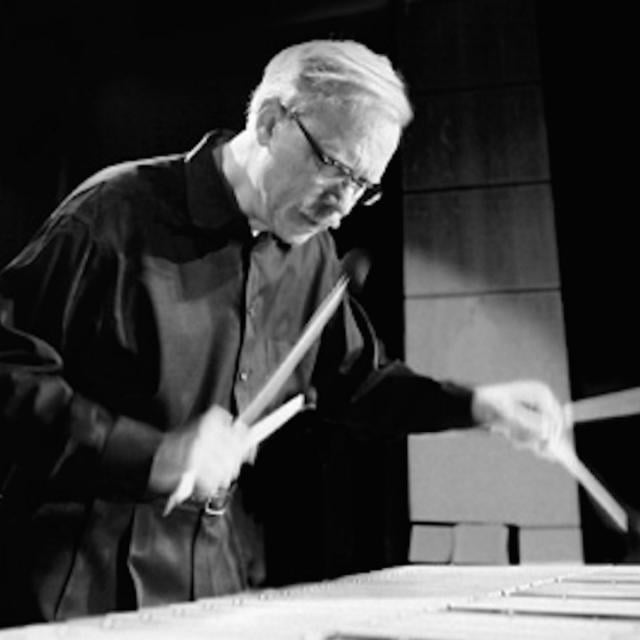
Learn the basic concepts of improvisation from Gary Burton, one of the most renowned improvisers in the jazz world, including the mental, melodic, and harmonic processes that contribute to the instinctive skills that an improviser puts to use when taking a solo. While many people are fans of jazz and understand that musicians are often “making up” the notes they are playing during a performance, most people—often including musicians, themselves, who are beginning to learn improvising—aren’t clear about what exact processes take place to enable this to happen. The purpose of this course is to introduce the basic concepts of modern improvisation and how to go about mastering the different musical and mental skills involved.

Oct 5th 2026
5-12 Weeks
Translation in Practice (Coursera) Coursera
Nanjing University

Translation in Practice (Coursera)

This course offers you basic but valuable techniques used by a good translator in the translation between English and Chinese. We’ll discuss what is translation, what is good translation, and learn about how to produce good translations. All the examples used in this course are taken from the course instructor's own translations of various genres and topics of writing.

Oct 5th 2026
5-12 Weeks
Writing in English at University (Coursera) Coursera
Lund University

Writing in English at University (Coursera)

Acquiring good academic research and writing skills early on is essential for your success both at university and in your professional life. This course aims: - to give you an understanding of the conventions of academic writing in English and to teach you the components and benefits of what is called process writing. - to help you to put together your own “toolbox” of academic writing skills, as well as to give you a chance to test out these tools and to reflect on your own development as a writer. - to encourage reflection on discipline specific conventions; although the course deals with generic skills, you will be able to apply these generic skills to meet the particular needs of your own discipline.

Oct 5th 2026
4 Weeks
English and Academic Preparation - Grad Track (Coursera) Coursera
Rice University

English and Academic Preparation - Grad Track (Coursera)

The English and Academic Preparation – Grad Track course is for students with a (minimum) advanced level of English. It is designed to help international students strengthen their English while developing academic skills necessary for success in graduate studies at an American university. Ideally, prospective students have completed or are near completion of a bachelor’s degree in their country and would like to come to the United States to study for a master’s or doctorate degree.

Oct 5th 2026
4 Weeks
Exploring Beethoven’s Piano Sonatas Part 2 (Coursera) Coursera
Curtis Institute of Music

Exploring Beethoven’s Piano Sonatas Part 2 (Coursera)

Welcome to Part 2 of Exploring Beethoven's Piano Sonatas! I'm delighted to launch another set of new lectures of this course as Part 2. As before, this class is meant for people of all levels of experience with Beethoven's music (including no experience at all!). Remember that you are able to watch the lectures as many times as you like, at whatever pace is comfortable for you.

Oct 5th 2026
5-12 Weeks
Creating Sounds for Electronic Music (Coursera) Coursera
Berklee College of Music

Creating Sounds for Electronic Music (Coursera)

What you’ll achieve: In this project-centered course*, you will create sounds and use them in your own musical compositions. Whether you're an aspiring producer, composer, or hobbyist, this course will help you gain skills in music production and confidence using software synthesizers. Along with your classmates, you will create a massive database of designed sounds, or patches, to use in your compositions. As part of the course, you will work with a free version of FXpansion Strobe 2.

Sep 28th 2026
4 Weeks