Modern Robotics, Course 2: Robot Kinematics (Coursera)

Modern Robotics, Course 2: Robot Kinematics (Coursera)

Do you want to know how robots work? Are you interested in robotics as a career? Are you willing to invest the effort to learn fundamental mathematical modeling techniques that are used in all subfields of robotics? If so, then the "Modern Robotics: Mechanics, Planning, and Control" specialization may be for you. This specialization, consisting of six short courses, is serious preparation for serious students who hope to work in the field of robotics or to undertake advanced study. It is not a sampler.

Class Deals by MOOC List - Click here and see Coursera's Active Discounts, Deals, and Promo Codes.

If so, then the "Modern Robotics: Mechanics, Planning, and Control" specialization may be for you. This specialization, consisting of six short courses, is serious preparation for serious students who hope to work in the field of robotics or to undertake advanced study. It is not a sampler.
Your efforts in Course 1 pay off handsomely, as forward kinematics is a breeze with the tools you've learned. This is followed by velocity kinematics and statics relating joint velocities and forces/torques to end-effector twists and wrenches, inverse kinematics (calculating joint values that achieve a desired "hand" configuration), and kinematics of robots with closed chains.
Course 2 of 6 in the Modern Robotics: Mechanics, Planning, and Control Specialization.

Syllabus

WEEK 1
Chapter 4: Forward Kinematics
Product of exponentials formula for forward kinematics in the space frame and the end-effector frame.

WEEK 2
Chapter 5: Velocity Kinematics and Statics
Velocity kinematics using the space Jacobian and body Jacobian, statics of open chains, singularities, and manipulability.

WEEK 3
Chapter 6: Inverse Kinematics
Analytical and numerical inverse kinematics.

WEEK 4
Chapter 7: Kinematics of Closed Chains
Forward kinematics, inverse kinematics, velocity kinematics, and statics of closed chains.

Go to Class
MOOC List is learner-supported. When you buy through links on our site, we may earn an affiliate commission.

Related Courses

CPS Design for Mechatronics, Healthcare, EV & Robotics (Coursera) Coursera
L&T EduTech

CPS Design for Mechatronics, Healthcare, EV & Robotics (Coursera)

This course covers diverse aspects of mechatronics, electric vehicles (EVs), medical devices, and Cyber-Physical Systems (CPS). The Automotive Mechatronics module provides participants with a deep understanding of essential components, emphasizing the analysis of Electronic Control Units (ECUs) and the application of various sensor types and Advanced Driver Assistance Systems in critical automotive functions.

Sep 21st 2026
4 Weeks
Modern Robotics, Course 6: Capstone Project, Mobile Manipulation (Coursera) Coursera
Northwestern University

Modern Robotics, Course 6: Capstone Project, Mobile Manipulation (Coursera)

The capstone project of the Modern Robotics specialization is on mobile manipulation: simultaneously controlling the motion of a wheeled mobile base and its robot arm to achieve a manipulation task. This project integrates several topics from the specialization, including trajectory planning, odometry for mobile robots, and feedback control.

Dec 5th 2021
4 Weeks
Robotics: Perception (Coursera) Coursera
University of Pennsylvania

Robotics: Perception (Coursera)

How can robots perceive the world and their own movements so that they accomplish navigation and manipulation tasks? In this module, we will study how images and videos acquired by cameras mounted on robots are transformed into representations like features and optical flow. Such 2D representations allow us then to extract 3D information about where the camera is and in which direction the robot moves. You will come to understand how grasping objects is facilitated by the computation of 3D posing of objects and navigation can be accomplished by visual odometry and landmark-based localization.

Jan 13th 2025
4 Weeks
Robotic Mapping and Trajectory Generation (Coursera) Coursera
University of Colorado Boulder

Robotic Mapping and Trajectory Generation (Coursera)

In this second course of the Introduction to Robotics specialization, "Robotic Mapping and Trajectory Generation", you will learn how to perform basic inverse kinematics of (non-)holonomic systems using a feedback control approach. You will also learn how to process multi-dimensional sensor signals such as laser range scanners for mapping. Additionally, you will apply the overarching focus of mechanisms and sensors as sources of uncertainty and gain techniques to how to model and control them.

Sep 21st 2026
5-12 Weeks
Physics 101 - Forces and Kinematics (Coursera) Coursera
Rice University

Physics 101 - Forces and Kinematics (Coursera)

This course serves as an introduction to the physics of force and motion. Upon completion, learners will have an understanding of how mathematical laws and conservation principles describe the motions and interactions of objects all around us. They will gain experience in solving physics problems with tools such as graphical analysis, algebra, vector analysis, and calculus.

Sep 21st 2026
4 Weeks
Digitalisation in the Aerospace Industry (Coursera) Coursera
Technische Universität München - TUM

Digitalisation in the Aerospace Industry (Coursera)

The online course Digitalisation in Aerospace aims at making you aware of special production requirements connected with digitalisation. You will learn about the role of robotics and automation in manufacturing and gain a better understanding of differing perspectives on research and manufacturing as well as the points where these intersect.

Sep 21st 2026
3 Weeks
Computational Geometry (Coursera) Coursera
Saint Petersburg State University

Computational Geometry (Coursera)

This course represents an introduction to computational geometry – a branch of algorithm theory that aims at solving problems about geometric objects. Its application areas include computer graphics, computer-aided design and geographic information systems, robotics, and many others. You will learn to apply to this end various algorithmic approaches, and asses their strong and weak points in a particular context, thus gaining an ability to choose the most appropriate method for a concrete problem.

May 16th 2022
5-12 Weeks
Modern Robotics, Course 1: Foundations of Robot Motion (Coursera) Coursera
Northwestern University

Modern Robotics, Course 1: Foundations of Robot Motion (Coursera)

Do you want to know how robots work? Are you interested in robotics as a career? Are you willing to invest the effort to learn fundamental mathematical modeling techniques that are used in all subfields of robotics? If so, then the "Modern Robotics: Mechanics, Planning, and Control" specialization may be for you. This specialization, consisting of six short courses, is serious preparation for serious students who hope to work in the field of robotics or to undertake advanced study. It is not a sampler.

Sep 21st 2026
4 Weeks
Robotic Path Planning and Task Execution (Coursera) Coursera
University of Colorado Boulder

Robotic Path Planning and Task Execution (Coursera)

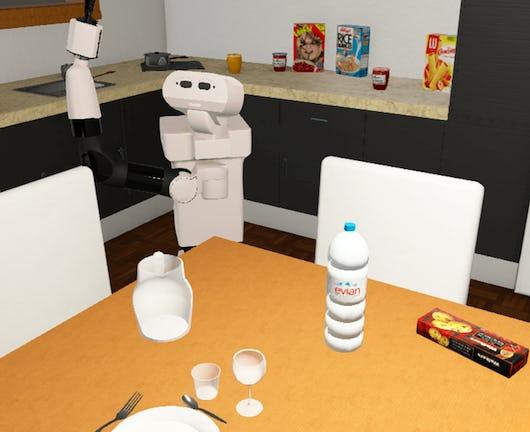
This course, which is the last and final course in the Introduction to Robotics with Webots specialization, will teach you basic approaches for planning robot trajectories and sequence their task execution. In "Robotic Path Planning and Task Execution", you will develop standard algorithms such as Breadth-First Search, Dijkstra's, A* and Rapidly Exploring Random Trees through guided exercises. You will implement Behavior Trees for task sequencing and experiment with a mobile manipulation robot "Tiago Steel".

Sep 21st 2026
5-12 Weeks
Modern Robotics, Course 6: Capstone Project, Mobile Manipulation (Coursera) Coursera
Northwestern University

Modern Robotics, Course 6: Capstone Project, Mobile Manipulation (Coursera)

The capstone project of the Modern Robotics specialization is on mobile manipulation: simultaneously controlling the motion of a wheeled mobile base and its robot arm to achieve a manipulation task. This project integrates several topics from the specialization, including trajectory planning, odometry for mobile robots, and feedback control. Beginning from the Modern Robotics software library provided to you (written in Python, Mathematica, and MATLAB), and software you have written for previous courses, you will develop software to plan and control the motion of a mobile manipulator to perform a pick and place task.

Sep 14th 2026
4 Weeks