Modern Poetry and Poetics (saylor.org)

Offered by Saylor.org,
Modern Poetry and Poetics (saylor.org)

The decades between roughly 1890 and 1950 witnessed unprecedented efforts to create new art, new values, and a new culture in Europe and the United States. During this time Western writers, artists, and intellectuals questioned accepted aesthetic norms and produced radically experimental works of art and new understandings of what it means to live in modern times.

The first half of the twentieth century also witnessed the most devastating conflicts in Western history – the two World Wars and the Holocaust – and these events accelerated and profoundly influenced cultural changes. Modernist poetry, which emerged during this time, is among the most interesting cultural developments of the last century, and it is the subject of this course.
Critic Cary Nelson has argued that modern poetry—meaning, most generally, poetry from the turn-of-the-century through the 1950s—does not conform to any linear narrative and that it should not be studied as such. However, while it is true that modernist poetic developments sprang up in unlikely and seemingly spontaneous ways, we will attempt to progress through this course in a roughly chronological manner. This is because, in many ways, poetry is a social form that reflects the cultural and political situations in which it is written.
This course will invite you to situate poetry within those contexts. Throughout the course you will explore such questions as: what makes poetry modern? Is artistic innovation influenced by political commitments? Should it be? Does literature have ethical responsibilities? Is it possible to fully reject traditional norms and values? The course starts with a theoretical consideration of modernity and modernism, as well as a historical overview of the period. It then explores fin-de-siècle poetic innovation, World War I, early modernist movements like Imagism and Vorticism as well as the writings of High Modernism. It then analyzes how World War II and the Holocaust affected poetry and how poetic innovation continued in the postwar years. A unit on African American modernism explores another crucially important dimension of what is now recognized, somewhat paradoxically, as the modernist tradition. By the end of the course, you will have studied the work of major American and British modernist writers, and you will have critically explored the characteristic techniques, concerns, and tropes of modern poetry.

Course Requirements: it is recommended that you have already completed the following courses from the Core Program of the English discipline: Introduction to Literary Studies, Medieval Cultural and Literary Expression, Cultural and Literary Expression in the English Renaissance, Cultural and Literary Expression in the 18th and 19th Centuries, Cultural and Literary Expression in Modernity, and Introduction to Literary Theory.

Go to Class
MOOC List is learner-supported. When you buy through links on our site, we may earn an affiliate commission.

Related Courses

Modern American Poetry (Coursera) Coursera
University of Illinois at Urbana-Champaign

Modern American Poetry (Coursera)

Twelve experienced faculty members from across the United States present their analyses of ground-breaking modern American poets in richly illustrated video lectures. The course highlights both major poets—from Walt Whitman and Emily Dickinson through T.S. Eliot, H.D., Amy Lowell, Hart Crane, Langston Hughes, Muriel Rukeyser, and many others—and influential movements. The course mixes historical overview with close readings of individual poets and poems.

Oct 12th 2026
4 Weeks
Introduction to Literary Theory (saylor.org) Saylor Academy
Saylor.org

Introduction to Literary Theory (saylor.org)

This course will introduce you to the field of literary theory, making its various methods and premises available to you and your endeavors as a critical reader. As we progress through the syllabus, we will identify and engage with the key problems and questions that have animated—and continue to animate—theoretical discussion among literary scholars and critics, including issues pertaining to ideology, cultural value, the patriarchal and colonial bases of Western culture, and more.

Legacy Course
Self-Paced
English Romantic Poetry (saylor.org) Saylor Academy
Saylor.org

English Romantic Poetry (saylor.org)

The Romantic Period in England took place during the “age of revolutions,” a span of time that saw not only the rapid industrialization of Europe but two significant national revolutions—one in France, and one in America. This revolutionary spirit in many ways fed and sustained the Romantic movement in English literature; its chief practitioners believed that poetry could literally transform the world and the way in which we understand it.

Legacy Course
Self-Paced
First Nights - Stravinsky’s Rite of Spring: Modernism, Ballet, and Riots (edX) EdX
HarvardX,Harvard University

First Nights - Stravinsky’s Rite of Spring: Modernism, Ballet, and Riots (edX)

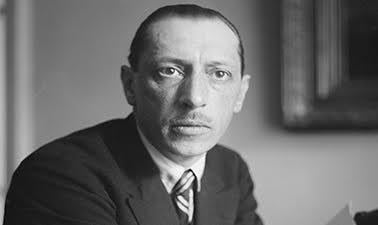
Learn the fascinating history of Igor Stravinsky’s The Rite of Spring, one of the most challenging and rewarding ballets ever written. Igor Stravinsky’s The Rite of Spring premiered in Paris in 1913, sparking a riot and screaming so loud that the dancers could not hear the orchestra, and the choreographer had to shout numbers from backstage to keep the dancers on beat.

Self Paced
Self-Paced
Poetry in America: Modernism (edX) EdX
HarvardX,Harvard University

Poetry in America: Modernism (edX)

We will consider how American Modernist poets—poets like Robert Frost, T.S. Eliot, Langston Hughes, Marianne Moore, William Carlos Williams, and Wallace Stevens—created, in the first half of the 20th Century, a poetic tradition that was new and different. This literature course, the sixth module in the Poetry in America series, explores a diverse array of American Modernist poets and poems. While “Modernism” is notoriously difficult to define, the movement spanned the decades from the 1910s to the mid-1940s, and the poetry of this period marked a clear break from past traditions and past forms.

No sessions available
5-12 Weeks
Miracles of Human Language: An Introduction to Linguistics (Coursera) Coursera
Leiden University,Meertens Instituut - KNAW

Miracles of Human Language: An Introduction to Linguistics (Coursera)

Everywhere, every day, everybody uses language. There is no human society, no matter how small or how isolated, which does not employ a language that is rich and diverse. This course introduces you to linguistics, featuring interviews with well-known linguists and with speakers of many different languages. Join us to explore the miracles of human language!

Oct 12th 2026
5-12 Weeks
Business English: Marketing and Sales (Coursera) Coursera
Arizona State University

Business English: Marketing and Sales (Coursera)

If you work in marketing, sales, or advertising, you already know that effective communication is a requirement. This can be even more difficult when expressing your ideas in a persuasive manner in English. In this course, you will learn to use English more efficiently while joining successful global professionals around the world.

Oct 12th 2026
5-12 Weeks
Sexing the Canvas: Art and Gender (Coursera) Coursera
University of Melbourne

Sexing the Canvas: Art and Gender (Coursera)

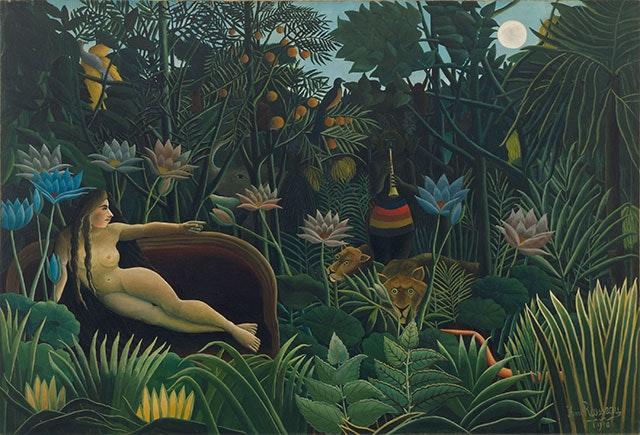
What do paintings tell us about sex? How is art gendered? In this course we will study some of the world’s most beloved pictures guided by expert curators and art historians who step outside of the square, bringing a gendered reading to the masterpieces contained in the magnificent collections that we have been lucky enough to bring to the Coursera platform.

Oct 24th 2022
5-12 Weeks
Corrección, estilo y variaciones de la lengua española (Coursera) Coursera
Universitat Autònoma de Barcelona

Corrección, estilo y variaciones de la lengua española (Coursera)

¿Le interesa el idioma español y se preocupa por la corrección, el estilo y las variaciones de la lengua española? ¿Siente curiosidad acerca de las variaciones española y argentina o americana del Español estudiadas en textos cultos de referencia? En este curso se estudian empíricamente algunos aspectos relevantes de esas variedades de la lengua con datos significativos de las versiones hispanas de J. D. Salinger: «El cazador oculto», argentinas; y «El guardián entre el centeno», españolas.

Oct 12th 2026
5-12 Weeks
Fundamentos de la escritura (Coursera) Coursera
Tecnológico de Monterrey

Fundamentos de la escritura (Coursera)

La redacción de un texto, cualquiera que este sea, implica conocer y dominar las reglas y estrategias que hacen del producto final un escrito coherente, de lectura ágil y adecuado al público que se destina. Por medio de ejercicios, videos y ejemplos reales, el primer módulo (Semana 1 y 2) guía al alumno en el proceso de aplicación y dominio de normas elementales de ortografía y puntuación.

Oct 12th 2026
5-12 Weeks
Spanish Vocabulary: Meeting People (Coursera) Coursera
University of California, Davis

Spanish Vocabulary: Meeting People (Coursera)

¡Hola! ¿Como Estas? In this entry level course, you will take the first step toward exploring the foundations of Spanish grammar and pronunciation, and will begin to build a working vocabulary of common Spanish words and expressions. You will be able to talk about yourself, your family and friends in the present tense, and begin to explore the cultural context of the Spanish-speaking world through a series of videos and interactive activities, including speaking, reading and writing exercises.

Oct 12th 2026
3 Weeks