EdX

First Nights - Stravinsky’s Rite of Spring: Modernism, Ballet, and Riots (edX)

First Nights - Stravinsky’s Rite of Spring: Modernism, Ballet, and Riots (edX)

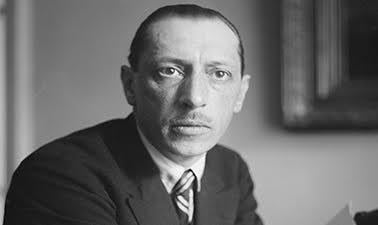
Learn the fascinating history of Igor Stravinsky’s The Rite of Spring, one of the most challenging and rewarding ballets ever written. Igor Stravinsky’s The Rite of Spring premiered in Paris in 1913, sparking a riot and screaming so loud that the dancers could not hear the orchestra, and the choreographer had to shout numbers from backstage to keep the dancers on beat.

Class Deals by MOOC List - Click here and see EdX's Active Discounts, Deals, and Promo Codes.

The Rite of Spring continues to challenge listeners. According to Stravinsky, The Rite of Spring was intended to portray “the surge of spring, the magnificent upsurge of nature reborn.” As you will see, Stravinsky’s description is almost frighteningly apt!

Harvard’s Thomas Forrest Kelly (Morton B. Knafel Professor of Music) guides learners through The Rite of Spring, highlighting not only the contributions of Stravinsky, the composer, but also those of his collaborators. Professor Kelly takes learners through the ballet’s development, rehearsals, and finally, premiere performance, and he explores just how and why The Rite of Spring challenged (and to a certain extent, continues to challenge) its listeners.
You will learn about the ballet’s innovative choreography, the basics of 20th-century orchestral form and technique, and the circumstances of this ballet’s first performance and subsequent history. Learners in this course need not have any prior musical experience.
This course is part of the Classical Works XSeries.
What you'll learn:

  • Identify and describe forms and techniques used in 20th-century orchestral music
  • Understand approaches to ballet choreography in the 20th century
  • Appreciate cultural context and performance circumstances of Stravinsky’s The Rite of Spring
Go to Class
MOOC List is learner-supported. When you buy through links on our site, we may earn an affiliate commission.

Related Courses

Fundamentals of Audio and Music Engineering: Part 1 Musical Sound & Electronics (Coursera) Coursera
University of Rochester

Fundamentals of Audio and Music Engineering: Part 1 Musical Sound & Electronics (Coursera)

In this course students learn the basic concepts of acoustics and electronics and how they can applied to understand musical sound and make music with electronic instruments. Topics include: sound waves, musical sound, basic electronics, and applications of these basic principles in amplifiers and speaker design.

Nov 23rd 2026
5-12 Weeks
Poetry in America: Modernism (edX) EdX
HarvardX,Harvard University

Poetry in America: Modernism (edX)

We will consider how American Modernist poets—poets like Robert Frost, T.S. Eliot, Langston Hughes, Marianne Moore, William Carlos Williams, and Wallace Stevens—created, in the first half of the 20th Century, a poetic tradition that was new and different. This literature course, the sixth module in the Poetry in America series, explores a diverse array of American Modernist poets and poems. While “Modernism” is notoriously difficult to define, the movement spanned the decades from the 1910s to the mid-1940s, and the poetry of this period marked a clear break from past traditions and past forms.

No sessions available
5-12 Weeks
Fundamentals of Music Theory (Coursera) Coursera
University of Edinburgh

Fundamentals of Music Theory (Coursera)

This course will introduce students to the theory of music, providing them with the skills needed to read and write Western music notation, as well as to understand, analyse, and listen informedly. It will cover material such as pitEli Appleby-Donaldches and scales, intervals, clefs, rhythm, form, meter, phrases and cadences, and basic harmony.

Nov 23rd 2026
5-12 Weeks
Creativity & Entrepreneurship (edX) EdX
Berklee College of Music,BerkleeX

Creativity & Entrepreneurship (edX)

Learn skills and listen to examples from world-renown entrepreneurs and innovators as they discuss the parallels between the creative and entrepreneurial journeys -- and why entrepreneurship, much like music or creativity, is something we all possess. Creativity & Entrepreneurship will help you tap into your inner creativity and learn how to leverage it for career development or business innovation.

Self Paced
Self-Paced
First Nights: Berlioz’s Symphonie Fantastique and Program Music in the 19th Century (edX) EdX
HarvardX,Harvard University

First Nights: Berlioz’s Symphonie Fantastique and Program Music in the 19th Century (edX)

Learn about Hector Berlioz’s Symphonie Fantastique, an iconic Romantic symphony that ushered in an era of narrative “program music.” Six years after the premiere of Beethoven’s monumental Ninth Symphony, composer Hector Berlioz sought to make use of the symphonic genre, but on his own terms. Indeed, he wrote not only a five-movement symphony, but also a narrative program to accompany and explain the symphony.

Self Paced
Self-Paced
Exploring Beethoven's Piano Sonatas (Coursera) Coursera
Curtis Institute of Music

Exploring Beethoven's Piano Sonatas (Coursera)

Our relationship to Beethoven is a deep and paradoxical one. For many musicians, he represents a kind of holy grail: His music has an intensity, rigor, and profundity which keep us in its thrall, and it is perhaps unequalled in the interpretive, technical, and even spiritual challenges it poses to performers. At the same time, Beethoven’s music is casually familiar to millions of people who do not attend concerts or consider themselves musically inclined. Two hundred years after his death, he is everywhere in the culture, yet still represents its summit. This course takes an inside-out look at the 32 piano sonatas from the point of view of a performer.

Nov 23rd 2026
5-12 Weeks
Introduction to Music Theory (edX) EdX
Berklee College of Music,BerkleeX

Introduction to Music Theory (edX)

Learn key concepts and approaches needed to understand, create, and perform contemporary music. Do you have a passion for music and want to learn more about how it works? Are you a musician who learned by ear and has no formal training? Would you like to study music but are unsure of where to begin? Then this music theory course is for you.

Self Paced
Self-Paced
The Music of the Beatles (Coursera) Coursera
University of Rochester

The Music of the Beatles (Coursera)

The Music of the Beatles will track the musical development of the band, starting from the earliest days in Liverpool and Hamburg, moving through the excitement of Beatlemania, the rush of psychedelia, and the maturity of Abbey Road. While the focus will be on the music, we will also consider how recording techniques, the music business, the music of other artists, and the culture of the 1960s affected John, Paul, George, and Ringo as they created the Beatles repertory.

Nov 23rd 2026
5-12 Weeks