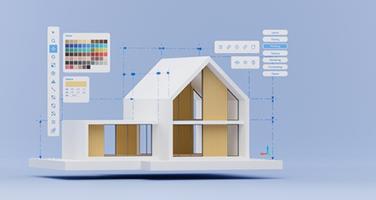
Modellazione digitale 3D: output (POK)

Offered by Politecnico di Milano,
Modellazione digitale 3D: output (POK)

Generare dal modello 3D file per la stampa grafica, e per la prototipazione fisica mediante macchine da taglio e stampanti 3D a deposizione. Il programma si propone di fornire indicazioni e consigli per la stampa di modelli digitali 3D su carta, e per la prototipazione mediante macchine da taglio CNC e macchine a deposizione FDM, ponendo particolare attenzione all'impaginazione delle viste da stampare su carta, alla scomposizione del modello da stampare in FabLab, alle scale di lavoro.

Il corso è composto da 2 week:
Week 1 – L’output per la stampa grafica
Week 2 – L’output per la prototipazione fisica

La prima Week è articola in quattro lezioni. Nella prima, dedicata alla “Generazione e gestione del layout di stampa”, richiamate le nozioni di dimensione, scala, e formato di stampa, e introdotti i concetti di spazio carta (2D) e spazio modello (3D) in ambiente CAD, vengono mostrate le procedure per la generazione di file per la stampa su carta e su file, e i procedimenti per la composizione e il controllo dei layout di stampa. Nella seconda lezione, dedicata all’“Inserimento e gestione qualitativa dei contenuti grafici o ‘dettagli’” ci occuperemo dell’inserimento e dell’editing delle viste, delle quote e di altri contenuti grafici e testuali del modello 3D, all’interno dei campi grafici 2D del layout di stampa, dell’editing grafico del layout di stampa, e della misurazione dello spazio carta e dello spazio modello a partire dal layout di stampa.
Nella terza lezione, dal titolo “Il controllo della scala grafica nella stampa di file ‘vector’ e ‘raster’”, si affronta il tema del controllo della scala di stampa, il posizionamento controllato delle viste, e la scelta del formato e della risoluzione grafica in stampa; ricordata la distinzione fra immagini raster e vector, mostreremo anche come importare, scalare e orientare una mappa raster nello spazio grafico vettoriale del modello CAD 3D.
L’ultima lezione, dal titolo “Il controllo dei parametri grafici: colore, spessore, tipo di linea”, è dedicata al controllo in stampa dei principali parametri grafici, in funzione delle modalità di visualizzazione del modello; vedremo anche la differenza fra proprietà di livello e proprietà dell’oggetto, e mostreremo le procedure per la generazione di viste 2D renderizzate stampabili e delle relative preview.
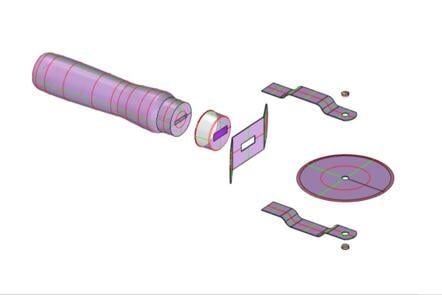
La Week 2 “L’output per la prototipazione fisica”, si compone di due lezioni. Nella prima lezione, dal titolo “Generare file di stampa per il taglio CNC", ci occuperemo della prototipazione fisica mediante taglio a lama e laser, e in particolare della preliminare riduzione del modello 3D in elementi piani, e della ottimizzazione dei consumi di materiale.
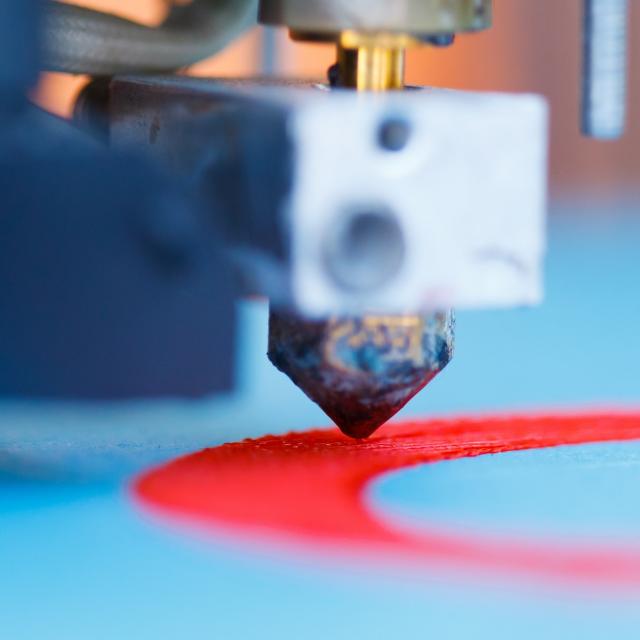
Nella seconda lezione vedremo come “Generare file di stampa 3D per deposizione FDM” in formato leggibile dalle stampanti 3D, e come preparare ed eventualmente scomporre il modello CAD, in funzione della dimensione di stampa.
Go to Class
MOOC List is learner-supported. When you buy through links on our site, we may earn an affiliate commission.

Related Courses

Digital Design (edX) EdX
HKUSTx,HKU School of Professional and Continuing Education

Digital Design (edX)

The course is an introduction to digital design technology. It allows you to understand the basics of digital design and helps you develop skills from computer aided design to animation covering topics such as rigging, key framing, rendering and more. Digital Design is about designing in digital space so that the created contents can be displayed and seen on a digital device. With the availability of high computing power, designers are able to quickly create designs in digital space prior to actual deployment.

Self Paced
Self-Paced
The 3D Printing Revolution (Coursera) Coursera
University of Illinois at Urbana-Champaign

The 3D Printing Revolution (Coursera)

This course will demonstrate how 3D printers work, show what people make with them, and examine the 3D printing ecosystem. It will also explore the future of 3D printing and discuss how this technology will revolutionize our world. Learners who complete this introductory course will have a solid understanding of 3D printing and its revolutionary potential, and will be able to print and customize 3D designs.

Aug 3rd 2026
2 Weeks
Modellazione digitale 3D: dal file al modello fisico (POK) Polimi OPEN KNOWLEDGE
Politecnico di Milano

Modellazione digitale 3D: dal file al modello fisico (POK)

Costruire modelli architettonici con l’aiuto di tecnologie CNC, per il taglio di materiali in lastra attraverso: laser, lama o filo a caldo e per la realizzazione di elementi tridimensionali tramite stampa 3D. Il corso presenta diverse tecnologie CNC utilizzabili nella realizzazione di modelli architettonici. In particolare per il taglio di materiali in lastra attraverso: plotter laser, plotter a lama o plotter a filo a caldo e per la realizzazione di elementi tridimensionali tramite stampa 3D a filamento e a resina liquida. Il corso si propone di fornire le conoscenze necessarie ad una scelta consapevole delle diverse tecnologie in base ai materiali scelti per la realizzazione del modello e fornisce le informazioni base per la produzione di idonei disegni CAD.

Available
2 Weeks
An Introduction to Digital Manufacturing and 3D Printing (FutureLearn) FutureLearn
Labdox

An Introduction to Digital Manufacturing and 3D Printing (FutureLearn)

Gain an insight into the world of 3D printing, and understand the relationship between digital manufacturing and industry 4.0. Learn about the world of 3D printing and digital manufacturing. 3D printing and digital manufacturing is driving a world with less waste, less inventory, and lower CO2 emissions. As we look to the future, the support for using 3D printing across many different industries and sectors will only increase.

Feb 28th 2022
2 Weeks
Additive Manufacturing and 3D Printing: Costs Structures and Benefits (FutureLearn) FutureLearn
EIT RawMaterials,LUT University

Additive Manufacturing and 3D Printing: Costs Structures and Benefits (FutureLearn)

Discover the applications and potential of metal additive manufacturing when used with other technologies in the process chain. Learn how additive manufacturing and 3D printing could benefit your organisation. This short course will develop your understanding of the cost structure and benefits of additive manufacturing (AM) and 3D printers, as well as the competitive business advantages additive manufacturing can provide.

Oct 11th 2021
4 Weeks
Art and Design in the Digital Age (edX) EdX
IsraelX

Art and Design in the Digital Age (edX)

Explore and discover how art changes technology and how technology changes art. We tend to think of art and technology as two separate, almost opposite things. But what if we showed you that the development of technology owes its debt to artists? And that art would not be what it is, without technology? "The digital age", born out of the scientific and technological revolutions of the last 500 years, exposes the artificial divergence of disciplinary categories.

No sessions available
5-12 Weeks
Future Technologies Series: Technologies Changing the World - An Introduction (CanopyLAB) CanopyLAB
CanopyLAB

Future Technologies Series: Technologies Changing the World - An Introduction (CanopyLAB)

From a hand-written letter to the typewriter, fax machine and email all the way up to the instant messaging of today, the state of technology has always defined the conditions for human interaction. Technological advancement is not just important for computer scientists and business managers - it also radically redefines the way each one of us live and interact with each other.

Self Paced
Self-Paced
Xcode Debugging (Udacity) Udacity
Udacity

Xcode Debugging (Udacity)

Print Statements, Breakpoints, and LLDB. "If debugging is the process of removing bugs, then programming must be the process of putting them in." Edsger W. Dijkstra Debugging is yin to programming's yang; you can't have one without the other. However, finding bugs in programs can be an incredibly frustrating and demotivating process for developers. This course will teach you a variety of techniques to help make debugging your code easier.

Self Paced
Self-Paced
Future Technologies Series: 3D printing and digital manufacturing (CanopyLAB) CanopyLAB
CanopyLAB

Future Technologies Series: 3D printing and digital manufacturing (CanopyLAB)

This course is a deep-dive in our “Future Technologies” series, where we explore the basics behind the buzzwords to properly understand the impact of technological developments on society. Will you soon be able to print your own clothes? Your own food? Your own gun? This course dives into the possibilities of Digital Manufacturing, popularly known as 3D printing.

Self Paced
Self-Paced