Migrants and Refugees in Education: A toolkit for teachers (FutureLearn)

Offered by British Council,
Migrants and Refugees in Education: A toolkit for teachers (FutureLearn)

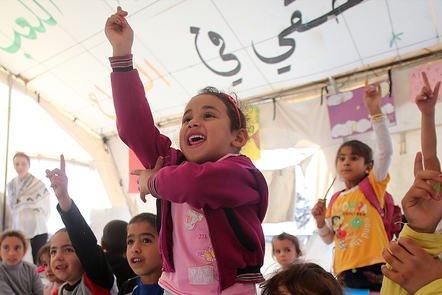
Learn how to teach and support young people across the globe affected by violence, conflict or displacement. Find out how to help students dealing with trauma. You’ll hear from experienced teachers talking about the challenges, what they learnt, and strategies they have used when teaching migrant and refugee learners both in countries affected by conflict and in host countries.

Class Deals by MOOC List - Click here and see FutureLearn's Active Discounts, Deals, and Promo Codes.

Whether you are a language teacher, a teacher of another subject, or a volunteer working with refugees and migrant learners, you’ll find ideas and strategies that you can use to better understand your learners. The course will help you to build inclusive classrooms and develop your learners’ confidence, taking into account the languages they know and their cultures.

What topics will you cover?

  • Global trends in migration and displacement as a result of different types of conflicts
  • The role and impact of language use as well as language development in migration and displacement
  • The range of educational pathways and curricula for students from formal to informal to remedial and the role of the community in supporting learning
  • The importance of challenging discrimination and promoting inclusive classrooms which foster collaborative learning
  • The learning and behaviour needs of primary and secondary learners who have experienced trauma, displacement and conflict
  • The effects of loss, trauma and displacement on the brain and how this knowledge can help teachers to understand learning difficulties and challenging behaviour
  • The importance of teacher self-care and the role of well-being in coping with the impact of trauma on teachers and learners

What will you achieve?
By the end of the course, you'll be able to...

  • Describe the causes, patterns and impact of migration on teaching and learning
  • Develop a profile of your learners and consider strategies to engage and include them
  • Apply a set of practical tools and techniques in the classroom environment to better cope with the impact of trauma on teachers and learners

Go to Class
MOOC List is learner-supported. When you buy through links on our site, we may earn an affiliate commission.

Related Courses

Creating Apps in the Classroom (FutureLearn) FutureLearn
Queensland University of Technology

Creating Apps in the Classroom (FutureLearn)

Find out how to create your own educational apps to support learning activities in your classroom. Learn how to create apps to use in your own teaching practice. There are many educational apps available, but the majority are created by non-educators. Platforms for developing apps are becoming increasingly user-friendly, so it’s easier for teachers to create apps to support their own classroom activities.

Self Paced
2 Weeks
Volunteering with Refugees (FutureLearn) FutureLearn
Cambridge Assessment English,The Human Hive

Volunteering with Refugees (FutureLearn)

Understand how to best support the emotional, linguistic, and social needs of refugees who are settling into a new country. Learn how to identify and respond to the needs of refugees and asylum seekers. When volunteering with refugees, it’s important to understand their backgrounds, current situations and needs in order to provide the best support.

Self Paced
3 Weeks
World War 1: Trauma, Memory, Controversy (FutureLearn) FutureLearn
The Open University

World War 1: Trauma, Memory, Controversy (FutureLearn)

Explore the traumatic effects of WW1 on soldiers and civilians. Discover how we remember and debate the history of this war. In this free online course, you will study the social, cultural, medical and diplomatic history of the First World War. Topics range from physical and mental trauma suffered by combatants to the traumatic experiences of civilians in wartime.

Self Paced
4 Weeks
Preparing for University (FutureLearn) FutureLearn
University of East Anglia

Preparing for University (FutureLearn)

Build the academic skills you need for learning at university and ease your transition from school learning to higher education. Develop writing, critical thinking, and analytical skills for university study. Learning at a university level requires enhanced critical thinking skills, as well as being able to hold a supported, substantive argument and critically analyse sources or data.

Self Paced
5-12 Weeks
Transforming Education in Challenging Environments (FutureLearn) FutureLearn
University College London,Centre for Lebanese Studies

Transforming Education in Challenging Environments (FutureLearn)

Discover practical ways teachers can transform the education of children and young people living in conflict-affected contexts. Build the knowledge needed to teach children affected by difficult contexts. Teachers play an important role in supporting vulnerable children affected by mass displacement, crisis, and conflict. Refugee children may also be victims of violence and other issues that impact their emotional wellbeing and ability to learn. Teachers need to be prepared to deal with these difficulties.

Self Paced
4 Weeks
Short Film in Language Teaching (FutureLearn) FutureLearn
The British Film Institute - BFI,INTO FILM

Short Film in Language Teaching (FutureLearn)

Find out how teaching with short film can bring alive the learning of languages and introduce rich cultural content to lessons. Learners of a new language face exciting challenges in developing their abilities to speak, listen, read and write and in learning about other cultures. Through short film, teachers can bring new worlds into the classroom and bring language learning alive.

Self Paced
3 Weeks
Improving Your Study Techniques (FutureLearn) FutureLearn
University of Groningen

Improving Your Study Techniques (FutureLearn)

Improve your study skills and get better results by learning to use the 'three-step study model'. Develop effective study skills for life. Learning is a fundamental part of life; many of us continue studying even when we leave formal education. This means good study skills are vital for all of us. Many, however, lack these skills and struggle to study effectively.

Self Paced
4 Weeks
The European Union: Crisis and Recovery (FutureLearn) FutureLearn
Dublin City University

The European Union: Crisis and Recovery (FutureLearn)

This course will develop your understanding of the recent history of the European Union and its prospects for the future. Learn about the recent challenges faced by the European Union. The fascinating course is designed to inform the public about the principal challenges that have faced the European Union over recent years including Brexit, the Euro Crisis, Migration, the Rule of Law Crisis, and COVID-19, and to communicate how the EU has responded to these challenges.

Self Paced
4 Weeks
Study UK: Prepare to Study and Live in the UK (FutureLearn) FutureLearn
British Council,The GREAT campaign,Study UK

Study UK: Prepare to Study and Live in the UK (FutureLearn)

Be prepared for university study in the UK by familiarising yourself with UK culture and higher education. Understand how to make the most of life and university study in the UK. The prestige of a UK university education attracts students from all over the world. However, research shows that transition to UK study is not always easy. Many feel challenged by an unfamiliar educational system, cultural differences, and working in a different language.

Self Paced
4 Weeks
Critical Thinking at University: An Introduction (FutureLearn) FutureLearn
University of Leeds

Critical Thinking at University: An Introduction (FutureLearn)

Critical thinking is a vital skill for university study whatever your discipline. Prepare for university now. Make sure you have the critical thinking skills required for university. Critical thinking is a vital skill at university and later in life. University study introduces you to new concepts, ways of learning and requires you to think critically. You need to know how to question information sources and how to evaluate different arguments.

Self Paced
2 Weeks