EdX

MedTech Go-To-Market Strategy (edX)

MedTech Go-To-Market Strategy (edX)

The most succinct and comprehensive introduction to MedTech education available online. Get to know the dynamics and ins-and-outs of this highly-regulated industry.

Class Deals by MOOC List - Click here and see EdX's Active Discounts, Deals, and Promo Codes.

Have an idea for a Health Technology device, but don't know where to begin? ****
Course 3: Go-to-Market Strategy is the third and final course in the MEDTECH FUNDAMENTALS by NEMIC Virtual Classroom Certificate Program, and serves to explore critical market concepts within the highly-regulated MedTech commercial space. Course 3 contains 4 modules:

  • Know Your Market
  • Reimbursement Strategy
  • Pricing Strategy
  • Go-to-Market Strategy

Researched, developed, and delivered by industry professionals from some of the world's most admired and successful companies in Health Tech, Go-to-Market Strategy will examine critical components of the market positioning of a medical device.
In this course, NEMIC Advisors will guide you through a series of activities that will analyze the current market, and various market segments, understanding the payer pool, exploring and drilling-down to pricing your innovation, and more.
Come experience the most succinct, comprehensive MedTech education available.
This course is part of the MedTech Fundamentals by NEMIC Virtual Classroom Professional Certificate.

What you'll learn

Know Your Market:

  • Market sizing
  • Market segmentation
  • Current market
  • Market entry points

Reimbursement Strategy:

  • How reimbursement interplays with commercial viability
  • CPT Codes
  • Identify proper coding
  • How to strategize proper coding acquisition

Pricing Strategy

  • How to calculate the value of your innovation
  • Role of value vs pricing vs sales
  • Consistency with your market strategy
  • Customer purchasing dynamics

Go-to-Market Strategy:

  • Value Proposition
  • Identify your "fit" within complexity
  • How to align strategy and goals
  • Maximize value to reach target markets

Go to Class
MOOC List is learner-supported. When you buy through links on our site, we may earn an affiliate commission.

Related Courses

Firm Level Economics: Markets and Allocations (Coursera) Coursera
University of Illinois at Urbana-Champaign

Firm Level Economics: Markets and Allocations (Coursera)

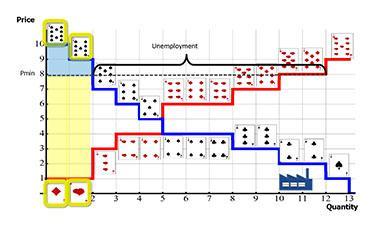
In this class, we will derive equilibrium outcomes across a variety of market structures. We will begin by understanding equilibrium under a market structure called Perfect Competition, a benchmark construction. Economists have tools to measure the efficiency of market outcomes. We next consider the polar extreme of a competitive market: a monopoly market. We will determine the monopoly equilibrium price and quantity and efficiency properties. Much economic activity takes place in markets with just a handful of very large producers.

Nov 4th 2026
4 Weeks
Marketing - Delivering the Value Proposition (edX) EdX
DoaneX,Doane University

Marketing - Delivering the Value Proposition (edX)

Examine the process of branding and its relationship to value creation. In today’s world consumers are constantly flooded by marketing efforts in every aspect of their lives. The best ideas, products, and solutions can only make an impact if they can reach the right audience, at the right time. One important aspect of this is developing and communicating a clear value proposition.

Self Paced
Self-Paced
Principles of Economics: Introduction - Getting to Know You (Coursera) Coursera
Rice University

Principles of Economics: Introduction - Getting to Know You (Coursera)

Economics and economic theory is fundamental to decision making in business, policy, and everyday life. If you're interested in a career in business, law, accounting, or investment then studying economics is a great foundation of knowledge. In this first course of a three course Specialization adapted from my ECON 100 course taught at Rice University, we'll cover the introduction to the basic concepts of microeconomics and macroeconomics.

Nov 9th 2026
5-12 Weeks
Forwards and Futures (edX) EdX
New York Institute of Finance

Forwards and Futures (edX)

Develop a comprehensive, practical understanding of forwards and futures including market conventions, contract specifications, valuation, and trading strategies. In this course – Forwards and Futures, the basic financial theories and concepts relevant to the topic will be discussed. The relationship between Forwards and Futures and the underlying security will also be explained. We'll also review concepts such as cost of carry, transportation, storage, and convenience factors that should be incorporated in the valuation of Forwards and Futures.

Self Paced
Self-Paced
Trading Algorithms (Coursera) Coursera
Indian School of Business - ISB

Trading Algorithms (Coursera)

This course covers two of the seven trading strategies that work in emerging markets. The seven include strategies based on momentum, momentum crashes, price reversal, persistence of earnings, quality of earnings, underlying business growth, behavioral biases and textual analysis of business reports about the company.

Nov 9th 2026
4 Weeks
Fundamentals of Microeconomics (edX) EdX
Universidad Carlos III de Madrid - UC3M,UC3Mx

Fundamentals of Microeconomics (edX)

Learn how to analyze markets and gain a solid foundation in economic concepts. Are you interested in obtaining a solid background in economics? This economics course offers a thorough view of markets, including their strengths and failures. You will learn how to view markets from an economist’s perspective to help you better understand the most relevant economic problems.

Self Paced
Self-Paced
Economics of Money and Banking (Coursera) Coursera
Columbia University

Economics of Money and Banking (Coursera)

The last three or four decades have seen a remarkable evolution in the institutions that comprise the modern monetary system. The financial crisis of 2007-2009 is a wakeup call that we need a similar evolution in the analytical apparatus and theories that we use to understand that system. Produced and sponsored by the Institute for New Economic Thinking, this course is an attempt to begin the process of new economic thinking by reviving and updating some forgotten traditions in monetary thought that have become newly relevant.

Nov 23rd 2026
13-24 Weeks
Firm Level Economics: Consumer and Producer Behavior (Coursera) Coursera
University of Illinois at Urbana-Champaign

Firm Level Economics: Consumer and Producer Behavior (Coursera)

All goods and services are subject to scarcity at some level. Scarcity means that society must develop some allocation mechanism – rules to determine who gets what. Over recorded history, these allocation rules were usually command based – the king or the emperor would decide. In contemporary times, most countries have turned to market based allocation systems. In markets, prices act as rationing devices, encouraging or discouraging production and encouraging or discouraging consumption in such a way as to find an equilibrium allocation of resources.

Nov 2nd 2026
4 Weeks