EdX

Fundamentals of Microeconomics (edX)

Fundamentals of Microeconomics (edX)

Learn how to analyze markets and gain a solid foundation in economic concepts. Are you interested in obtaining a solid background in economics? This economics course offers a thorough view of markets, including their strengths and failures. You will learn how to view markets from an economist’s perspective to help you better understand the most relevant economic problems.

Class Deals by MOOC List - Click here and see EdX's Active Discounts, Deals, and Promo Codes.

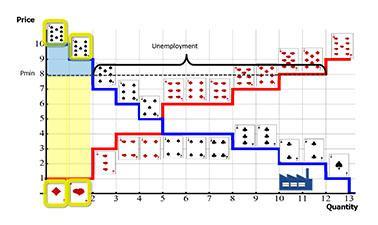
This course follows a rigorous approach that combines visual arguments with realistic examples to help you connect core economic concepts with your own experience.

At the end of this course, you will be able to answer questions like:

  • Why do most people in rich countries have a mortgage and why is it a problem that those in the developing world do not?
  • Why is the environment one of the most challenging problems of modern societies?
  • How could we estimate the economic impact of cannabis legalization?
  • The only required knowledge is certain familiarity with graph reading and basic high school mathematics.

What you'll learn

  • Basic tools of analysis in economics
  • The model of perfect competition and its elements
  • Elasticities and their applications
  • Taxes, subsidies and government intervention
  • Why markets fail and what to do about it:
  • Market power
  • Asymmetric information
  • Externalities
  • Public goods

Syllabus

Week 1: Introduction
Scarcity, opportunity cost, efficiency and equity, how are resources allocated in reality? Theories, models and assumptions. Model I of international trade: how countries trade what they have? Model II of international trade: how countries specialize? Some useful economic concepts.

Week 2: The Demand
The market. The model of perfect competition. Other market structures. The demand (I): Introduction. The demand (II): The unit-demand case. The demand (III): The general case. Marginal utilities. Market demands. Linear demands. Movements and shifts.

Week 3: The Supply
The unit-supply case. The costs. The general case. Movements and shifts. Elasticities (I): Definitions. Elasticities (II): applications.

Week 4: The equilibrium
Definition. The relevance of the equilibrium: logical and experimental support. Applications of the equilibrium (I): comparative statics. Applications of the equilibrium (II): welfare analysis. Measuring welfare. Estimating demand and supply in reality.

Week 5: Government intervention
Regulated prices. Taxes (I): classification. Taxes (II): analysis. Taxes (III): welfare. Taxes (IV): the incidence of a tax. Taxes (V): formal analysis.

Week 6: Market failures (I)
Introduction to market failures. Market power (I): definition. Market power (II): a model. Market power (III): welfare analysis. Market power (IV): comparative statics. Market power (V): barriers to entry. Market power (VI): solutions. Asymmetric information. Adverse selection. Moral hazard.

Week 7: Market failures (II)
Externalities (I). Classification of externalities. Externalities (II) Private solutions to externalities. Externalities (III) Public solutions to externalities. Public goods (I): definition. Public goods (II): analysis.


Go to Class
MOOC List is learner-supported. When you buy through links on our site, we may earn an affiliate commission.

Related Courses

Commercial Property and Opportunity (edX) EdX
University of Cape Town,UCT

Commercial Property and Opportunity (edX)

Learn about commercial property and the drivers of commercial property opportunities, with guidance from UCT faculty. Commercial property is a multifaceted and complex industry. Without a grasp of the landscape, it can be challenging to find worthwhile investment opportunities. In this course, you'll gain a detailed and big-picture understanding of the commercial property industry.

Self Paced
Self-Paced
Cosmopolitan Tang: Aristocratic Culture in China (edX) EdX
HarvardX,Harvard University

Cosmopolitan Tang: Aristocratic Culture in China (edX)

Explore the reunification of China under the Tang with a focus on aristocratic culture — from poetry to calligraphy to literature. By the Tang period, China was divided into northern and southern dynasties with different rulers and political systems. The north was conquered by relatively unsophisticated barbarians, but in the south, the aristocratic families established a refined appreciation of writing and literature.

Self Paced
Self-Paced
Understanding Wireless: Technology, Economics, and Policy (edX) EdX
University of Notre Dame,NotreDameX

Understanding Wireless: Technology, Economics, and Policy (edX)

Interested in learning how mobile smartphones and tablets convert digital information to and from electromagnetic signals in the radio frequency (RF) spectrum? Curious how radio designers and spectrum regulators avoid harmful interference within a network or among different wireless services? Debating whether television (TV) band spectrum or cellular spectrum is more valuable to society?

No sessions available
5-12 Weeks
Macroeconometric Forecasting (edX) EdX
International Monetary Fund - IMF,IMFx

Macroeconometric Forecasting (edX)

Learn how to create and assess forecasting models to predict macroeconomic variables such as inflation and economic growth. In this macroeconomics course, you will learn to predict macroeconomic variables such as inflation, growth or consumption, and to create statistical models in economics and use them to predict responses to economic policy.

Self Paced
Self-Paced
Programación y políticas financieras, Parte 2: Diseño de programas (FPP.2x) (edX) EdX
International Monetary Fund - IMF,IMFx

Programación y políticas financieras, Parte 2: Diseño de programas (FPP.2x) (edX)

Aprenda a realizar pronósticos de cuentas macroeconómicas y a diseñar un programa económico para un estudio de caso de país. Con este curso de macroeconomía mejorará sus aptitudes para analizar políticas macroeconómicas y aprenderá a diseñar un programa económico y financiero utilizando datos económicos reales. El ejercicio de programación financiera simula tareas que los economistas del Fondo Monetario Internacional (FMI) encargados de los distintos países llevan a cabo cotidianamente en su labor de supervisión y elaboración de programas de países.

Self Paced
Self-Paced
Financial Programming and Policies, Part 2: Program Design (edX) EdX
International Monetary Fund - IMF,IMFx

Financial Programming and Policies, Part 2: Program Design (edX)

Learn how to forecast macroeconomic accounts and design an economic program for a case study country. In this macroeconomics course, you will improve your skills in macroeconomic policy analysis and learn to design an economic and financial program, using real economic data. The financial programming exercise simulates what IMF (International Monetary Fund) desk economists routinely do in their country surveillance and program work.

Self Paced
Self-Paced
Financial Programming and Policies, Part 1: Macroeconomic Accounts & Analysis (edX) EdX
International Monetary Fund - IMF,IMFx

Financial Programming and Policies, Part 1: Macroeconomic Accounts & Analysis (edX)

A course on the macroeconomic accounts, their interrelationships, and the analysis of economic developments. How healthy is the state of the economy? How can economic policy help support or restore health to the economy? These questions are at the heart of financial programming. In our FPP courses you will learn the building blocks of how to answer to these questions.

Self Paced
Self-Paced