Material Jetting and Stereolithography (Coursera)

Material Jetting and Stereolithography (Coursera)

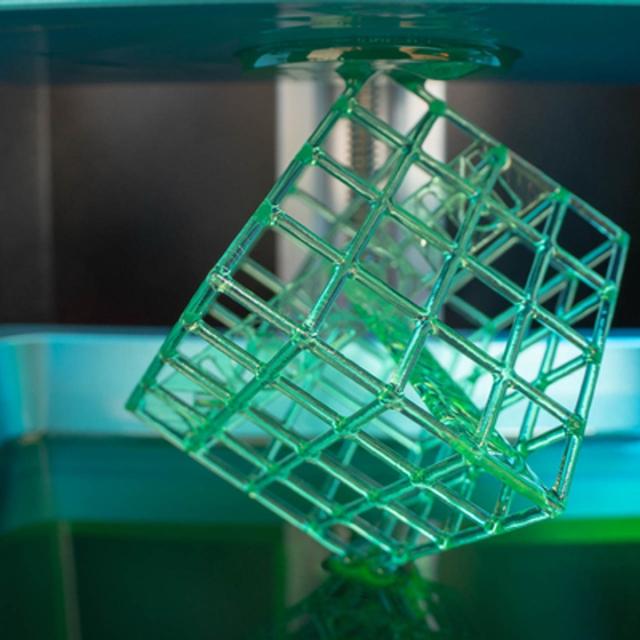
This course looks at two photopolymer resin-based processes: material jetting and stereolithography. We walk through the build preparation, printing, and post-processing for both processes, and discuss the kinds of applications for which these processes are well suited.

Class Deals by MOOC List - Click here and see Coursera's Active Discounts, Deals, and Promo Codes.

The necessary elements for each course are lecture videos, knowledge checks, and project completion. For additional information on certain topics, I've included supplemental readings and videos throughout various lessons that might enhance your knowledge. Because all resources are not available to all students, these materials are optional.
In addition, you will note that some of the lectures feature our department’s graduate students. These excellent students are sometimes closer to the material, having learned it recently, so we greatly appreciate their participation in the instructional process.

What You Will Learn
Students will identify the key elements of two photopolymer resin based processes: PolyJet and stereolithography.

Course 3 of 5 in the Additive Manufacturing Specialization.

Syllabus

WEEK 1
Course Introduction
This course looks at two photopolymer resin-based processes: material jetting and stereolithography. We walk through the build preparation, printing, and post-processing for both processes, and discuss the kinds of applications for which these processes are well suited. The necessary elements for each course are lecture videos, knowledge checks, and project completion. For additional information on certain topics, I've included supplemental readings and videos throughout various lessons that might enhance your knowledge. Because all resources are not available to all students, these materials are optional. In addition, you will note that some of the lectures feature our department’s graduate students. These excellent students are sometimes closer to the material, having learned it recently, so we greatly appreciate their participation in the instructional process.

WEEK 2
Module 3.1: Material Jetting
This module introduces you to material jetting.

WEEK 3
Module 3.2: Stereolithography
This module introduces you to stereolithography.

WEEK 4
Module 3.3: Course Project and Wrap-Up
This module highlights the feature of material jetting that distinguishes it from most other additive manufacturing processes: it can combine multiple materials into a print with ease. You will work with experimental data to relate the ratio of material mixture to the hardness as measured with a durometer.

Go to Class
MOOC List is learner-supported. When you buy through links on our site, we may earn an affiliate commission.

Related Courses

Rigid Body Dynamics (Coursera) Coursera
Korea Advanced Institute of Science and Technology - KAIST

Rigid Body Dynamics (Coursera)

This course teaches dynamics, one of the basic mechanics subjects of Mechanical Engineering. Students would be able to organize their knowledge about force and motion, work-energy, impulse-momentum in view of Newton's 2nd law and its integration over time and displacement. The Engineering Dynamics consists of two parts: particle dynamics and rigid body dynamics. This is the second part of the dynamics: rigid body dynamics.

Oct 12th 2026
13-24 Weeks
Internet of Things: Multimedia Technologies (Coursera) Coursera
University of California, San Diego

Internet of Things: Multimedia Technologies (Coursera)

Content is an eminent example of the features that contributed to the success of wireless Internet. Mobile platforms such as the Snapdragon™ processor have special hardware and software capabilities to make acquisition, processing and rendering of multimedia content efficient and cost-effective.

Oct 12th 2026
3 Weeks
An Introduction to Digital Manufacturing and 3D Printing (FutureLearn) FutureLearn
Labdox

An Introduction to Digital Manufacturing and 3D Printing (FutureLearn)

Gain an insight into the world of 3D printing, and understand the relationship between digital manufacturing and industry 4.0. Learn about the world of 3D printing and digital manufacturing. 3D printing and digital manufacturing is driving a world with less waste, less inventory, and lower CO2 emissions. As we look to the future, the support for using 3D printing across many different industries and sectors will only increase.

Feb 28th 2022
2 Weeks
Technology clusters for the Next Production Revolution in Africa (POK) Polimi OPEN KNOWLEDGE
Politecnico di Milano

Technology clusters for the Next Production Revolution in Africa (POK)

A short introduction to Additive Manufacturing and Smart Agriculture as enabling technology clusters for NPR. The course is part of a series of Sprint MOOC addressing the Next Production Revolution paradigma, as new wave of technological innovation. It addresses people from anywhere in the world, from industrialized economies as well as from “developing countries” and particularly from Africa.

Available
2 Weeks
Additive Manufacturing and 3D Printing: Costs Structures and Benefits (FutureLearn) FutureLearn
EIT RawMaterials,LUT University

Additive Manufacturing and 3D Printing: Costs Structures and Benefits (FutureLearn)

Discover the applications and potential of metal additive manufacturing when used with other technologies in the process chain. Learn how additive manufacturing and 3D printing could benefit your organisation. This short course will develop your understanding of the cost structure and benefits of additive manufacturing (AM) and 3D printers, as well as the competitive business advantages additive manufacturing can provide.

Oct 11th 2021
4 Weeks
Biomaterials and Biofabrication: Design, Engineering and Innovation (edX) EdX
University of Bayreuth,BayreuthX

Biomaterials and Biofabrication: Design, Engineering and Innovation (edX)

Take our MOOC to expand your knowledge about biomaterials, biomedical engineering, additive manufacturing, tissue engineering and to obtain insights on the future of biofabrication. This MOOC will benefit individuals working in the biomedical sector to discover emerging trends and achieve their next career step.

Self Paced
Self-Paced
Digital Signal Processing 3: Analog vs Digital (Coursera) Coursera
École Polytechnique Fédérale de Lausanne

Digital Signal Processing 3: Analog vs Digital (Coursera)

Digital Signal Processing is the branch of engineering that, in the space of just a few decades, has enabled unprecedented levels of interpersonal communication and of on-demand entertainment. By reworking the principles of electronics, telecommunication and computer science into a unifying paradigm, DSP is a the heart of the digital revolution that brought us CDs, DVDs, MP3 players, mobile phones and countless other devices.

Oct 12th 2026
4 Weeks
Converter Circuits (Coursera) Coursera
University of Colorado Boulder

Converter Circuits (Coursera)

This course introduces more advanced concepts of switched-mode converter circuits. Realization of the power semiconductors in inverters or in converters having bidirectional power flow is explained. Power diodes, power MOSFETs, and IGBTs are explained, along with the origins of their switching times. Equivalent circuit models are refined to include the effects of switching loss. The discontinuous conduction mode is described and analyzed. A number of well-known converter circuit topologies are explored, including those with transformer isolation.

Oct 12th 2026
4 Weeks
Material Processing (Coursera) Coursera
Georgia Institute of Technology

Material Processing (Coursera)

Have you ever wondered why ceramics are hard and brittle while metals tend to be ductile? Why some materials conduct heat or electricity while others are insulators? Why adding just a small amount of carbon to iron results in an alloy that is so much stronger than the base metal? In this course, you will learn how a material’s properties are determined by the microstructure of the material, which is in turn determined by composition and the processing that the material has undergone.

Oct 12th 2026
2 Weeks
Requirements Writing (Coursera) Coursera
UNSW Sydney - University of New South Wales

Requirements Writing (Coursera)

Welcome to "Requirements Writing". As the title indicates, over the next four weeks, we will be looking at the important task of writing of text-based requirement statements. The course takes you step by step through the rules for writing requirements statements in accordance with the "Guide for Writing Requirements" published by the International Council on Systems Engineering (INCOSE).

Oct 18th 2026
5-12 Weeks
Advanced Functional Ceramics (Coursera) Coursera
Yonsei University

Advanced Functional Ceramics (Coursera)

To realize next-generation devices, novel ceramic materials with ultimate physical and chemical properties are required. For this purpose, a few intrinsic and extrinsic approaches for the development of new functional ceramics are proceeding. This course provides the fundamentals of functional ceramics and the materials design rules for developing advanced ceramics with ultimate physical and chemical properties.

Oct 12th 2026
5-12 Weeks
Electrodynamics: In-depth Solutions for Maxwell’s Equations (Coursera) Coursera
Korea Advanced Institute of Science and Technology - KAIST

Electrodynamics: In-depth Solutions for Maxwell’s Equations (Coursera)

This course is the fourth course in the Electrodynamics series, and is directly proceeded by Electrodynamics: Electric and Magnetic Fields. Previously, we have learned about visualization of fields and solutions which were not time dependent. Here, we will return to Maxwell's Equations and use them to produce wave equations which can be used to analyze complex systems, such as oscillating dipoles. We will also introduce AC circuits, and how they can be simplified, solved, and applied.

Oct 12th 2026
5-12 Weeks