Les deux infinis et nous (Coursera)

Offered by École Polytechnique,
Les deux infinis et nous (Coursera)

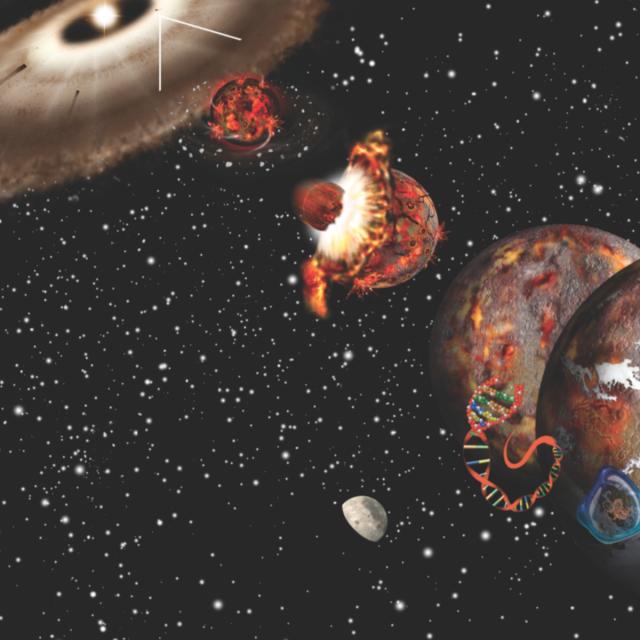
Partez à la découverte de l'infiniment grand et de l'infiniment petit dans leurs aspects les plus proches de notre quotidien, en compagnie de physiciens et de physiciennes qui vont vous faire découvrir leur présence insoupçonnée dans notre vie de tous les jours. Vous vous initierez à la vie et aux métiers d'une grande collaboration en physique de l'infiniment petit et de l'infiniment grand, vous découvrirez comment les outils développés dans ces domaines ont trouvé des applications inattendues, comment la physique nucléaire a profondément modifié les domaines de l'énergie et de la santé, et comment les propriétés de certaines particules aident à présent d'autres disciplines à sonder la matière d'une manière totalement différente.

Class Deals by MOOC List - Click here and see Coursera's Active Discounts, Deals, and Promo Codes.

Ce cours en français fait partie du MOOC "Voyages de l'infiniment grand à l'infiniment petit", conçus par des physiciens et des physiciennes du Labex P2IO (Physique des 2 Infinis et des Origines, IPP et Université Paris-Saclay) regroupant des laboratoires de physique de l'infiniment grand et de l'infiniment petit situés à Orsay et Saclay.

Course 4 of 4 in the Voyages de l'infiniment grand à l'infiniment petit Specialization

Syllabus

WEEK 1
Des Infinis et des Hommes
Ce module s'intéresse à la nature de la recherche fondamentale et à ses liens avec notre quotidien. Il aborde aussi la manière dont travaillent les hommes et les femmes qui participent aux progrès de la connaissance.

WEEK 2
Des technologies dans notre quotidien
Ce module décrit des technologies qui sont présentes dans notre quotidien et qui présentent des liens forts avec la physique de l'infiniment grand et de l'infiniment petit, tantôt par le biais des concepts, tantôt par celui des outils.

WEEK 3
De nouveaux regards sur le monde
Ce module montre comment les propriétés de certaines particules ont pu être exploitées pour mieux sonder la structure de la matière, en utilisant le rayonnement synchrotron, les neutrinos ou les muons.

WEEK 4
Les noyaux au service de l'énergie et de la santé
Ce module décrit des applications importantes de la physique nucléaire afin de produire de l'énergie ou bien d'aider la recherche médicale par de nouvelles techniques d'imagerie et de soin.

Go to Class
MOOC List is learner-supported. When you buy through links on our site, we may earn an affiliate commission.

Related Courses

Politics and Economics of International Energy (Coursera) Coursera
Sciences Po

Politics and Economics of International Energy (Coursera)

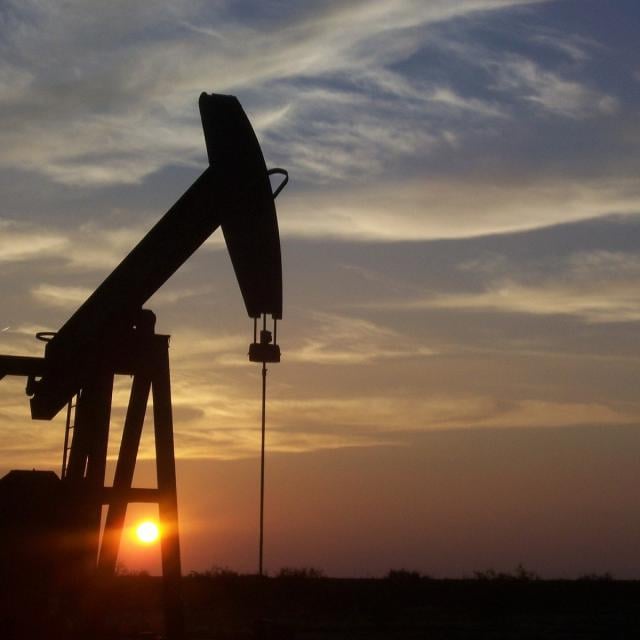
Energy issues have always been important in international relations, but in recent years may have become even more important than in the past due to the widespread awareness of existing limits to energy sources and negative climate impacts. The course discusses global trends in energy consumption and production, various available scenarios for potential developments in the coming decades, the availability of oil reserves and the evolution of the oil industry.

Jun 15th 2026
5-12 Weeks
The Finite Element Method for Problems in Physics (Coursera) Coursera
University of Michigan

The Finite Element Method for Problems in Physics (Coursera)

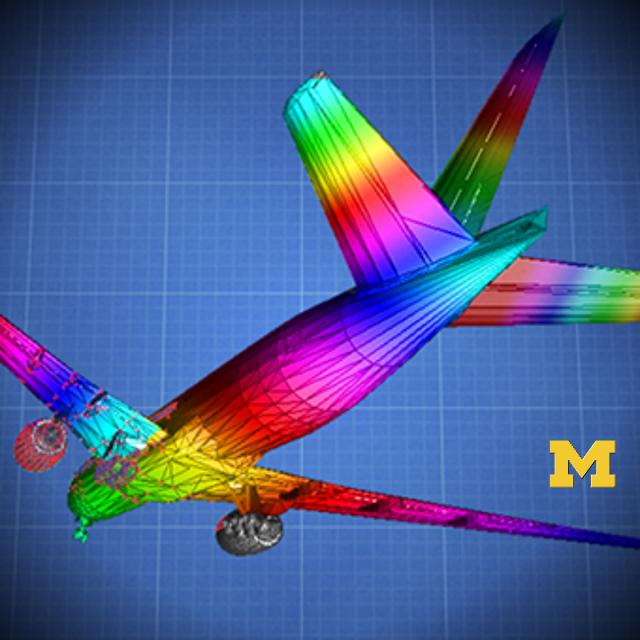
This course is an introduction to the finite element method as applicable to a range of problems in physics and engineering sciences. The treatment is mathematical, but only for the purpose of clarifying the formulation. The emphasis is on coding up the formulations in a modern, open-source environment that can be expanded to other applications, subsequently.

Jun 15th 2026
13-24 Weeks
Introduction to Chemistry: Reactions and Ratios (Coursera) Coursera
Duke University

Introduction to Chemistry: Reactions and Ratios (Coursera)

This is an introductory course for students with limited background in chemistry; basic concepts involved in chemical reactions, stoichiometry, the periodic table, periodic trends, nomenclature, and chemical problem solving will be emphasized with the goal of preparing students for further study in chemistry as needed for many science, health, and policy professions.

Jun 15th 2026
5-12 Weeks
Phases of Matter: Solid, Liquid, Gas and Beyond (Coursera) Coursera
University of Colorado Boulder

Phases of Matter: Solid, Liquid, Gas and Beyond (Coursera)

Complex systems can exhibit emergent phenomena, wherein the interplay of simple underlying rules governing the constituent parts leads to rich and unexpected behavior of the whole. Condensed matter physics is the branch of physics devoted to understanding such emergence in physical systems. It is the largest subfield of physics, and has developed a wealth of ideas and techniques for taming complexity. The course provides an introduction to this physics of emergence.

Jun 15th 2026
4 Weeks
Kinematics: Describing the Motions of Spacecraft (Coursera) Coursera
University of Colorado Boulder

Kinematics: Describing the Motions of Spacecraft (Coursera)

The movement of bodies in space (like spacecraft, satellites, and space stations) must be predicted and controlled with precision in order to ensure safety and efficacy. Kinematics is a field that develops descriptions and predictions of the motion of these bodies in 3D space. This course in Kinematics covers four major topic areas: an introduction to particle kinematics, a deep dive into rigid body kinematics in two parts (starting with classic descriptions of motion using the directional cosine matrix and Euler angles, and concluding with a review of modern descriptors like quaternions and Classical and Modified Rodrigues parameters).

Jun 15th 2026
4 Weeks
Wind resources for renewable energies (Coursera) Coursera
École Polytechnique

Wind resources for renewable energies (Coursera)

The main goal of this course is to get the necessary knowledge on atmospheric and fluid dynamics in order to quantify the wind resource of a local or regional area. We’ll learn about basic meteorology, the specific dynamics of turbulent boundary layers and some standard techniques to estimate wind resources regardless of the type of turbine used or the level of efficiency achieved.

Jun 15th 2026
4 Weeks
Flight Mechanics - Anemobarometry (Coursera) Coursera
ISAE-SUPAERO

Flight Mechanics - Anemobarometry (Coursera)

This course focuses on the physics of the atmosphere and its consequences on speed and altitude measurements. At the end of this course, you will understand precisely the meaning of the speed and altitude indication available to the pilot of an airplane. You will understand the difference between standard and actual atmosphere and be able to perform basic altitude and speed correction computations.

Jun 15th 2026
3 Weeks
Energy Harvesting (Coursera) Coursera
Sungkyunkwan University - SKKU

Energy Harvesting (Coursera)

Joining this course presents opportunity to learn about energy harvesting that refers to a technology that converts the energy discarded in our daily lives into useful electrical energy that we can use. As we all know, most of low-power electronics, such as remote sensors, are driven by batteries. However, even when it comes to long-lasting batteries, they face an issue that is a regular replacement. It can turn out to be costly as there are hundreds of sensors in remote locations.

Jun 15th 2026
4 Weeks
Physics 101 - Energy and Momentum (Coursera) Coursera
Rice University

Physics 101 - Energy and Momentum (Coursera)

This course serves as an introduction to the physics of energy and momentum. Upon completion, learners will have an understanding of how mathematical laws and conservation principles describe the motions and interactions of objects all around us. They will gain experience in solving physics problems with tools such as graphical analysis, algebra, vector analysis, and calculus.

Jun 15th 2026
4 Weeks
Particle Physics: an Introduction (Coursera) Coursera
University of Geneva

Particle Physics: an Introduction (Coursera)

This course introduces you to subatomic physics, i.e. the physics of nuclei and particles. More specifically, the following questions are addressed: What are the concepts of particle physics and how are they implemented?; What are the properties of atomic nuclei and how can one use them?; How does one accelerate and detect particles and measure their properties?; What does one learn from particle reactions at high energies and particle decays?; How do electromagnetic interactions work and how can one use them?; How do strong interactions work and why are they difficult to understand?; How do weak interactions work and why are they so special?; What is the mass of objects at the subatomic level and how does the Higgs boson intervene?; How does one search for new phenomena beyond the known ones?; What can one learn from particle physics concerning astrophysics and the Universe as a whole?

Jun 15th 2026
5-12 Weeks