L'entrepreneuriat social: faire son business plan (Coursera)

Offered by ESSEC Business School,
L'entrepreneuriat social: faire son business plan (Coursera)

Ce MOOC a pour vocation de vous aider à créer votre entreprise à but social ou environnemental en vous aidant à vous poser toutes les "bonnes questions" : besoin social, proposition de valeur, modèle économique, financement, statut juridique, mesure de l'impact social...Thierry Sibieude, professeur titulaire de la Chaire Innovation et Entrepreneuriat social et une vingtaine d'acteurs inspirants, entrepreneurs et intrapreneurs sociaux ou experts, vous apporteront leur éclairage inspirant

Class Deals by MOOC List - Click here and see Coursera's Active Discounts, Deals, and Promo Codes.

Que vous envisagiez de créer une entreprise sociale ou de lancer un nouveau projet à visée sociale dans votre entreprise actuelle, ce MOOC est pour vous !

What You Will Learn

  • Décrire ce qu'est un "bon" business plan
  • Citer les spécificités du business plan social, de l'analyse du besoin social à la mesure d'impact social
  • Lister l'ensemble des questions à se poser pour créer son entreprise sociale : analyse d'opportunité, modèle économique, statut juridique...
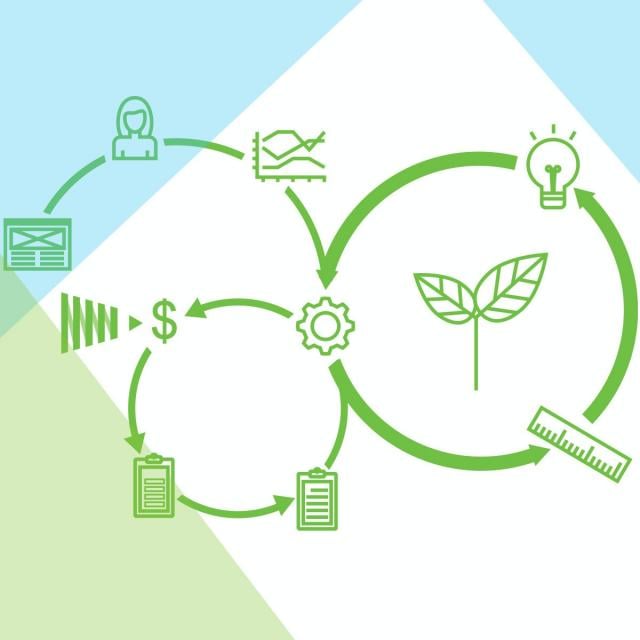
  • Utiliser le social business model canvas

Syllabus

WEEK 1
Découvrir le business plan social
Au terme de cet épisode vous saurez répondre aux 3 questions suivantes :1/ Pourquoi, quand et comment, je dois faire un business plan 2/ Quel est le besoin social que je veux traiter et quelle évolution de la société je souhaite impulser ? 3/ Quelle mission je me donne pour y arriver ?

WEEK 2
Construire son business model
Au terme de cet épisode vous saurez répondre aux 3 questions suivantes : 1/ Pourquoi, quand et comment, je dois faire une analyse d’opportunité et une étude de marché 2/ Qui sont mes clients ? qui sont mes bénéficiaires ? quel est le parcours utilisateur pour mon client/mon bénéficiaire ? 3/ Quel sera mon modèle économique ?

WEEK 3
Financer son projet
Au terme de cet épisode vous saurez répondre aux 3 questions suivantes : 1/ Quel statut juridique adopter ? 2/ Quelles instances de gouvernance pour mon projet ? Comment s’organiseront les processus de décision dans mon organisation ? 3/ Comment formaliser ses prévisions financières ?

WEEK 4
Mesurer son impact social
Au terme de cet épisode vous saurez répondre aux 3 questions suivantes : 1/ Quels changements votre projet vise-t-il ? A quelles conditions ? 2/ Quelles sont vos parties prenantes ? Quels seront les principaux impacts de votre action sur chacune d’elle ? 3/ Quels indicateurs utiliserez-vous pour évaluer cet impact ?


Go to Class
MOOC List is learner-supported. When you buy through links on our site, we may earn an affiliate commission.

Related Courses

Financial Markets (Coursera) Coursera
Yale University

Financial Markets (Coursera)

An overview of the ideas, methods, and institutions that permit human society to manage risks and foster enterprise. Emphasis on financially-savvy leadership skills. Description of practices today and analysis of prospects for the future. Introduction to risk management and behavioral finance principles to understand the real-world functioning of securities, insurance, and banking industries. The ultimate goal of this course is using such industries effectively and towards a better society.

Sep 28th 2026
5-12 Weeks
The Art of Negotiation (Coursera) Coursera
University of California, Irvine

The Art of Negotiation (Coursera)

The art of negotiation comes into play daily in the life of employees at all levels and in every position. Participants explore how current approaches to negotiation strategy and tactics are used, what negotiation entails, types of negotiation relationships that exist from hard bargain to win-win, to fully partnered relationships and personal ones. The course explores the personal and behavioral characteristics of an effective negotiator. Participants discuss how empowerment, power, and authority affect the negotiation process and outcome. Topics include how important it is to plan and prepare for a negotiation session.

Sep 28th 2026
4 Weeks
Design Thinking para Inovação (Coursera) Coursera
University of Virginia

Design Thinking para Inovação (Coursera)

Hoje em dia, a inovação é um negócio de todos. Se você for um gerente em uma corporação global, um empreendedor iniciando em uma função governamental ou um professor em uma escola primária, espera-se que todos sejam enxutos – para fazer melhor com menos. É por isso que todos nós precisamos de design thinking (pensamento criativo).

Sep 28th 2026
5-12 Weeks
Introduction to KPIs: Measuring Success in Business (Coursera) Coursera
Coursera Instructor Network

Introduction to KPIs: Measuring Success in Business (Coursera)

“What gets measured gets done” If we measure something, we are more likely to do it. This idea is important for people who work in business. They learn that the main problem is not deciding what to measure but figuring out how to measure it. After measuring, they still need to decide how to judge the results (the "metric") and how to track if a new product is successful over time (KPIs). This is a key concern for everyone in business because picking the wrong thing to measure can cause a business to fail.

Sep 28th 2026
1 Week
The Search for Great Ideas: Harnessing creativity to empower innovation (Coursera) Coursera
Michigan State University

The Search for Great Ideas: Harnessing creativity to empower innovation (Coursera)

Where do great business ideas come from? We all have compelling business concepts that we've been thinking about for years. In this course we will explore how to use observational tools and other techniques for idea generation and we will talk about how to evaluate the good ideas from the bad. The goal is to settle on a business idea that you are not only passionate about but also has real market application.

Sep 28th 2026
3 Weeks
Beyond Silicon Valley: Growing Entrepreneurship in Transitioning Economies (Coursera) Coursera
Case Western Reserve University

Beyond Silicon Valley: Growing Entrepreneurship in Transitioning Economies (Coursera)

The path for entrepreneurs to grow their companies outside of well-developed entrepreneurial ecosystems like Silicon Valley is challenging. Most markets around the world do not look like Silicon Valley, and they never will. But there are other models to support new businesses. In transitioning markets (where entrepreneurs do not have much access to private sector financing), government officials, donors, and business leaders are experimenting with creative approaches to support the growth of entrepreneurs. Northeast Ohio, whose largest city is Cleveland, is one such community. During our time together in this course, we will be exploring some of these innovative approaches.

Sep 28th 2026
5-12 Weeks
The entrepreneur's guide for beginners (Coursera) Coursera
University of Barcelona

The entrepreneur's guide for beginners (Coursera)

The Entrepreneur's Guide for beginners and is a course created in collaboration with all Catalan public universities and EIT Health and aims to be the starting point for all those who want to improve their knowledge and skills in the world entrepreneurship. In this course you will be able to identify a business opportunity, develop the business model (and the steps to validate it) and know the main mechanisms to find your business.

Sep 28th 2026
5-12 Weeks
Impact from Digital Transformation: Full course (Coursera) Coursera
EIT Digital

Impact from Digital Transformation: Full course (Coursera)

This course is about what you can do when everything around you seems to be moving due to digital change. It is about how to handle the disruptive process that tends to unfold in industry nowadays due to digitalisation. The way to handle this is what is here referred to as "Digital Transformation" and at the core of it, it is about understanding how the new business landscape is evolving and heading for a new position in that landscape. It is about corporate strategy.

Sep 28th 2026
5-12 Weeks