Language Testing During Awake Brain Surgery (FutureLearn)

Language Testing During Awake Brain Surgery (FutureLearn)

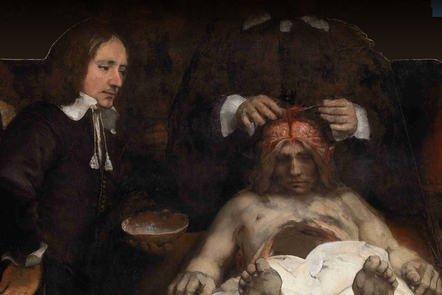
Discover the importance and the process of language testing during awake brain surgery. Language representation in the brain can be studied by testing language during awake brain surgery. In this course, you will get to know the importance of neurolinguistics and awake brain surgery by seeing the collaboration between surgical staff and neurolinguists before, during and after the operation.

Class Deals by MOOC List - Click here and see FutureLearn's Active Discounts, Deals, and Promo Codes.

You will also learn how to develop appropriate language tests for use during awake brain surgery and explore some of the latest developments in this field.

What topics will you cover?

  • Neuroatonomy of the brain
  • Language representation in the brain
  • Brain tumors
  • Awake brain surgery
  • Tailor-made language tests
  • Language testing during awake brain surgery
  • Neurotechnology

What will you achieve?
By the end of the course, you'll be able to...

  • Identify the complexity of the language representation in the brain
  • Explain the necessity of awake brain surgery
  • Describe the procedure including direct electrical stimulation (DES)
  • Identify the prerequisites of a good language test
  • Describe the complexity of developing a language test battery for LTABS
  • Evaluate the developments of the field

Who is the course for?
The course has been created for healthcare professionals involved in the procedure of awake surgery, including neurosurgeons and neurosurgical teams but also neurolinguists and clinical linguists who wish to start developing language tests.
Equally, it will be relevant for anyone involved in the procedure before, during and after awake brain surgery including neuro-anaesthesiologists, neuropsychologists, nursing staff and neurologists.
It also delivers useful information for patients with brain tumours and their proxies, to inform them about the surgical procedure they are about to undergo as well as anyone else intrigued by the topic.

Go to Class
MOOC List is learner-supported. When you buy through links on our site, we may earn an affiliate commission.

Related Courses

Cultural Studies and Modern Languages: an Introduction (FutureLearn) FutureLearn
University of Bristol

Cultural Studies and Modern Languages: an Introduction (FutureLearn)

Explore the culture, language and national identity of eight countries through their books, images, slogans and monuments. Are you interested in other countries? Do you want to study and understand other cultures? This free online course will take you on a journey through a number of periods from the medieval to the modern day, from Russia to Europe and all the way to Latin America.

No sessions available
4 Weeks
Studying in Italian - Language and Literature: a MOVE-ME Project Course (FutureLearn) FutureLearn
The Open University,Università per Stranieri di Siena - UniStraSi,NUI Galway

Studying in Italian - Language and Literature: a MOVE-ME Project Course (FutureLearn)

Study Language and Literature in Italian and develop the skills you need to take part in a European student mobility program. Each year thousands of students travel across Europe to study in a foreign language like Italian. This can be daunting, even for those who are fluent. This online course, developed within the MOVE-ME project by UniStraSi, NUI Galway and The Open University, will help, guiding you through the peculiarities of academic discourse in Italian, and enabling you to understand and produce written and aural academic texts.

No sessions available
5-12 Weeks
Neurosciences : audition, langage et musique (FUN) FUN
Université libre de Bruxelles

Neurosciences : audition, langage et musique (FUN)

De la berceuse chantée au bébé jusqu’au discours enflammé du politicien et ses intonations, du chanteur sous la douche au pianiste virtuose, le langage et la musique font partie de notre vie sociale, intellectuelle et affective tout au long de notre vie. Comment ces informations sont-elles traitées par le cerveau ? Comment est-on capable de déduire l’état émotionnel d’autrui à partir de la mélodie de sa voix, sa prosodie ? Comment la voix est-elle modifiée pendant un épisode émotionnel, quels sont les mécanismes cérébraux à l’œuvre ? Est-ce que l’apprentissage de la musique modifie la structure du cerveau ?

No sessions available
5-12 Weeks
Easy Way to Technical Writing (Stepik) Stepik
Instructor Made Course

Easy Way to Technical Writing (Stepik)

The course is aimed at simplifying your approach to technical writing in English as well as explaining some grammar, vocabulary, and punctuation typical of this genre. It summarizes the main points of successful and up-to-date technical writing and reading process. Feel free to enroll and enjoy these clear, practical, easy-to-access and inspiring materials.

Self-paced
Self-Paced
Introduction to Mathematical Thinking (Coursera) Coursera
Stanford University

Introduction to Mathematical Thinking (Coursera)

Learn how to think the way mathematicians do - a powerful cognitive process developed over thousands of years. Mathematical thinking is not the same as doing mathematics – at least not as mathematics is typically presented in our school system. School math typically focuses on learning procedures to solve highly stereotyped problems. Professional mathematicians think a certain way to solve real problems, problems that can arise from the everyday world, or from science, or from within mathematics itself.

Aug 10th 2026
5-12 Weeks
Brain Tumor Classification Using Keras (Coursera) Coursera
Coursera Project Network

Brain Tumor Classification Using Keras (Coursera)

In this 2-hour-long guided project, we will use an efficient net model and train it on a Brain MRI dataset. This dataset has more than 3000 Brain MRI scans which are categorized in four classes - Glioma Tumor, Meningioma Tumor, Pituitary Tumor and No Tumor. Our objective in this project is to create an image classification model that can predict Brain MRI scans that belong to one of the four classes with a reasonably high accuracy. Please note that this dataset, and the model that we train in the project, is for educational purposes only.

Mar 14th 2022
Self-Paced
Latino: forme e circolazione nella pars Orientis dell’Impero (Federica Web Learning) Federica Web Learning
University of Naples Federico II

Latino: forme e circolazione nella pars Orientis dell’Impero (Federica Web Learning)

Se per l’Occidente mancano testimonianze che non siano quelle indirette di trattazioni specifiche come l’Institutio oratoria di Quintiliano, l’Oriente ha restituito una serie di testimoni diretti delle forme dell’insegnamento del latino,tra I a.C. e VI d.C.: favorita fondamentalmente dall’occupazione militare e dai bisogni dell’amministrazione per tutta la prima età imperiale, nelle province eccentriche dell’Impero, la circolazione del latino venne ulteriormente incentivata da una politica che lo identificava con la lingua dell’amministrazione (e del diritto) a partire dal III secolo. Continuo, infatti, è il contatto dei latinofoni con allofoni che, spesso, si misero alla prova con l’apprendimento della lingua di Roma.

Apr 12th 2017
5-12 Weeks
Adventures in Writing (Stanford Online) Lagunita Stanford Online
Stanford University

Adventures in Writing (Stanford Online)

Welcome to Adventures in Writing, a series of graphic-novel style learning modules designed to help you learn more about and practice a range of effective written communication skills. You’ll immerse yourself in the adventures of Maya and Chris, using each module’s interactive exercises to apply what you’ve learned.

Self Paced
Self-Paced
Language Revival: Securing the Future of Endangered Languages (edX) EdX
University of Adelaide,AdelaideX

Language Revival: Securing the Future of Endangered Languages (edX)

Learn how the world’s endangered languages are revived and why this process is critical to preserving cultural identity. Language is an integral part of society. Wherever we come from, the words we use and the way in which we use them are fundamental to our cultural identity. In today’s increasingly globalised world, however, ‘linguicide’ – the loss of a language – is becoming all too common. But there is hope. The language revival movement has emerged as an important and effective response, and this course will introduce you to its key principles and techniques.

Self Paced
Self-Paced