FUN

Neurosciences : audition, langage et musique (FUN)

Neurosciences : audition, langage et musique (FUN)

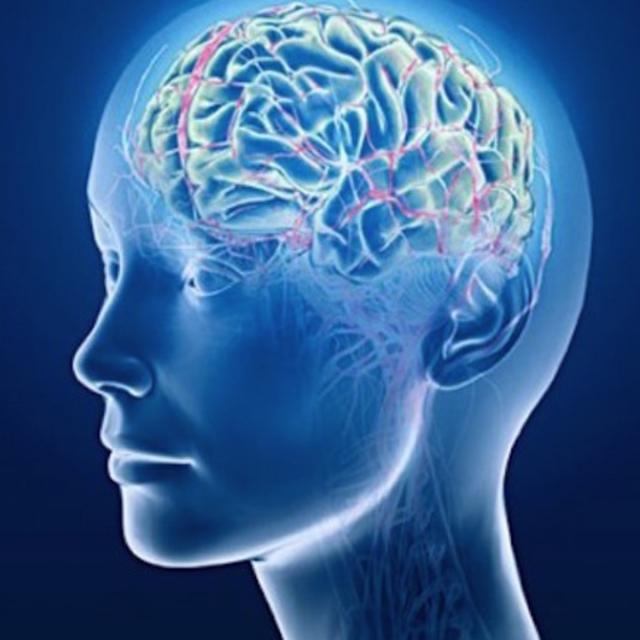
De la berceuse chantée au bébé jusqu’au discours enflammé du politicien et ses intonations, du chanteur sous la douche au pianiste virtuose, le langage et la musique font partie de notre vie sociale, intellectuelle et affective tout au long de notre vie. Comment ces informations sont-elles traitées par le cerveau ? Comment est-on capable de déduire l’état émotionnel d’autrui à partir de la mélodie de sa voix, sa prosodie ? Comment la voix est-elle modifiée pendant un épisode émotionnel, quels sont les mécanismes cérébraux à l’œuvre ? Est-ce que l’apprentissage de la musique modifie la structure du cerveau ?

Pourquoi certaines personnes sont-elles incapables, par exemple, de percevoir des fausses notes ? Quelles sont les conséquences cognitives et psychoaffectives d’une déficience auditive chez les enfants qui n’ont pas encore appris à parler ? Pourquoi les personnes âgées ont-elles du mal à comprendre la parole, surtout dans des environnements bruyants ? Comment peut-on évaluer ces différents types de troubles ? Peut-on y remédier ? Et, si tel est le cas, comment ?

Telles sont des questions auxquelles des neuroscientifiques de l’Université libre de Bruxelles, de l’Université de Genève et de l’Université de Montréal répondront dans le cours.
« Neurosciences : audition, langage et musique » est constitué de vidéos, de textes, de tests linguistiques et musicaux en ligne, d’articles scientifiques et de quizz qui vous permettront de bâtir ou d’étoffer vos connaissances sur la neuro-cognition du langage, de la prosodie et de la musique.

Format
Le MOOC propose une expérience d’apprentissage de 9 semaines qui vous permettront d’aborder 3 grandes thématiques (audition, langage et musique) par le biais d’études menées dans le champs des neurosciences.
Bien qu’il soit conseillé de suivre le MOOC dans son intégralité et à raison d’un module par semaine, tous les contenus seront accessibles dès le lancement afin de vous permettre, si vous le souhaitez, de naviguer librement en fonction de vos centres d’intérêts ou de vous constituer votre propre planning.
A l’intérieur de chaque module, nos expert.e.s vous présenteront, par le biais de vidéos et/ou de textes, les résultats de la recherche en neurosciences. Vous aurez ensuite l’occasion de réaliser différents types d’exercices pour vous entraîner ou tester votre compréhension.
A la fin de chaque module, une évaluation de type QCM (questions à choix multiples) vous aidera à déterminer dans quelle mesure vous maitrisez la matière présentée.
En fin de MOOC, une évaluation finale de type QCM vous permettra, en cas de réussite, de télécharger l’attestation de suivi avec succès.
Go to Class
MOOC List is learner-supported. When you buy through links on our site, we may earn an affiliate commission.

Related Courses

The Brain and Space (Coursera) Coursera
Duke University

The Brain and Space (Coursera)

This course is about how the brain creates our sense of spatial location from a variety of sensory and motor sources, and how this spatial sense in turn shapes our cognitive abilities. Knowing where things are is effortless. But “under the hood,” your brain must figure out even the simplest of details about the world around you and your position in it.

Aug 17th 2026
5-12 Weeks
Computational Neuroscience (Coursera) Coursera
University of Washington

Computational Neuroscience (Coursera)

This course provides an introduction to basic computational methods for understanding what nervous systems do and for determining how they function. We will explore the computational principles governing various aspects of vision, sensory-motor control, learning, and memory. Specific topics that will be covered include representation of information by spiking neurons, processing of information in neural networks, and algorithms for adaptation and learning.

Aug 17th 2026
5-12 Weeks
Éducation par la recherche : neurosciences à l’École III (FUN) FUN
Université Sorbonne Paris Cité

Éducation par la recherche : neurosciences à l’École III (FUN)

L’objectif de ce MOOC Éducation par la recherche : neurosciences à l'École III est de former les professeurs des écoles et du collège, les animateurs, les formateurs d'enseignants, un modèle de l’Éducation par la recherche appliqué aux neurosciences. Il s’agit notamment pour chaque participant de concevoir, mettre en oeuvre et consolider son projet Savanturiers.

No session available
5-12 Weeks
Introducción al Arte Sonoro (Coursera) Coursera
University of Barcelona

Introducción al Arte Sonoro (Coursera)

Concebido para personas formadas en cualquier disciplina y que se sientan atraídas por la creación artística vinculada al sonido: la escultura y la instalación sonoras, la música experimental, la improvisación, la poesía, la performance y otras prácticas artísticas que han terminado trascendiendo el ámbito tradicional de las artes plásticas y las escénicas. El seguimiento de este curso les dará una idea general de la creación.

Aug 17th 2026
5-12 Weeks
Think Again I: How to Understand Arguments (Coursera) Coursera
Duke University

Think Again I: How to Understand Arguments (Coursera)

In this course, you will learn what an argument is. The definition of argument will enable you to identify when speakers are giving arguments and when they are not. Next, you will learn how to break an argument into its essential parts, how to put them in order to reveal their connections, and how to fill in gaps in an argument by adding suppressed premises. By the end of this course, you will be better able to understand and appreciate arguments that you and other people present.

Aug 17th 2026
4 Weeks
Philosophy, Science and Religion: Religion and Science (Coursera) Coursera
University of Edinburgh

Philosophy, Science and Religion: Religion and Science (Coursera)

Philosophy, Science and Religion mark three of the most fundamental modes of thinking about the world and our place in it. Are these modes incompatible? Put another way: is the intellectually responsible thing to do to ‘pick sides’ and identify with one of these approaches at the exclusion of others? Or, are they complementary or mutually supportive? As is typical of questions of such magnitude, the devil is in the details. For example, it is important to work out what is really distinctive about each of these ways of inquiring about the world. In order to gain some clarity here, we’ll be investigating what some of the current leading thinkers in philosophy, science and religion are actually doing.

Aug 11th 2026
5-12 Weeks
Constructivism and Mathematics, Science, and Technology Education (Coursera) Coursera
University of Illinois at Urbana-Champaign

Constructivism and Mathematics, Science, and Technology Education (Coursera)

This course is designed to help participants examine the implications of constructivism for learning and teaching in science, mathematics, and technology focused areas. Course readings, discussions, and assignments will examine constructivist views of learning, research on students' ideas and idea-based interactions, research on instructional approaches taking student ideas into account, and challenges in implementing constructivist perspectives in instruction.

Aug 17th 2026
5-12 Weeks
Structuring Values in Modern China (Coursera) Coursera
The Chinese University of Hong Kong

Structuring Values in Modern China (Coursera)

This sequence of four courses will propose a multi-disciplinary approach to the study of Chinese cultural history conceived of as a succession of modes of rationality (philosophical, bureaucratic, and economic). The focus will be on the moments of paradigm shift from one mode of rationality to another. For each of these moments, cultural facts and artifacts—thought, literature, ritual—will be examined in relationship to changing social, political, and economic systems.

Aug 17th 2026
5-12 Weeks
Copyright for Multimedia (Coursera) Coursera
Duke University,Emory University,University of North Carolina

Copyright for Multimedia (Coursera)

Copyright questions about different formats (data, images, music and video) can be especially difficult. Sometimes the law specifically distinguishes between these different formats, and in most cases there are media-specific considerations that impact a copyright analysis. In this course we will look at four different media, paying special attention to the unique issues for each one and the kinds of information that is important when making copyright decisions for each type of material.

Aug 17th 2026
4 Weeks
Introduction to Forensic Science (Coursera) Coursera
Nanyang Technological University

Introduction to Forensic Science (Coursera)

We have all seen forensic scientists in TV shows, but how do they really work? What is the science behind their work? The course aims to explain the scientific principles and techniques behind the work of forensic scientists and will be illustrated with numerous case studies from Singapore and around the world.

Aug 24th 2026
5-12 Weeks