La Química de las Reacciones (Coursera)

La Química de las Reacciones (Coursera)

En este curso aprenderás los conocimientos básicos de reacciones químicas, lo cual te permitirá tener una mejor comprensión del estudio de la química, así como de la naturaleza. En general la mayoría de la gente le tiene miedo a la palabra química; sin embargo, debido a que la química es una ciencia central es necesario comprenderla y hacerla nuestra amiga.

Class Deals by MOOC List - Click here and see Coursera's Active Discounts, Deals, and Promo Codes.

En este curso podrás adentrarte a las reacciones químicas y cálculos de una manera gradual y relacionando los conceptos con situaciones de la vida cotidiana para que puedas tener una mayor comprensión.
Pero te pido, por favor, que realices cada una de las actividades que fueron planeadas para ayudarte a comprender esta hermosa ciencia.
Mucho éxito y estoy segura de que nos divertiremos mucho.

What You Will Learn

  • Adquirir los conocimientos básicos de las reacciones químicas que le permitan comprender la naturaleza y reactividades de los compuestos químicos.

Syllabus

WEEK 1: Tipos de reacciones químicas
En este curso aprenderás los conocimientos básicos de reacciones químicas, lo cual te permitirá tener una mejor comprensión del estudio de la química, así como de la naturaleza.
En general la mayoría de la gente le tiene miedo a la palabra química; sin embargo, debido a que la química es una ciencia central es necesario comprenderla y hacerla nuestra amiga. En este curso podrás adentrarte a las reacciones químicas y cálculos de una manera gradual y relacionando los conceptos con situaciones de la vida cotidiana para que puedas tener una mayor comprensión. Pero te pido, por favor, que realices cada una de las actividades que fueron planeadas para ayudarte a comprender esta hermosa ciencia. Mucho éxito y estoy segura de que nos divertiremos mucho.
WEEK 2: Estequiometría de ecuaciones químicas
WEEK 3: Disoluciones
WEEK 4: Equilibrio químico
Go to Class
MOOC List is learner-supported. When you buy through links on our site, we may earn an affiliate commission.

Related Courses

Fundamentals of Macroscopic and Microscopic Thermodynamics (Coursera) Coursera
University of Colorado Boulder

Fundamentals of Macroscopic and Microscopic Thermodynamics (Coursera)

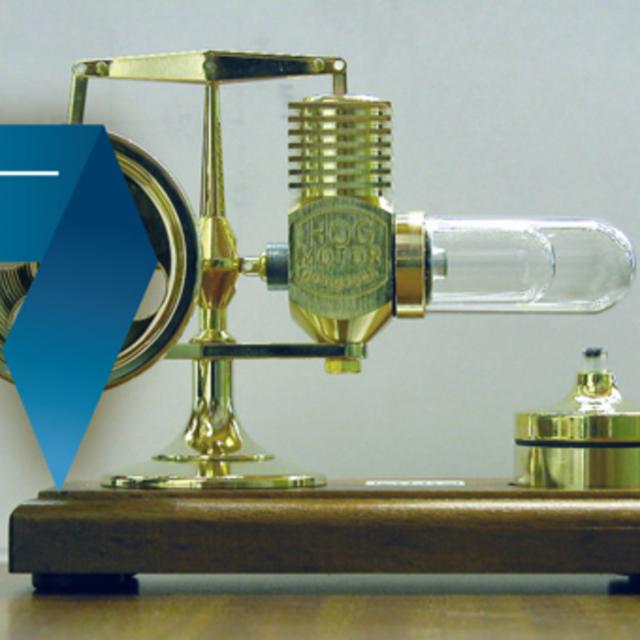
Course 1 first explores the basics of both macroscopic and microscopic thermodynamics from a postulatory point of view. In this view, the meaning of temperature, thermodynamic pressure and chemical potential are especially clear and easy to understand. In addition, the development of the Fundamental Relation and its various transformations leads to a clear path to property relations and to the concept of ensembles needed to understand the relationship between atomic and molecular structural properties and macroscopic properties.

Aug 3rd 2026
3 Weeks
Chemical Biology (Coursera) Coursera
University of Geneva

Chemical Biology (Coursera)

Chemical biology is a burgeoning field that has rapidly risen to prominence. This surge of interest has been fuelled by chemical biology’s applicability to understanding critical processes in live cells or model organisms in real time. This success has arisen because chemical biology straddles a nexus between chemistry, biology, and physics. Thus, chemical biology can harness rapid chemistry to observe or perturb biological processes, that are in turn reported using physical assays, all in an otherwise unperturbed living entity. Although its boundaries are endless, the multidisciplinary nature of chemical biology can make the field seem daunting; we beg to differ! Here, we deconstruct chemical biology into its core components, and repackage the material.

Aug 3rd 2026
5-12 Weeks
Materials Data Sciences and Informatics (Coursera) Coursera
Georgia Institute of Technology

Materials Data Sciences and Informatics (Coursera)

This course aims to provide a succinct overview of the emerging discipline of Materials Informatics at the intersection of materials science, computational science, and information science. Attention is drawn to specific opportunities afforded by this new field in accelerating materials development and deployment efforts.

Aug 10th 2026
5-12 Weeks
Thermodynamique : applications (Coursera) Coursera
École Polytechnique Fédérale de Lausanne

Thermodynamique : applications (Coursera)

Ce cours complète le MOOC « Thermodynamique : fondements » qui vous permettra de mettre en application les concepts fondamentaux de la thermodynamique. Pour atteindre cet objectif, le Professeur J.-Ph. Ansermet de l’Ecole Polytechnique Fédérale de Lausanne s’est entouré d’experts et de spécialistes des différents domaines d’application provenant de diverses institutions partenaires du réseau RESCIF. Vous pourrez ainsi voir l’usage de la thermodynamique en chimie, en ingénierie et en physique.

Aug 3rd 2026
5-12 Weeks
Ideal Gases (Coursera) Coursera
University of Colorado Boulder

Ideal Gases (Coursera)

Course 3 of Statistical Thermodynamics, Ideal Gases, explores the behavior of systems when intermolecular forces are not important. This done by evaluating the appropriate partition functions for translational, rotational, vibrational and/or electronic motion. We start with pure ideal gases including monatomic, diatomic and polyatomic species.

Aug 3rd 2026
3 Weeks
Introduction to High-Throughput Materials Development (Coursera) Coursera
Georgia Institute of Technology

Introduction to High-Throughput Materials Development (Coursera)

This course is an introduction to high-throughput experimental methods that accelerate the discovery and development of new materials. This course is an introduction to high-throughput experimental methods that accelerate the discovery and development of new materials. It is well recognized that the discovery of new materials is the key to solving many technological problems faced by industry and society. These problems include energy production and utilization, carbon capture, tissue engineering, and sustainable materials production, among many others. This course will introduce the learner to a remarkable new approach to materials discovery and characterization: high-throughput materials development (HTMD).

Aug 3rd 2026
5-12 Weeks
The Science of Gastronomy (Coursera) Coursera
The Hong Kong University of Science and Technology - HKUST

The Science of Gastronomy (Coursera)

This course introduces a number of basic scientific principles underpinning the methodology of cooking, food preparation and the enjoyment of food. All topics covered have a strong basis in biology, chemistry, and physics application. Among others, they include the consumption of cooked food, the physiological and evolutionary implication of the senses, geographic and cultural influences on food, and the rationale behind food preparation. We will also discuss issues such as coupling of senses to improve sense stimulation; altering flavor by chemical means; and modification of the coloration to improve the appearance of dishes. Following the video demonstrations of the scientific principles of cooking, you will learn to recognize the key ingredients and their combinations for preparing good healthy food.

Jul 7th 2026
5-12 Weeks
General Chemistry: Concept Development and Application (Coursera) Coursera
Rice University

General Chemistry: Concept Development and Application (Coursera)

This course will cover the topics of a full year, two semester General Chemistry course. We will use a free on-line textbook, Concept Development Studies in Chemistry, available via Rice’s Connexions project. The fundamental concepts in the course will be introduced via the Concept Development Approach developed at Rice University. In this approach, we will develop the concepts you need to know from experimental observations and scientific reasoning rather than simply telling you the concepts and then asking you to simply memorize or apply them.

Jul 27th 2026
5-12 Weeks
The Science of the Solar System (Coursera) Coursera
Caltech

The Science of the Solar System (Coursera)

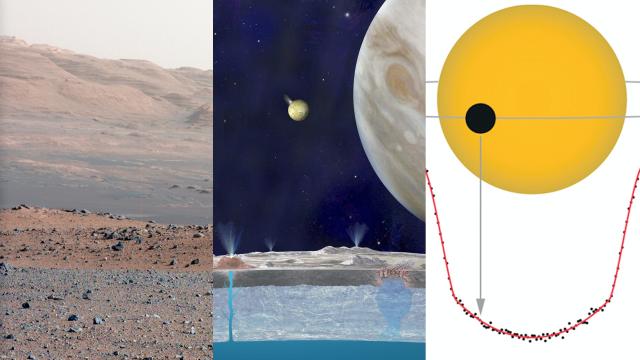
Learn about the science behind the current exploration of the solar system in this free class. Use principles from physics, chemistry, biology, and geology to understand the latest from Mars, comprehend the outer solar system, ponder planets outside our solar system, and search for habitability in our neighborhood and beyond. This course is generally taught at an advanced level assuming a prior knowledge of undergraduate math and physics, but the majority of the concepts and lectures can be understood without these prerequisites.

Jun 22nd 2026
5-12 Weeks
Chemical Engineering Thermodynamics 1 (Coursera) Coursera
Korea Advanced Institute of Science and Technology - KAIST

Chemical Engineering Thermodynamics 1 (Coursera)

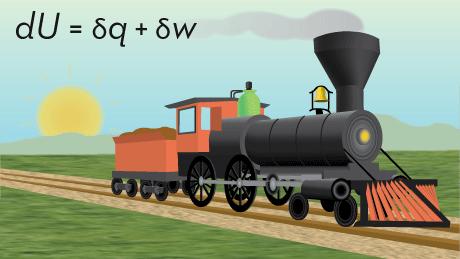
An appreciation of thermodynamics is required to become a chemical and biomolecular engineer. Thermodynamics can assess the viability of a process and is one of the curriculum's most essential topics. The principles are utilized in following engineering courses (kinetics, mass transfer, design, materials) and are applicable to numerous engineering disciplines. The increased emphasis on energy usage and transformation as a result of rising demand, diminishing supply, and global warming necessitates that the engineers who will tackle these issues have a firm grasp of thermodynamics.

Aug 3rd 2026
5-12 Weeks