Knowledge and Skills for Dementia Care: the SSLD Approach (Coursera)

Offered by University of Toronto,
Knowledge and Skills for Dementia Care: the SSLD Approach (Coursera)

This course is designed and produced by Professor Ka Tat Tsang of the Factor-Inwentash Faculty of Social Work in collaboration with the Institute for Life Course and Aging at the University of Toronto. This course aims to inform learners about dementia and dementia care from an SSLD perspective, including, community care, in-home support, and long-term care. This course will cover the continuum of senior services and support across different settings, including, private caregiving, community services, and institutionalized residential care.

Class Deals by MOOC List - Click here and see Coursera's Active Discounts, Deals, and Promo Codes.

Course components are designed to equip learners with practical knowledge regarding dementia and dementia care. This course also features top-notch researchers and practitioners who will be sharing their expertise and experience on recent research developments about dementia and other related topics, including, advance care planning, elder abuse, management of behavioural and psychological symptoms associated with dementia, sexuality and intimacy, consent and capacity, legal issues, principles of designed space and aging-in-place, substance use and addiction in older adults with dementia, senior care models, etc.
Upon the completion of this course, learners will possess a holistic understanding of the needs and characteristics of older adults living with dementia, and will also be equipped with the knowledge and skills needed to enhance their competency in providing care.

Syllabus

WEEK 1
Overview and Course Introduction
This course aims to inform learners about the continuum of senior services and support, from community care to in-home support to long-term care across various contexts, including, private caregiving community services, and institutionalized residential care. Course components are designed to equip learners with a conceptual foundation regarding dementia and dementia care. Upon the completion of this course, learners will possess a holistic understanding of the needs of older adults living with dementia, and will also be equipped with the knowledge and skills to enhance their competency in performing dementia care.

WEEK 2
Functional Recovery and Enhancement
This module will cover the important role optimism plays in dementia care. Learners will study the core concepts of the SSLD system, including, the N3C-6D formulation and its applications in everyday caregiving for people living with dementia. Learners will further study the concepts of "ageing in place" and the basic principles of how to design living spaces to adequately meet the needs of older adults living with dementia.

WEEK 3
Applications in Daily Life
In this module, learners will study the nature of ageism, its various forms, and its manifestations in everyday life. Learners will build on this foundation by studying different ways to counter ageist practises in different care settings. This module will also cover the general principles of psychosocial interventions from an SSLD perspective, and the Play Intervention for Dementia (PID) application of SSLD. In addition, the importance of caregivers' wellness, as well as different strategies to practice self-care will also be covered.

WEEK 4
Mental Health, Psychosocial and Behavioural Challenges
This module will examine different mental health, psychosocial, and behavioural challenges of caring for people living with dementia. The topics that will be covered are: managing responsive behaviours; substance use in older adults; intimacy and consent for people living with dementia; elder abuse; as well as legal issues, including, for example, consent and capacity, and advance care planning.

WEEK5
From Attachment, Intimacy, Sexuality to the Lifeworld
In this module, learners will study issues relevant to attachment, intimacy and sexuality in people living with dementia in various settings, as well as the concept of Lifeworld. This module will also revisit the topic of ageism and examine its implications in the contexts of erotophobia and desexualization. The special topic of the intersections of ageing and LGBTQ+ will also be explored.

WEEK 6
Holistic Experience and Transcendence (HT)
In this module, learners will be equipped with an understanding of the HT formulation in SSLD. Specifically, learners will have the opportunity to study the concepts and principles of personhood and agency of older adults. The intersections of ageing and social exclusion, as well as the role of technology in furthering social inclusion will also be examined.

WEEK 7
Organizational Development and Service System Enhancement
This module will cover the circumstances of senior service delivery in a global context. Examples of domestic senior service organizations and their service programs will be introduced. Learners will have the opportunity to examine what constitutes a good senior service system and will study how to implement holistic and person-centred care for people living with dementia in various settings. This module will conclude by revisiting how to counter the pervasiveness of ageing from an SSLD perspective.

Go to Class
MOOC List is learner-supported. When you buy through links on our site, we may earn an affiliate commission.

Related Courses

Dentistry 101 (Coursera) Coursera
University of Michigan

Dentistry 101 (Coursera)

Dentistry 101 is an introduction to the exciting and diverse field of dentistry through the lens of its many practitioners. If you’re interested in exploring dentistry as a profession, or if you’re ready to pursue a career in it and want to prepare yourself for dental school and the profession that lies ahead, Dentistry 101 will help you better envision the paths you can take.

Jun 17th 2026
4 Weeks
COVID-19: What You Need to Know (CME Eligible) (Coursera) Coursera
Osmosis

COVID-19: What You Need to Know (CME Eligible) (Coursera)

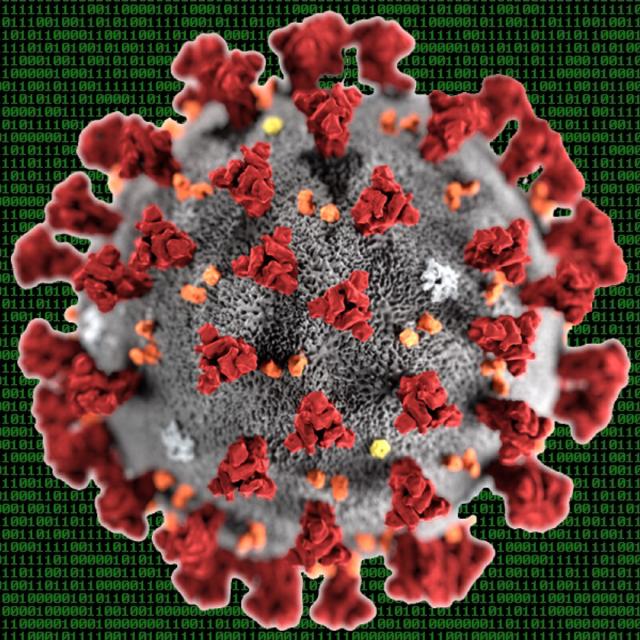
COVID-19 is a global pandemic that has already resulted in hundreds of thousands of infections and thousands of deaths, with many more anticipated. This course is a go-to resource that will be regularly updated with all of the current information put forth by the CDC, WHO, and other leading agencies and covers the basics, personal protective equipment, diagnostics, and other material.

Jun 21st 2026
1 Week
The Arts and Science of Relationships: Understanding Human Needs (Coursera) Coursera
University of Toronto

The Arts and Science of Relationships: Understanding Human Needs (Coursera)

This course provides an introduction to: 1- Basic concepts of The Strategies and Skills Learning and Development System (SSLD), their relevance for every day relationships and provide advanced concepts for participants who work in fields of social work and health care. 2- Basic practice principles and methods of SSLD, illustrated by relationship management case studies. 3- The SSLD framework for relationship management assessment; N3C (needs, circumstances, characteristics, capacity) and problem translation. 4- Core competencies in the relationship management application of the SSLD system: Observation learning, simulation, real life implementation, review and monitoring.

Jun 15th 2026
5-12 Weeks
Sustainable Food Production Through Livestock Health Management (Coursera) Coursera
University of Illinois at Urbana-Champaign

Sustainable Food Production Through Livestock Health Management (Coursera)

Learn about the impact of infectious disease on sustainable animal-based food production by understanding the science of growth, immunity, and infection and by learning the problem-solving skills needed to advance animal health and food production through optimal management practices. In this course we will explore the effect of infectious disease on sustainable animal-based food production. The content and learning outcomes of this new course will be designed to be relevant across different food production sectors (i.e., beef, dairy, poultry, and pigs).

Jun 15th 2026
5-12 Weeks
Whole genome sequencing of bacterial genomes - tools and applications (Coursera) Coursera
Technical University of Denmark - DTU

Whole genome sequencing of bacterial genomes - tools and applications (Coursera)

This course will cover the topic of Whole genome sequencing (WGS) of bacterial genomes which is becoming more and more relevant for the medical sector. WGS technology and applications are high on international political agenda, as the classical methods are being replaced by WGS technology and therefore bioinformatic tools are extremely important for allowing the people working in this sector to be able to analyze the data and obtain results that can be interpreted and used for different purposes.

Jun 15th 2026
5-12 Weeks
Planning a Patient Safety or Quality Improvement Project (Patient Safety III) (Coursera) Coursera
Johns Hopkins University

Planning a Patient Safety or Quality Improvement Project (Patient Safety III) (Coursera)

This course provides students with a set of tools and methodologies to plan and initiate a Problem Solving or Quality Improvement project. The first module presents methods for selecting, scoping and structuring a project before it is even initiated. It also introduces the project classifications of implementation and discovery. The second module describes the A3 problem solving methodology and the tool itself. Further in that same module, the student is shown tools to identify problems in flow, defects, and waste and to discover causes, brainstorm, and prioritize interventions. Module 3 shows a methodology within the implementation class. These methods are designed to overcome emotional and organizational barriers to translating evidence-based interventions into practice. The fourth and last module looks at one more way to approach improvement projects in the discovery class. These tools are specifically for new, out-of-the-box design thinking.

Jun 15th 2026
4 Weeks
Science of Exercise (Coursera) Coursera
University of Colorado Boulder

Science of Exercise (Coursera)

Learners who complete Science of Exercise will have an improved physiological understanding of how your body responds to exercise, and will be able to identify behaviors, choices, and environments that impact your health and training. You will explore a number of significant adjustments required by your body in order to properly respond to the physical stress of exercise, including changes in carbohydrate, fat and protein metabolism, nutritional considerations, causes of muscle soreness & fatigue, and the effectiveness and dangers of performance enhancing drugs.

Jun 15th 2026
4 Weeks
Herbal Medicine (Coursera) Coursera
University of Minnesota

Herbal Medicine (Coursera)

There is strong demand for alternatives to pharmaceuticals for a variety of common illnesses due to concerns of safety, efficacy, and a desire for more “natural” products. Despite this growing interest, “conventional” healthcare providers may have little to no knowledge about herbal medicines, which is further compounded by the sometimes misleading information in the media and on the internet. This course provides the necessary background for providers to begin to incorporate herbal medicines into their practice, particularly in regards to their therapeutic properties, efficacy (or lack thereof), and safety concerns, including quality control and potential adverse effects.

Jun 17th 2026
5-12 Weeks
Essentials of Global Health (Coursera) Coursera
Yale University

Essentials of Global Health (Coursera)

Essentials of Global Health is a comprehensive introduction to global health. It is meant to introduce you to this topic in well-structured, clear and easy to understand ways. Much of the course will focus on five questions: What do people get sick, disabled and die from; Why do they suffer from these conditions? Which people are most affected? Why should we care about such concerns? What can be done to address key health issues, hopefully at least cost, as fast as possible, and in sustainable ways?

Jun 15th 2026
5-12 Weeks
Patient Safety and Quality Improvement: Developing a Systems View (Patient Safety I) (Coursera) Coursera
Johns Hopkins University

Patient Safety and Quality Improvement: Developing a Systems View (Patient Safety I) (Coursera)

In this course, you will be able develop a systems view for patient safety and quality improvement in healthcare. By then end of this course, you will be able to: 1) Describe a minimum of four key events in the history of patient safety and quality improvement, 2) define the key characteristics of high reliability organizations, and 3) explain the benefits of having strategies for both proactive and reactive systems thinking.

Jun 15th 2026
4 Weeks