Introduction to Robotics (QUT)

Introduction to Robotics (QUT)

This course is an introduction to the exciting world of robotics and the mathematics and algorithms that underpin it. You’ll develop an understanding of the representation of pose and motion, kinematics, dynamics and control. You’ll also be introduced to the variety of robots and the diversity of tasks to which this knowledge and skills can be applied, the role of robots in society, and associated ethical issues.

A newer version of this course is available here:
Introducing Robotics: Making Robots Move

If you have access to a Lego Mindstorms kit (9797) you will be able to build a simple robot arm and write the control software for it.
Combined with the Robotic Vision MOOC, this course is based on a 13 week undergraduate course Introduction to Robotics at the Queensland University of Technology.
This course includes an introductory week, followed by six weeks of lectures. Each week includes two video lectures, quizzes and MATLAB programming exercises.
Getting started: Pre-course activities are available in the week prior to week 1. These activities help you prepare for the course.
Week 1: Introduction to robotics and Where things are in 2D
Week 2: Where things are in 3D and Time varying coordinate frames
Week 3: Measuring the motion of things and Robot arms and forward kinematics
Week 4: Inverse kinematics and robot motion and Robot velocity in 2D
Week 5: Robot velocity in 3D and Robot joint control
Week 6: Rigid body dynamics and Robotics and the future
Final week: Submissions and project peer assessment. All quiz and MATLAB assessments must be submitted. Participants who have undertaken the Build a robot arm project must submit their video for peer assessment and participate as a peer assessor.
By the end of this course you should be able to:

  • describe and explain what robots are and what they can do
  • describe mathematically the position and orientation of objects and how they move
  • describe mathematically the relationship between robot joint coordinates and tool pose
  • reflect on the future role and development of robots in human society
  • compute the rigid-body forces in a robot and design a joint control system (optional advanced material)
  • apply the mathematical, algorithmic and control principles of robot arm manipulators to implement a working robot through physical construction and software development (applies to optional project).

Assessment:
Throughout the course you'll have the opportunity to complete assessable quizzes and programming exercises. These will be marked automatically. The programming exercises will consist of several MATLAB tasks and will be based on the lecture content for that week.
Certificate of participation:
If you complete the assessment successfully you will receive a certificate of participation. The certificate does not earn credit points towards a QUT qualification. The overall assessment is worth a total of 240 points (120 points for assessable quizzes and 120 points for MATLAB programming tasks). You need to achieve an overall score of 50% (120 points). The quizzes and programming tasks are weighted equally, so it does not matter how you make up your 120 points.
Optional project:
As an optional project, you can choose to build a simple robot arm and write the software to control it. You'll need a LEGO Mindstorms robotics development kit. This isn't a requirement for the certificate of participation, however it's a valuable opportunity to apply your knowledge and skills. A peer assessment or review process will allow you to share your experience and robot with others, while reviewing the robots your peers build.
Note: This course is currently not available.

Related Courses

Sistemas Digitales: De las puertas lógicas al procesador (Coursera) Coursera
Universitat Autònoma de Barcelona

Sistemas Digitales: De las puertas lógicas al procesador (Coursera)

En este curso aprenderemos los fundamentos del diseño de los circuitos digitales actuales, siguiendo una orientación eminentemente práctica. A diferencia de otros cursos más "clásicos" de Circuitos Digitales, nuestro interés se centrará más en el Sistema que en la Electrónica que lo sustenta. Este enfoque nos permitirá sentar las bases del diseño de Sistemas Digitales complejos.

Aug 3rd 2026
5-12 Weeks
Collaborative Robot Safety: Design & Deployment (Coursera) Coursera
University at Buffalo,The State University of New York

Collaborative Robot Safety: Design & Deployment (Coursera)

As robots evolve and increasingly interact with humans, enhancing the safety of personnel working with these “collaborative robots” (cobots) is vital. This course equips you to assess the safety of a collaborative robot workcell and prevent the chances of injury or harm. It imparts industry-endorsed safety standards, technical report recommendations and best practices from the International Organization for Standardization (ISO), Robotic Industries Association (RIA) and Occupational Safety and Health Administration (OSHA).

Aug 3rd 2026
4 Weeks
Hydrogen for Mobility (IFP School) Other Providers
IFP School

Hydrogen for Mobility (IFP School)

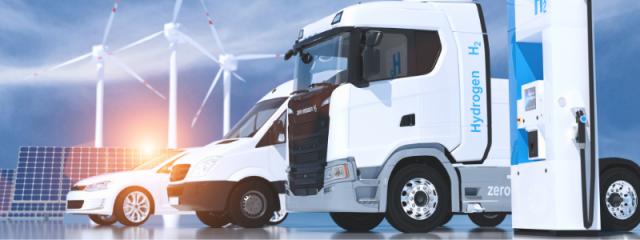
Hydrogen is a hot topic nowadays. Why? Because society must find solutions to reduce its impact on climate change and because there is now a political will (in Europe) to develop a hydrogen economy. The mobility sector, and in particular the heavy mobility, is concerned by this transformation. After some general information about hydrogen production and the hydrogen economy, you will gain a deep understanding of the hydrogen solution for mobility. We will explore both the fuel cells and the hydrogen thermal engine solutions as a mean to reduce the environmental footprint of heavy mobility.

Jan 16th 2023
1 Week
Energy Transition Selection (IFP School) Other Providers
IFP School

Energy Transition Selection (IFP School)

This module is intended either for students and professionals interested in the energy transition challenges and innovative solutions to reduce CO2 emissions. But more specifically it is intended for those willing to gain knowledge about developing a decarbonized energy mix based on both renewables and natural gas, underground CO2 and energy storage, energy efficiency and CO2 abatements in processes, biofuels. In general, for those who are convinced that climate change is really a challenge that can also be sustained through concrete solutions and societal awareness. **ENERGY TRANSITION SELECTION WILL BE AVAILABLE UNTIL MARCH 31ST.**

Available Now
1 Week
Designing Effective Science Communication (Coursera) Coursera
University of Colorado Boulder

Designing Effective Science Communication (Coursera)

Although many would prefer to leave science in the past and no longer engage with it once completing compulsory science classes in school, the reality is that engaging with science is an integral part of our daily lives. Moreover, for the safety and wellness of human society, it is necessary to engage with scientific information. We are faced with the necessity of examining scientific evidence on topics ranging from conservation to public health and make decisions that impact not only our families but those around us.

Jul 27th 2026
5-12 Weeks
Introduction to Engineering Mechanics (Coursera) Coursera
Georgia Institute of Technology

Introduction to Engineering Mechanics (Coursera)

This course is an introduction to learning and applying the principles required to solve engineering mechanics problems. Concepts will be applied in this course from previous courses you have taken in basic math and physics. The course addresses the modeling and analysis of static equilibrium problems with an emphasis on real world engineering applications and problem solving.

Jul 27th 2026
5-12 Weeks
Materials Science: 10 Things Every Engineer Should Know (Coursera) Coursera
University of California, Davis

Materials Science: 10 Things Every Engineer Should Know (Coursera)

We explore “10 things” that range from the menu of materials available to engineers in their profession to the many mechanical and electrical properties of materials important to their use in various engineering fields. We also discuss the principles behind the manufacturing of those materials. By the end of the course, you will be able to: recognize the important aspects of the materials used in modern engineering applications; explain the underlying principle of materials science: “structure leads to properties,”; identify the role of thermally activated processes in many of these important “things” – as illustrated by the Arrhenius relationship; relate each of these topics to issues that have arisen (or potentially could arise) in your life and work.

Aug 3rd 2026
5-12 Weeks
Chemical Engineering Thermodynamics 2 (Coursera) Coursera
Korea Advanced Institute of Science and Technology - KAIST

Chemical Engineering Thermodynamics 2 (Coursera)

An appreciation of thermodynamics is required to become a chemical and biomolecular engineer. Thermodynamics can assess the viability of a process and is one of the curriculum's most essential topics. The principles are utilized in following engineering courses (kinetics, mass transfer, design, materials) and are applicable to numerous engineering disciplines. The increased emphasis on energy usage and transformation as a result of rising demand, diminishing supply, and global warming necessitates that the engineers who will tackle these issues have a firm grasp of thermodynamics.

Aug 3rd 2026
5-12 Weeks
MBSE: Model-Based Systems Engineering (Coursera) Coursera
University at Buffalo,The State University of New York

MBSE: Model-Based Systems Engineering (Coursera)

This Model-Based Systems Engineering (MBSE) course and the Digital Thread courses featured earlier in this specialization bring together the concepts from across digital manufacturing and design, forming a vision in which the geometry of a product is just one way of describing it. MBSE is where the model resulting from the evolution of system requirements, design, analysis, verification and validation activities is the focus of design and manufacturing.

Jul 20th 2026
4 Weeks
Interpersonal Communication for Engineering Leaders (Coursera) Coursera
Rice University

Interpersonal Communication for Engineering Leaders (Coursera)

This course covers communication skills that engineering leaders use every day to motivate, inspire, and support the people in their organizations. Speaking and writing are basic leadership communication skills. (We covered these topics in the Specialization course 1 and 3.) However, leaders also need to be skillful interpersonal communicators.

Jul 20th 2026
4 Weeks
Ethics in Engineering (Coursera) Coursera
University of Michigan

Ethics in Engineering (Coursera)

e.g. This is primarily aimed at first- and second-year undergraduates interested in engineering or science, along with high school Explore unique case studies in engineering ethics. On this four-week course, you’ll examine different historical case studies and understand how they led to classic engineering failures. Though each case is unique and has a distinct context, they all share common themes; a backstory, a disastrous event, a post-event with ramifications, and outcomes.

Jul 27th 2026
4 Weeks