Introduction to Image Processing (Coursera)

Offered by MathWorks,
Introduction to Image Processing (Coursera)

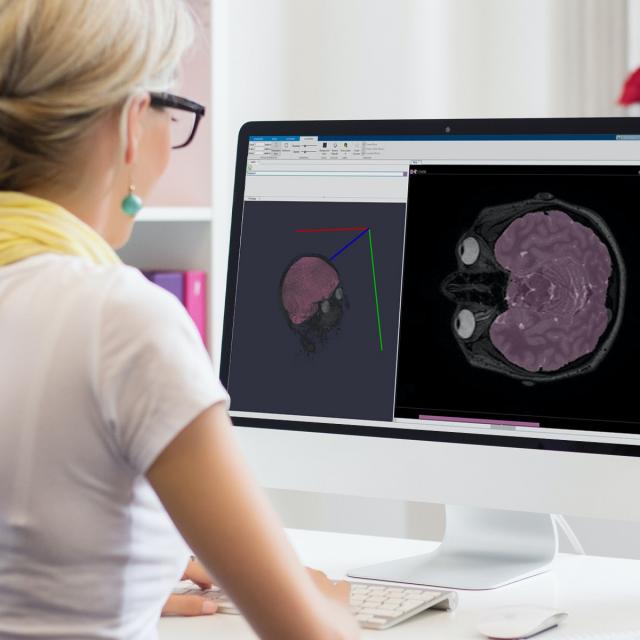
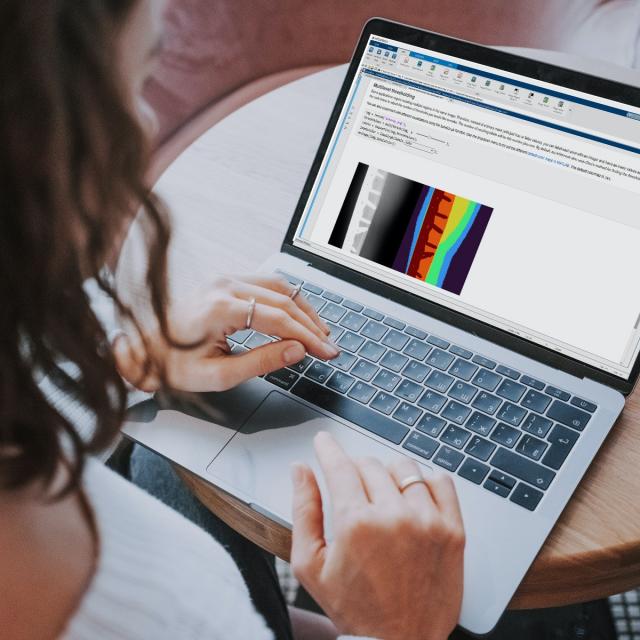
In this introduction to image processing, you'll take your first steps in accessing and adjusting digital images for analysis and processing. You will load, save, and adjust image size and orientation while also understanding how digital images are recognized. You will then perform basic segmentation and quantitative analysis. Lastly, you will enhance the contrast of images to make objects of interest easier to identify.

Class Deals by MOOC List - Click here and see Coursera's Active Discounts, Deals, and Promo Codes.

By the end of the course, you’ll apply your segmentation skills to identify regions of interest, such as the amount of surface water from satellite images. This introduction to image processing will give you the foundation you need to conduct more advanced work on this topic.
You will use MATLAB throughout this course. MATLAB is the go-to choice for millions of people working in engineering and science and provides the capabilities you need to accomplish your image processing tasks. You will be provided with free access to MATLAB for the duration of the course to complete your work.
To be successful in this course you should have a background in basic math and some exposure to MATLAB. If you want to familiarize yourself with MATLAB check out the free, two-hour MATLAB Onramp. Experience with image processing is not required.
Course 1 of 3 in the Image Processing for Engineering and Science Specialization.

Syllabus

WEEK 1: Introduction to Digital Images
WEEK 2: Working with Image Data
WEEK 3: Thresholding Images
WEEK 4: Adjusting Image Contrast
Go to Class
MOOC List is learner-supported. When you buy through links on our site, we may earn an affiliate commission.

Related Courses

Mastering Programming with MATLAB (Coursera) Coursera
Vanderbilt University

Mastering Programming with MATLAB (Coursera)

The course builds on the foundation laid by the first course of the Specialization called “Introduction to Programming with MATLAB.” It covers more advanced programming concepts such as recursion, vectorization, function handles, algorithm efficiency and others. At the same time, it presents many features that make MATLAB a powerful programming environment for engineering and scientific computing, such as its support for object oriented programming, the new user interface design environment and Live Scripts.

Jun 8th 2026
5-12 Weeks
Introduction to Neurohacking In R (Coursera) Coursera
Johns Hopkins University

Introduction to Neurohacking In R (Coursera)

Neurohacking describes how to use the R programming language and its associated package to perform manipulation, processing, and analysis of neuroimaging data. We focus on publicly-available structural magnetic resonance imaging (MRI). We discuss concepts such as inhomogeneity correction, image registration, and image visualization.

May 18th 2026
4 Weeks
Advanced Computer Vision with TensorFlow (Coursera) Coursera
DeepLearning.AI

Advanced Computer Vision with TensorFlow (Coursera)

In this course, you will: a) Explore image classification, image segmentation, object localization, and object detection. Apply transfer learning to object localization and detection; b) Apply object detection models such as regional-CNN and ResNet-50, customize existing models, and build your own models to detect, localize, and label your own rubber duck images; c) Implement image segmentation using variations of the fully convolutional network (FCN) including U-Net and d) Mask-RCNN to identify and detect numbers, pets, zombies, and more; d) Identify which parts of an image are being used by your model to make its predictions using class activation maps and saliency maps and apply these ML interpretation methods to inspect and improve the design of a famous network, AlexNet.

Jun 8th 2026
4 Weeks
Introduction to Computer Vision (Coursera) Coursera
University of Colorado Boulder

Introduction to Computer Vision (Coursera)

Introduction to Computer Vision guides learners through the essential algorithms and methods to help computers 'see' and interpret visual data. You will first learn the core concepts and techniques that have been traditionally used to analyze images. Then, you will learn modern deep learning methods, such as neural networks and specific models designed for image recognition, and how it can be used to perform more complex tasks like object detection and image segmentation. Additionally, you will learn the creation and impact of AI-generated images and videos, exploring the ethical considerations of such technology.

Jun 1st 2026
4 Weeks
Introduction to Programming with MATLAB (Coursera) Coursera
Vanderbilt University

Introduction to Programming with MATLAB (Coursera)

This course teaches computer programming to those with little to no previous experience. It uses the programming system and language called MATLAB to do so because it is easy to learn, versatile and very useful for engineers and other professionals. MATLAB is a special-purpose language that is an excellent choice for writing moderate-size programs that solve problems involving the manipulation of numbers.

Jun 8th 2026
5-12 Weeks
Numerical Methods for Engineers (Coursera) Coursera
The Hong Kong University of Science and Technology - HKUST

Numerical Methods for Engineers (Coursera)

Numerical Methods for Engineers covers the most important numerical methods that an engineer should know. We derive basic algorithms in root finding, matrix algebra, integration and interpolation, ordinary and partial differential equations. We learn how to use MATLAB to solve numerical problems. Access to MATLAB online and the MATLAB grader is given to all students who enroll. We assume students are already familiar with the basics of matrix algebra, differential equations, and vector calculus. Students should have already studied a programming language, and be willing to learn MATLAB.

Jun 1st 2026
5-12 Weeks
Fundamentals of Digital Image and Video Processing (Coursera) Coursera
Northwestern University

Fundamentals of Digital Image and Video Processing (Coursera)

In this class you will learn the basic principles and tools used to process images and videos, and how to apply them in solving practical problems of commercial and scientific interests. Digital images and videos are everywhere these days – in thousands of scientific (e.g., astronomical, bio-medical), consumer, industrial, and artistic applications. Moreover they come in a wide range of the electromagnetic spectrum - from visible light and infrared to gamma rays and beyond.

May 18th 2026
5-12 Weeks
Introdução ao Controle Moderno (Coursera) Coursera
Instituto Tecnológico de Aeronáutica

Introdução ao Controle Moderno (Coursera)

Este curso lhe dará a base necessária para entender técnicas mais avançadas de controle moderno. Você aprenderá como representar a dinâmica de um sistema no espaço de estados, como analisar um sistema no espaço de estados, como projetar uma realimentação de estado e como projetar um observador de estado.

Jun 1st 2026
5-12 Weeks
Exploratory Data Analysis with MATLAB (Coursera) Coursera
MathWorks

Exploratory Data Analysis with MATLAB (Coursera)

In this course, you will learn to think like a data scientist and ask questions of your data. You will use interactive features in MATLAB to extract subsets of data and to compute statistics on groups of related data. You will learn to use MATLAB to automatically generate code so you can learn syntax as you explore. You will also use interactive documents, called live scripts, to capture the steps of your analysis, communicate the results, and provide interactive controls allowing others to experiment by selecting groups of data.

Jun 1st 2026
5-12 Weeks
CUDA at Scale for the Enterprise (Coursera) Coursera
Johns Hopkins University

CUDA at Scale for the Enterprise (Coursera)

This course will aid in students in learning in concepts that scale the use of GPUs and the CPUs that manage their use beyond the most common consumer-grade GPU installations. They will learn how to manage asynchronous workflows, sending and receiving events to encapsulate data transfers and control signals. Also, students will walk through application of GPUs to sorting of data and processing images, implementing their own software using these techniques and libraries.

Jun 8th 2026
5-12 Weeks
Data Science Companion (Coursera) Coursera
MathWorks

Data Science Companion (Coursera)

The Data Science Companion provides an introduction to data science. You will gain a quick background in data science and core machine learning concepts, such as regression and classification. You’ll be introduced to the practical knowledge of data processing and visualization using low-code solutions, as well as an overview of the ways to integrate multiple tools effectively to solve data science problems.

Jun 5th 2026
4 Weeks