Automating Image Processing (Coursera)

Offered by MathWorks,
Automating Image Processing (Coursera)

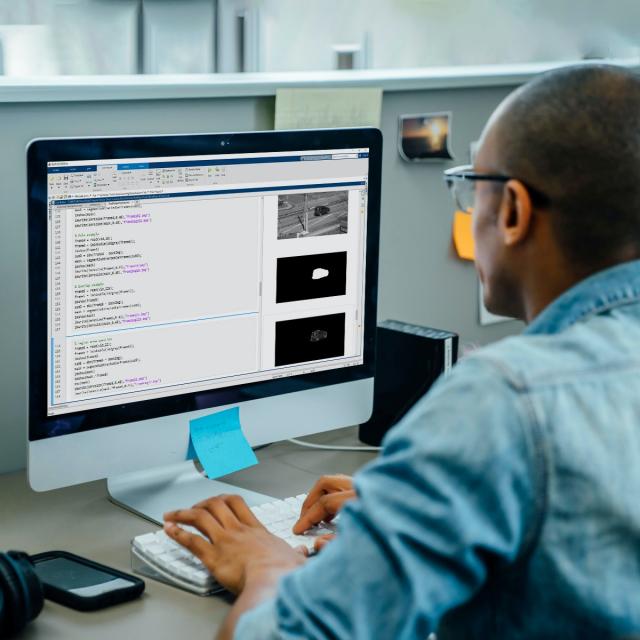
In this course, you will build on the skills acquired in Image Segmentation, Filtering, and Region Analysis to explore large sets of images and video files. It’s impractical to manually inspect results in large data sets. Automating image processing allows you to do your work more efficiently.

Class Deals by MOOC List - Click here and see Coursera's Active Discounts, Deals, and Promo Codes.

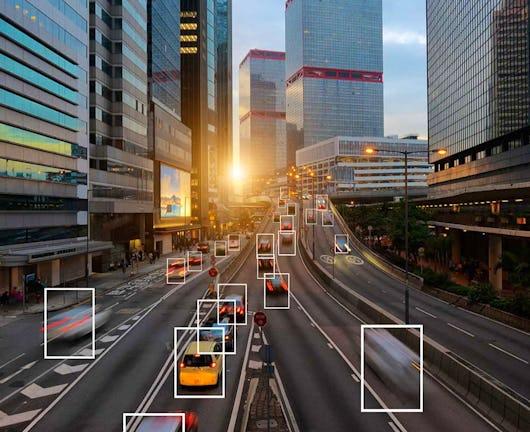
At the end of this course, you’ll apply all the skills learned in this specialization to a final project. You’ll take the role of an engineer being asked to monitor traffic on a busy road. You’ll detect cars from a noisy video and analyze the results.
You will use MATLAB throughout this course. MATLAB is the go-to choice for millions of people working in engineering and science, and provides the capabilities you need to accomplish your image processing tasks. You will be provided with free access to MATLAB for the duration of the course to complete your work.
To be successful in this course you should have a background in basic math and some exposure to MATLAB. If you want to familiarize yourself with MATLAB check out the free, two-hour MATLAB Onramp. Experience with image processing is not required.
Course 3 of 3 in the Image Processing for Engineering and Science Specialization.

Syllabus

WEEK 1: Processing Batches of Images
WEEK 2: Working with Video Files
WEEK 3: Analyzing Results
WEEK 4: Final Project: Detecting Cars in a Noisy Video

Go to Class
MOOC List is learner-supported. When you buy through links on our site, we may earn an affiliate commission.

Related Courses

Matlab and Simulink Basics (Coursera) Coursera
Starweaver

Matlab and Simulink Basics (Coursera)

Matlab and Simulink Basics is a meticulously crafted course offering a comprehensive introduction to Matlab's programming environment and Simulink's modeling capabilities. This course is tailored for individuals keen on bolstering their skills in these indispensable tools for engineering, science, and research domains. From laying down foundational concepts to delving into practical applications, participants will embark on a journey that hones their abilities to manipulate data, design models, and interpret results with Matlab and Simulink.

Jul 20th 2026
4 Weeks
Introduction to Neurohacking In R (Coursera) Coursera
Johns Hopkins University

Introduction to Neurohacking In R (Coursera)

Neurohacking describes how to use the R programming language and its associated package to perform manipulation, processing, and analysis of neuroimaging data. We focus on publicly-available structural magnetic resonance imaging (MRI). We discuss concepts such as inhomogeneity correction, image registration, and image visualization.

Aug 10th 2026
4 Weeks
Introduction to Image Processing (Coursera) Coursera
MathWorks

Introduction to Image Processing (Coursera)

In this introduction to image processing, you'll take your first steps in accessing and adjusting digital images for analysis and processing. You will load, save, and adjust image size and orientation while also understanding how digital images are recognized. You will then perform basic segmentation and quantitative analysis. Lastly, you will enhance the contrast of images to make objects of interest easier to identify.

Jul 20th 2026
4 Weeks
Introduction to Programming with MATLAB (Coursera) Coursera
Vanderbilt University

Introduction to Programming with MATLAB (Coursera)

This course teaches computer programming to those with little to no previous experience. It uses the programming system and language called MATLAB to do so because it is easy to learn, versatile and very useful for engineers and other professionals. MATLAB is a special-purpose language that is an excellent choice for writing moderate-size programs that solve problems involving the manipulation of numbers.

Jul 20th 2026
5-12 Weeks
Camera and Imaging (Coursera) Coursera
Columbia University

Camera and Imaging (Coursera)

This course covers the fundamentals of imaging – the creation of an image that is ready for consumption or processing by a human or a machine. Imaging has a long history, spanning several centuries. But the advances made in the last three decades have revolutionized the camera and dramatically improved the robustness and accuracy of computer vision systems. We describe the fundamentals of imaging, as well as recent innovations in imaging that have had a profound impact on computer vision.

Jul 27th 2026
5-12 Weeks
CUDA at Scale for the Enterprise (Coursera) Coursera
Johns Hopkins University

CUDA at Scale for the Enterprise (Coursera)

This course will aid in students in learning in concepts that scale the use of GPUs and the CPUs that manage their use beyond the most common consumer-grade GPU installations. They will learn how to manage asynchronous workflows, sending and receiving events to encapsulate data transfers and control signals. Also, students will walk through application of GPUs to sorting of data and processing images, implementing their own software using these techniques and libraries.

Jul 20th 2026
5-12 Weeks
Digital Signal Processing 4: Applications (Coursera) Coursera
École Polytechnique Fédérale de Lausanne

Digital Signal Processing 4: Applications (Coursera)

Digital Signal Processing is the branch of engineering that, in the space of just a few decades, has enabled unprecedented levels of interpersonal communication and of on-demand entertainment. By reworking the principles of electronics, telecommunication and computer science into a unifying paradigm, DSP is a the heart of the digital revolution that brought us CDs, DVDs, MP3 players, mobile phones and countless other devices.

Jul 20th 2026
3 Weeks
Visual Perception for Self-Driving Cars (Coursera) Coursera
University of Toronto

Visual Perception for Self-Driving Cars (Coursera)

Welcome to Visual Perception for Self-Driving Cars, the third course in University of Toronto’s Self-Driving Cars Specialization. This course will introduce you to the main perception tasks in autonomous driving, static and dynamic object detection, and will survey common computer vision methods for robotic perception. By the end of this course, you will be able to work with the pinhole camera model, perform intrinsic and extrinsic camera calibration, detect, describe and match image features and design your own convolutional neural networks.

Jul 27th 2026
5-12 Weeks
Predictive Modeling and Machine Learning with MATLAB (Coursera) Coursera
MathWorks

Predictive Modeling and Machine Learning with MATLAB (Coursera)

In this course, you will build on the skills learned in Exploratory Data Analysis with MATLAB and Data Processing and Feature Engineering with MATLAB to increase your ability to harness the power of MATLAB to analyze data relevant to the work you do. These skills are valuable for those who have domain knowledge and some exposure to computational tools, but no programming background.

Jul 20th 2026
4 Weeks
Modern Robotics, Course 6: Capstone Project, Mobile Manipulation (Coursera) Coursera
Northwestern University

Modern Robotics, Course 6: Capstone Project, Mobile Manipulation (Coursera)

The capstone project of the Modern Robotics specialization is on mobile manipulation: simultaneously controlling the motion of a wheeled mobile base and its robot arm to achieve a manipulation task. This project integrates several topics from the specialization, including trajectory planning, odometry for mobile robots, and feedback control. Beginning from the Modern Robotics software library provided to you (written in Python, Mathematica, and MATLAB), and software you have written for previous courses, you will develop software to plan and control the motion of a mobile manipulator to perform a pick and place task.

Jul 20th 2026
4 Weeks