Advanced Deep Learning Techniques for Computer Vision (Coursera)

Offered by MathWorks,
Advanced Deep Learning Techniques for Computer Vision (Coursera)

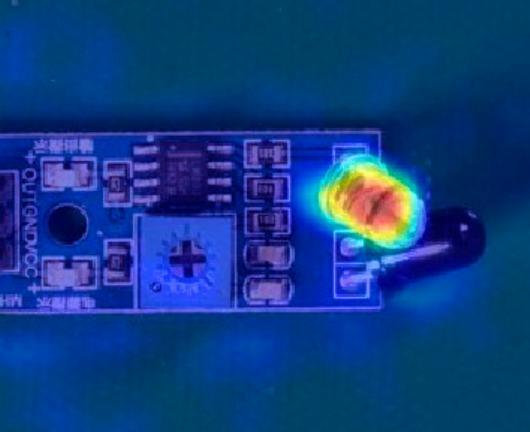
Visual inspection and medical imaging are two applications that aim to find anything unusual in images. In this course, you’ll train and calibrate specialized models known as anomaly detectors to identify defects. You’ll also use advanced techniques to overcome common data challenges with deep learning.

Class Deals by MOOC List - Click here and see Coursera's Active Discounts, Deals, and Promo Codes.

AI-assisted labeling is a technique to auto-label images, saving time and money when you have tens of thousands of images. If you have too few images, you’ll generate synthetic training images using data augmentation for situations where acquiring more data is expensive or impossible.
By the end of this course, you will be able to:
• Train anomaly detection models
• Generate synthetic training images using data augmentation
• Use AI-assisted annotation to label images and video files
• Import models from 3rd party tools like PyTorch
• Describe approaches to using your model outside of MATLAB
For the duration of the course, you will have free access to MATLAB, software used by top employers worldwide. The courses draw on the applications using MATLAB, so you spend less time coding and more time applying deep learning concepts.
This course is part of the Deep Learning for Computer Vision Specialization.

What you'll learn

  • Train and calibrate specialized models known as anomaly detectors
  • Generate synthetic training images for situations where acquiring more data is expensive or impossible
  • Use AI-assisted auto-labeling to save time and money
  • Import models from 3rd party tools like PyTorch and export your model outside of MATLAB

Syllabus

Anomaly Detection
Train anomaly detection models. These models do not find specific objects or classes, but instead find unusual regions in images.

Data Augmentation
Generate synthetic images to use for training models.

Model-Assisted Labeling
Save hours of manual labor by using model-assisted labeling to prepare images for object detection

Creating Your Own Models
Learn how to diagnose problems when training models for your applications. Also, learn the options available to share and use your model outside of MATLAB.
Go to Class
MOOC List is learner-supported. When you buy through links on our site, we may earn an affiliate commission.

Related Courses

Data Augmented Technology Assisted Medical Decision Making (Coursera) Coursera
University of Michigan

Data Augmented Technology Assisted Medical Decision Making (Coursera)

Artificial intelligence (AI) and machine learning (ML) have the potential to increase diagnostic accuracy, decrease diagnostic errors, and improve patient outcomes. The Data Augmented, Technology Assisted Medical Decision Making (DATA-MD) course will teach you how to use AI to augment your diagnostic decision-making.

Aug 17th 2026
4 Weeks
Gen AI for Code Generation for Python (Coursera) Coursera
Edureka

Gen AI for Code Generation for Python (Coursera)

Welcome to the 'Gen AI for Code Generation for Python' course, where you'll embark on a journey to explore and develop your skills in the art of code generation with Generative AI. Throughout this short course, you will delve into various techniques for generating Python code effortlessly, ranging from simple scripts to complete end-to-end projects.

Aug 17th 2026
1 Week
Computational Neuroscience (Coursera) Coursera
University of Washington

Computational Neuroscience (Coursera)

This course provides an introduction to basic computational methods for understanding what nervous systems do and for determining how they function. We will explore the computational principles governing various aspects of vision, sensory-motor control, learning, and memory. Specific topics that will be covered include representation of information by spiking neurons, processing of information in neural networks, and algorithms for adaptation and learning.

Aug 17th 2026
5-12 Weeks
Introducción al Aprendizaje Profundo (Coursera) Coursera
Universidad Austral

Introducción al Aprendizaje Profundo (Coursera)

Este curso te brindará los conocimientos introductorios sobre Aprendizaje Profundo, vas a entender los fundamentos teóricos y su implementación . Se comenzará entendiendo cómo evolucionó el campo hasta llegar a las redes profundas y cuáles son sus principales beneficios frente a otras técnicas de aprendizaje supervisado, así como también sus limitaciones y situaciones en donde no posee un rendimiento superior

Aug 17th 2026
4 Weeks
Prompt Engineering for Web Developers (Coursera) Coursera
Scrimba

Prompt Engineering for Web Developers (Coursera)

Not quite getting the results you want from ChatGPT? Wondering how you can use AI language models to your advantage? Then this course is for you! If you’ve spent any amount of time with AI language models like ChatGPT and Google Bard, you may have noticed the results can sometimes be, well, frustrating. When it comes to leveraging AI language models, your output is often only as good as your input. In other words, it’s all about learning how best to communicate your desired results. Effective prompt engineering is the secret sauce for getting the most out of AI.

Aug 17th 2026
3 Weeks
Machine Learning Rapid Prototyping with IBM Watson Studio (Coursera) Coursera
IBM

Machine Learning Rapid Prototyping with IBM Watson Studio (Coursera)

An emerging trend in AI is the availability of technologies in which automation is used to select a best-fit model, perform feature engineering and improve model performance via hyperparameter optimization. This automation will provide rapid-prototyping of models and allow the Data Scientist to focus their efforts on applying domain knowledge to fine-tune models. This course will take the learner through the creation of an end-to-end automated pipeline built by Watson Studio’s AutoAI experiment tool, explaining the underlying technology at work as developed by IBM Research.

Aug 17th 2026
4 Weeks
Innovative Teaching with ChatGPT (Coursera) Coursera
Vanderbilt University

Innovative Teaching with ChatGPT (Coursera)

Despite what you may have heard, ChatGPT offers exciting possibilities for supporting innovative teaching and personalized education. This course provides practical techniques that any educator, from K-12 to higher education, can use to help support their teaching. No experience with ChatGPT, prompt engineering, or Generative AI is required.

Aug 17th 2026
1 Week
Leveraging Virtual Assistants for Personal Productivity (Coursera) Coursera
Coursera Instructor Network

Leveraging Virtual Assistants for Personal Productivity (Coursera)

In a fast-paced world, managing personal productivity is crucial. This course introduces beginners to the world of virtual assistants and chatbots and how they can be harnessed to enhance personal productivity. Learn how to use these AI-driven tools effectively to streamline tasks, manage time, and boost overall efficiency.

Aug 17th 2026
1 Week
Matlab and Simulink Basics (Coursera) Coursera
Starweaver

Matlab and Simulink Basics (Coursera)

Matlab and Simulink Basics is a meticulously crafted course offering a comprehensive introduction to Matlab's programming environment and Simulink's modeling capabilities. This course is tailored for individuals keen on bolstering their skills in these indispensable tools for engineering, science, and research domains. From laying down foundational concepts to delving into practical applications, participants will embark on a journey that hones their abilities to manipulate data, design models, and interpret results with Matlab and Simulink.

Aug 17th 2026
4 Weeks
Dynamical Modeling Methods for Systems Biology (Coursera) Coursera
Icahn School of Medicine at Mount Sinai

Dynamical Modeling Methods for Systems Biology (Coursera)

An introduction to dynamical modeling techniques used in contemporary Systems Biology research. We take a case-based approach to teach contemporary mathematical modeling techniques. The course is appropriate for advanced undergraduates and beginning graduate students. Lectures provide biological background and describe the development of both classical mathematical models and more recent representations of biological processes. The course will be useful for students who plan to use experimental techniques as their approach in the laboratory and employ computational modeling as a tool to draw deeper understanding of experiments.

Aug 10th 2026
5-12 Weeks