Introduction to Additive Manufacturing Processes (Coursera)

Introduction to Additive Manufacturing Processes (Coursera)

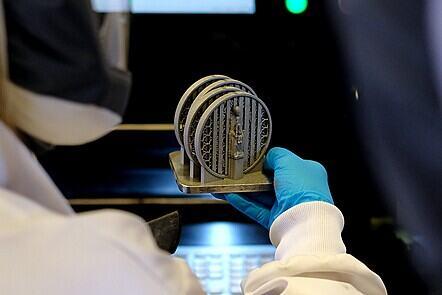
This course provides an overview of additive manufacturing processes, setting the stage for a deeper dive into individual processes. We will compare and contrast different additive manufacturing processes, and we will discuss a typical additive manufacturing process flow, from design file to finished part.

Class Deals by MOOC List - Click here and see Coursera's Active Discounts, Deals, and Promo Codes.

The necessary elements for each course are lecture videos, knowledge checks, and project completion. For additional information on certain topics, I've included supplemental readings and videos throughout various lessons that might enhance your knowledge. Because all resources are not available to all students, these materials are optional.
In addition, you will note that some of the lectures feature our department’s graduate students. These excellent students are sometimes closer to the material, having learned it recently, so we greatly appreciate their participation in the instructional process.

What You Will Learn
Students will compare and contrast different additive manufacturing processes and describe a typical AM process flow.
Course 1 of 5 in the Additive Manufacturing Specialization.

Syllabus

WEEK 1
Course Introduction
This course provides an overview of additive manufacturing processes, setting the stage for the deeper dives into individual processes. We will compare and contrast different additive manufacturing processes, and we will discuss a typical additive manufacturing process flow, from design file to finished part. The necessary elements for each course are lecture videos, knowledge checks, and project completion. For additional information on certain topics, I've included supplemental readings and videos throughout various lessons that might enhance your knowledge. Because all resources are not available to all students, these materials are optional. In addition, you will note that some of the lectures feature our department’s graduate students. These excellent students are sometimes closer to the material, having learned it recently, so we greatly appreciate their participation in the instructional process.

WEEK 2
Module 1.1: What is Additive Manufacturing?
This module provides a basic overview and history of additive manufacturing, also known as 3D printing.

WEEK 3
Module 1.2: Additive Manufacturing Processes
In this module, you will learn about the six major categories of additive manufacturing processes.

WEEK 4
Module 1.3: The Additive Manufacturing Process Flow
In this module, you will learn about the process flow common to all additive manufacturing processes, from CAD file to final part in hand.

WEEK 5
Module 1.4: Course Project
This course introduced additive manufacturing processes and emphasized how different types of raw material are converted into a part using a range of energy sources. In this module you will synthesize what you learned about the different additive manufacturing processes.
Go to Class
MOOC List is learner-supported. When you buy through links on our site, we may earn an affiliate commission.

Related Courses

Requirements Writing (Coursera) Coursera
UNSW Sydney - University of New South Wales

Requirements Writing (Coursera)

Welcome to "Requirements Writing". As the title indicates, over the next four weeks, we will be looking at the important task of writing of text-based requirement statements. The course takes you step by step through the rules for writing requirements statements in accordance with the "Guide for Writing Requirements" published by the International Council on Systems Engineering (INCOSE).

Oct 18th 2026
5-12 Weeks
Introducción a los modelos de demanda de transporte (Coursera) Coursera
Pontificia Universidad Católica de Chile

Introducción a los modelos de demanda de transporte (Coursera)

¿Cuántos viajan? ¿Por dónde? ¿En qué modo? En general, los proyectos de transporte (tanto de infraestructura como gestión) poseen plazos y costos de realización sumamente elevados. Por estos motivos, la evaluación de este tipo de proyectos requiere de una adecuada estimación de la demanda para su correcto dimensionamiento.

Oct 12th 2026
5-12 Weeks
Introduction to Metal Additive Manufacturing (AM) Technology (FutureLearn) FutureLearn
KU Leuven University,EIT RawMaterials

Introduction to Metal Additive Manufacturing (AM) Technology (FutureLearn)

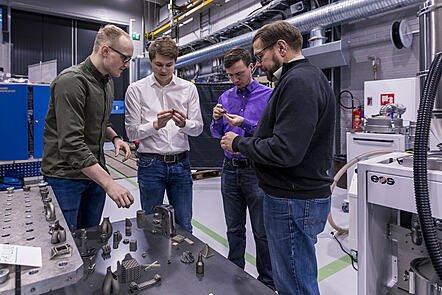
Enhance your knowledge of metal additive manufacturing (AM) technology, as well as metal AM applications and materials. Discover the challenges and advantages of additive manufacturing processes. This short course will develop your knowledge and understanding of metal additive manufacturing technology, from AM processes to how AM is used in different industries.

Oct 11th 2021
3 Weeks
Technology clusters for the Next Production Revolution in Africa (POK) Polimi OPEN KNOWLEDGE
Politecnico di Milano

Technology clusters for the Next Production Revolution in Africa (POK)

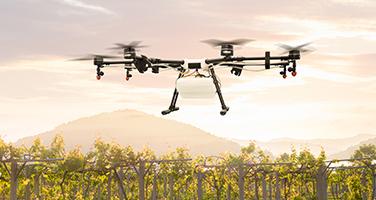
A short introduction to Additive Manufacturing and Smart Agriculture as enabling technology clusters for NPR. The course is part of a series of Sprint MOOC addressing the Next Production Revolution paradigma, as new wave of technological innovation. It addresses people from anywhere in the world, from industrialized economies as well as from “developing countries” and particularly from Africa.

Available
2 Weeks
Additive Manufacturing and 3D Printing: Costs Structures and Benefits (FutureLearn) FutureLearn
EIT RawMaterials,LUT University

Additive Manufacturing and 3D Printing: Costs Structures and Benefits (FutureLearn)

Discover the applications and potential of metal additive manufacturing when used with other technologies in the process chain. Learn how additive manufacturing and 3D printing could benefit your organisation. This short course will develop your understanding of the cost structure and benefits of additive manufacturing (AM) and 3D printers, as well as the competitive business advantages additive manufacturing can provide.

Oct 11th 2021
4 Weeks
Biomaterials and Biofabrication: Design, Engineering and Innovation (edX) EdX
University of Bayreuth,BayreuthX

Biomaterials and Biofabrication: Design, Engineering and Innovation (edX)

Take our MOOC to expand your knowledge about biomaterials, biomedical engineering, additive manufacturing, tissue engineering and to obtain insights on the future of biofabrication. This MOOC will benefit individuals working in the biomedical sector to discover emerging trends and achieve their next career step.

Self Paced
Self-Paced
Biosphere 2 Science for the Future of Our Planet (Coursera) Coursera
University of Arizona

Biosphere 2 Science for the Future of Our Planet (Coursera)

Are you ready to take an incredible journey around Planet Earth and beyond? In this course, you will delve into a world of innovative science and learn from a team of Biosphere 2 and University of Arizona researchers. From plants and soils, to oceans and rainforests, the Moon, Mars, and more, this course is an exciting opportunity for anyone interested in science and Earth stewardship.

Oct 12th 2026
5-12 Weeks
Machine Design Part I (Coursera) Coursera
Georgia Institute of Technology

Machine Design Part I (Coursera)

“Machine Design Part I” is the first course in an in-depth three course series of “Machine Design.” The “Machine Design” Coursera series covers fundamental mechanical design topics, such as static and fatigue failure theories, the analysis of shafts, fasteners, and gears, and the design of mechanical systems such as gearboxes. Throughout this series of courses we will examine a number of exciting design case studies, including the material selection of a total hip implant, the design and testing of the wing on the 777 aircraft, and the impact of dynamic loads on the design of an bolted pressure vessel. In this first course, you will learn robust analysis techniques to predict and validate design performance and life.

Oct 12th 2026
5-12 Weeks
Material Processing (Coursera) Coursera
Georgia Institute of Technology

Material Processing (Coursera)

Have you ever wondered why ceramics are hard and brittle while metals tend to be ductile? Why some materials conduct heat or electricity while others are insulators? Why adding just a small amount of carbon to iron results in an alloy that is so much stronger than the base metal? In this course, you will learn how a material’s properties are determined by the microstructure of the material, which is in turn determined by composition and the processing that the material has undergone.

Oct 12th 2026
2 Weeks
Introduction to Embedded Systems Software and Development Environments (Coursera) Coursera
University of Colorado Boulder

Introduction to Embedded Systems Software and Development Environments (Coursera)

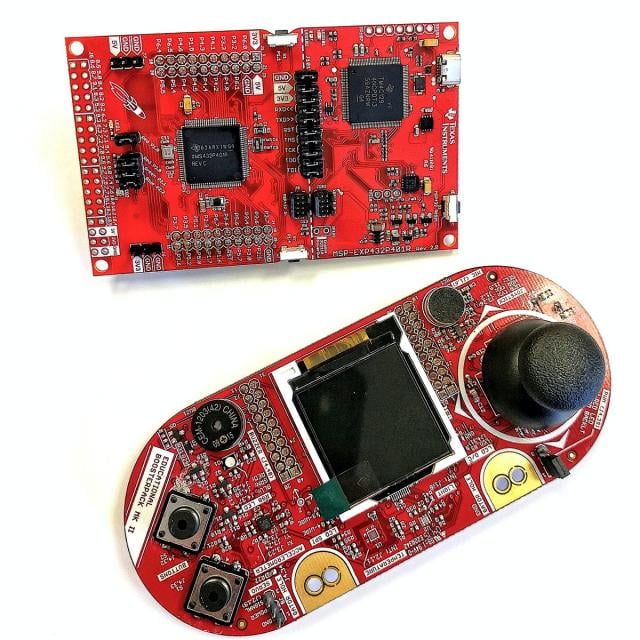
Welcome to the Introduction to Embedded Systems Software and Development Environments. This course is focused on giving you real world coding experience and hands on project work with ARM based Microcontrollers. You will learn how to implement software configuration management and develop embedded software applications. Course assignments include creating a build system using the GNU Toolchain GCC, using Git version control, and developing software in Linux on a Virtual Machine.

Oct 12th 2026
4 Weeks
Digital Signal Processing 1: Basic Concepts and Algorithms (Coursera) Coursera
École Polytechnique Fédérale de Lausanne

Digital Signal Processing 1: Basic Concepts and Algorithms (Coursera)

Digital Signal Processing is the branch of engineering that, in the space of just a few decades, has enabled unprecedented levels of interpersonal communication and of on-demand entertainment. By reworking the principles of electronics, telecommunication and computer science into a unifying paradigm, DSP is a the heart of the digital revolution that brought us CDs, DVDs, MP3 players, mobile phones and countless other devices.

Oct 12th 2026
4 Weeks
Digital Signal Processing 2: Filtering (Coursera) Coursera
École Polytechnique Fédérale de Lausanne

Digital Signal Processing 2: Filtering (Coursera)

Digital Signal Processing is the branch of engineering that, in the space of just a few decades, has enabled unprecedented levels of interpersonal communication and of on-demand entertainment. By reworking the principles of electronics, telecommunication and computer science into a unifying paradigm, DSP is a the heart of the digital revolution that brought us CDs, DVDs, MP3 players, mobile phones and countless other devices.

Oct 12th 2026
3 Weeks