Control automático: La tecnología invisible (Coursera)

Control automático: La tecnología invisible (Coursera)

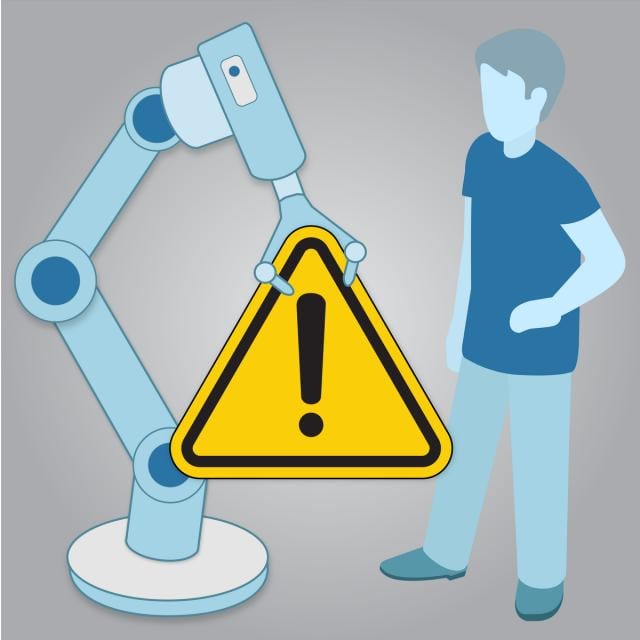
A lo largo de la historia, el ser humano se ha empeñado en construir dispositivos que le hagan más cómodo su día a día. Además, siempre ha estado interesado en que éstos lleven a cabo la tarea por sí mismos, sin necesidad de una supervisión continua. En nuestros días, muchos dispositivos llevan a cabo tareas como por arte de magia; pareciera que piensan o que adivinan nuestros deseos, que nunca se pueden equivocar o que su precisión y velocidad no puede ser superada. Los sistemas de control son una parte crucial de este funcionamiento.

Class Deals by MOOC List - Click here and see Coursera's Active Discounts, Deals, and Promo Codes.

Con este curso, los participantes conocerán la aplicación de los sistemas de control y algunos ejemplos de ellos. Además, revisarán a grandes rasgos sus características básicas y sus diferentes representaciones, con especial énfasis en el modelado matemático.
Al término del curso:
Identificarás la utilidad y las características principales de los sistemas de control.
Distinguirás entre un sistema de control en lazo abierto y un sistema de control en lazo cerrado.

Syllabus

WEEK 1
Introducción
El participante, mediante la visualización de numerosos ejemplos y actividades descriptivas, conocerá las principales propiedades de los sistemas de control y su aplicación en la vida cotidiana.
Control ¿Dónde estás?
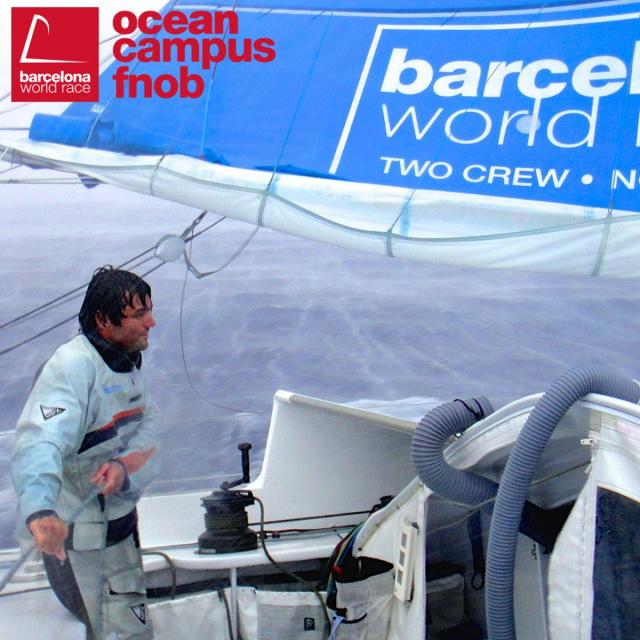
Existen muchos sistemas a nuestro alrededor que hacen tareas por sí mismos: regular la cantidad de agua presente en los tinacos de nuestra casa, la temperatura de la misma en un calentador, los modernos sistemas de conducción autónoma de los más recientes modelos de vehículos, etc. ¿Te has preguntado cómo funcionan? En este módulo, veremos una sencilla aproximación al control automático, la medición y realimentación de señales y aprenderemos a identificarlos como parte de sistemas de nuestra vida diaria, incluso, en tecnologías de vanguardia.

WEEK 2
¿Cómo llegamos a esto?
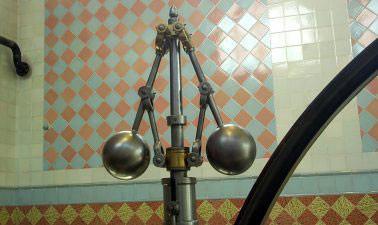
En este módulo, viajaremos en un recorrido histórico por diversas partes del mundo, entre ellas, la antigua China, Grecia, Egipto y la Europa del Renacimiento, en el cual observaremos artefactos o herramientas donde se aplicaron principios de control automático de manera intuitiva. Después se mostrarán algunos ejemplos donde estos principios son usados y desarrollados de manera formal. Esto ha sido parte de una historia que quizás para ti ha permanecido invisible.

WEEK 3
¡A moverse! La dinámica de las cosas
Las señales asociadas a los sistemas a controlar varían con el tiempo, y ese mismo cambio se considera y aprovecha en el diseño de los sistemas de control. Ahora, veremos cómo podemos conocer y predecir el comportamiento de un sistema mediante modelos, de forma que no sea necesario construirlos o desarmarlos para saber cómo funcionan.
Go to Class
MOOC List is learner-supported. When you buy through links on our site, we may earn an affiliate commission.

Related Courses

Fundamentals of Fluid Power (Coursera) Coursera
University of Minnesota

Fundamentals of Fluid Power (Coursera)

In this course, you will be introduced to the fundamental principles and analytical modeling of fluid power components, circuits, and systems. You will learn the benefits and limitations of fluid power compared with other power transmission technologies; the operation, use, and symbols of common hydraulic components; how to formulate and analyze models of hydraulic components and circuits; and how to design and predict the performance of fluid power circuits.

Aug 31st 2026
5-12 Weeks
Fundamentals of Audio and Music Engineering: Part 1 Musical Sound & Electronics (Coursera) Coursera
University of Rochester

Fundamentals of Audio and Music Engineering: Part 1 Musical Sound & Electronics (Coursera)

In this course students learn the basic concepts of acoustics and electronics and how they can applied to understand musical sound and make music with electronic instruments. Topics include: sound waves, musical sound, basic electronics, and applications of these basic principles in amplifiers and speaker design.

Aug 31st 2026
5-12 Weeks
Dynamics and Control (edX) EdX
Universitat Politècnica de València,UPValenciaX

Dynamics and Control (edX)

This is an interactive course about the basic concepts of Systems, Control and their impact in all the human activities. First, the basic concepts of systems, dynamics, structure and control are introduced. Then, looking at many examples in Nature and human made devices, we will realize that the dynamic behavior of most systems can be modified by adding a control system. Later we will see how knowing how to evaluate the dynamic behavior of a system and measure its performance will provide the tools to design new controlled systems fulfilling some requirements.

Self Paced
Self-Paced
Dynamic Systems & Controls (saylor.org) Saylor Academy
Saylor.org

Dynamic Systems & Controls (saylor.org)

The study of dynamic systems focuses on the behavior of physical systems as well as the physics of individual components and the interactions between them. Control systems are designed to enable dynamic systems to respond in a specific manner. In this course, we will learn about the mathematical modeling, analysis, and control of physical systems that are in rest, in motion, or acted upon by a force.

Legacy Course
Self-Paced
Organizational Design: Creating Competitive Advantage (edX) EdX
Indian Institute of Management, Bangalore,IIMBx

Organizational Design: Creating Competitive Advantage (edX)

Learn how to design control systems, decision-making processes and a culture that enables value creation and the development of sustainable competitive advantage. In order to sustain themselves, organizations need to compete for scarce resources both in input and output markets. Because of this organizations need to create some kind of competitive advantage.

This course is archived
5-12 Weeks
Sistemas Digitales: De las puertas lógicas al procesador (Coursera) Coursera
Universitat Autònoma de Barcelona

Sistemas Digitales: De las puertas lógicas al procesador (Coursera)

En este curso aprenderemos los fundamentos del diseño de los circuitos digitales actuales, siguiendo una orientación eminentemente práctica. A diferencia de otros cursos más "clásicos" de Circuitos Digitales, nuestro interés se centrará más en el Sistema que en la Electrónica que lo sustenta. Este enfoque nos permitirá sentar las bases del diseño de Sistemas Digitales complejos.

Aug 31st 2026
5-12 Weeks
Wind Energy (Coursera) Coursera
Technical University of Denmark - DTU

Wind Energy (Coursera)

How tall is a modern wind turbine and how can it possibly generate power from the wind? This course gives an overview of key aspects in wind energy engineering. Whether you are looking for general insight in this green technology or your ambition is to pursue a career in wind energy engineering, 'Wind Energy' is an excellent starting point. Experts located in the wind pioneering country of Denmark will take you on a tour through the most fundamental disciplines of wind energy research such as wind measurements and resource assessment, aerodynamics, wind turbine technology, structural mechanics, materials, financial and electrical systems.

Aug 31st 2026
5-12 Weeks
Uncertainty and Research (Coursera) Coursera
Johns Hopkins University

Uncertainty and Research (Coursera)

This course teaches the fundamentals of scientific research. We approach the research process as a means of systematically reducing uncertainty and demonstrate how conducting a scientific investigation can be posed as an exercise in Bayesian uncertainty quantification. We begin by exploring the scientific landscape to understand the different types of research, where they are conducted, how they are supported, and why each of these types of research is important.

Aug 31st 2026
5-12 Weeks
Introduction to High-Throughput Materials Development (Coursera) Coursera
Georgia Institute of Technology

Introduction to High-Throughput Materials Development (Coursera)

This course is an introduction to high-throughput experimental methods that accelerate the discovery and development of new materials. This course is an introduction to high-throughput experimental methods that accelerate the discovery and development of new materials. It is well recognized that the discovery of new materials is the key to solving many technological problems faced by industry and society. These problems include energy production and utilization, carbon capture, tissue engineering, and sustainable materials production, among many others. This course will introduce the learner to a remarkable new approach to materials discovery and characterization: high-throughput materials development (HTMD).

Aug 31st 2026
5-12 Weeks