Dynamic Systems & Controls (saylor.org)

Offered by Saylor.org,
Dynamic Systems & Controls (saylor.org)

The study of dynamic systems focuses on the behavior of physical systems as well as the physics of individual components and the interactions between them. Control systems are designed to enable dynamic systems to respond in a specific manner. In this course, we will learn about the mathematical modeling, analysis, and control of physical systems that are in rest, in motion, or acted upon by a force.

Please note: this legacy course does not offer a certificate and may contain broken links and outdated information. Although archived, it is open for learning without registration or enrollment.
Dynamic systems can be mechanical, electrical, thermal, hydraulic, pneumatic, or any combination thereof. An electrical motor is a good example of a dynamic system in which electricity is used to drive the motor’s mechanical movement. The operation of the motor is controlled by altering the electric current or voltage. Another good example is a car’s suspension system, which is designed to curb abnormal vibrations while riding on a bumpy road. In order to design a suspension system, you must analyze the mathematical equations of the physics of the suspension and its response (i.e. how effectively the system absorbs the vibrations). The springs between the tires and the chassis balance the weight and maintain the height of the car. The suspension system is controlled by actuators (serving as shock absorbers) that curb the vibrations and therefore make for a more comfortable driving experience.
This course explores the dynamics of mechanical, thermal, fluid, electrical, and hybrid systems and sub-systems. We will learn the mathematical models (i.e. differential equations) that govern these systems and work to understand how these systems respond to various inputs both in time-domain and frequency-domain. The course will also focus on stability analysis of these systems with regards to controller designs. (We will take a look at a range of designs, from simple feedback controls to advanced lead-lag compensators). Controller design involves complex mathematical calculations which should be handled by mathematical computation tools like SCILAB, MATLAB, MathCAD, Maple, and so forth. As SCILAB is a freely available tool used for designing, analyzing, and optimizing systems and controls, we will use SCILAB, which will save us time and provide us with more accurate results. You have already used SCILAB in Introduction to Mechanical Engineering. MATLAB users who are not familiar with SCILAB can used a tool in SCILAB (please see UNIT 4) that converts MATLAB codes to SCILAB codes.
We will begin by learning about the different types of dynamic systems through various examples and reviewing relevant mathematical material (much of which you may already know), which will enable you to better understand the material covered in this course. We will then learn how to represent these systems using different mathematical forms before analyzing them in terms of frequency, time domain, and stability with respect to controller design. You will also take a close look at various controller designs and learn how to apply SCILAB. Finally, we will conclude the course by visiting advanced topics and case studies in the field.
Go to Class
MOOC List is learner-supported. When you buy through links on our site, we may earn an affiliate commission.

Related Courses

Sistemas Digitales: De las puertas lógicas al procesador (Coursera) Coursera
Universitat Autònoma de Barcelona

Sistemas Digitales: De las puertas lógicas al procesador (Coursera)

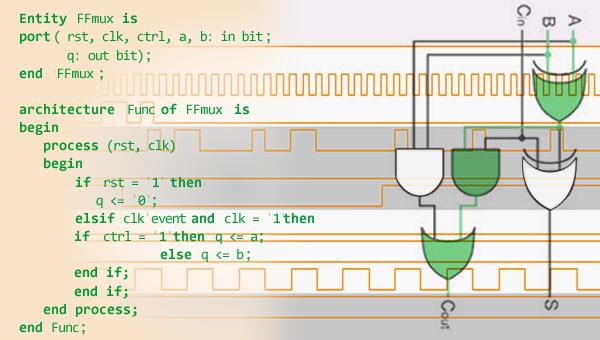
En este curso aprenderemos los fundamentos del diseño de los circuitos digitales actuales, siguiendo una orientación eminentemente práctica. A diferencia de otros cursos más "clásicos" de Circuitos Digitales, nuestro interés se centrará más en el Sistema que en la Electrónica que lo sustenta. Este enfoque nos permitirá sentar las bases del diseño de Sistemas Digitales complejos.

Sep 28th 2026
5-12 Weeks
MBSE: Model-Based Systems Engineering (Coursera) Coursera
University at Buffalo,The State University of New York

MBSE: Model-Based Systems Engineering (Coursera)

This Model-Based Systems Engineering (MBSE) course and the Digital Thread courses featured earlier in this specialization bring together the concepts from across digital manufacturing and design, forming a vision in which the geometry of a product is just one way of describing it. MBSE is where the model resulting from the evolution of system requirements, design, analysis, verification and validation activities is the focus of design and manufacturing.

Sep 28th 2026
4 Weeks
Numerical Methods for Engineers (saylor.org) Saylor Academy
Saylor.org

Numerical Methods for Engineers (saylor.org)

Numerical methods have been used to solve mathematical expressions of engineering and scientific problems for at least 4000 years. Such methods apply numerical approximation in order to convert continuous mathematical problems (for example, determining the mechanical stress throughout a loaded truss) into systems of discrete equations that can be solved with sufficient accuracy by machine. This course will provide you with an introduction to several of those numerical methods which you may then find opportunity to practice later in the curriculum.

Legacy Course
Self-Paced
Railway Engineering: An Integral Approach (edX) EdX
Delft University of Technology,DelftX

Railway Engineering: An Integral Approach (edX)

Discover the science and complexity behind the exciting world of metro, tram and railway systems. Have you ever wondered what it takes to get your train on the right platform at the scheduled time every day? Understanding the complexity behind today’s sophisticated railway systems will give you a better insight into how this safe and reliable transportation system works. We will show you the many factors which are involved and how multiple people, behind the scenes, have a daily task that enables you to get from home to work. Journey with us into the world of rail - a complex system that connects people, cities and countries.

Oct 14th 2026
5-12 Weeks
Engineering Maintainable Android Apps (Coursera) Coursera
Vanderbilt University

Engineering Maintainable Android Apps (Coursera)

Engineering Maintainable Android Apps, which is a 4 week MOOC that shows by example various methods for engineering maintainable Android apps, including test-driven development methods and how to develop/run unit tests using JUnit and Robotium (or equivalent automated testing frameworks for Android), as well as how to successfully apply common Java/Android software patterns to improve the extensibility and clarity of Android apps.

Sep 28th 2026
4 Weeks
Materials Science: 10 Things Every Engineer Should Know (Coursera) Coursera
University of California, Davis

Materials Science: 10 Things Every Engineer Should Know (Coursera)

We explore “10 things” that range from the menu of materials available to engineers in their profession to the many mechanical and electrical properties of materials important to their use in various engineering fields. We also discuss the principles behind the manufacturing of those materials. By the end of the course, you will be able to: recognize the important aspects of the materials used in modern engineering applications; explain the underlying principle of materials science: “structure leads to properties,”; identify the role of thermally activated processes in many of these important “things” – as illustrated by the Arrhenius relationship; relate each of these topics to issues that have arisen (or potentially could arise) in your life and work.

Sep 28th 2026
5-12 Weeks
Introdução ao Controle de Sistemas (Coursera) Coursera
Instituto Tecnológico de Aeronáutica

Introdução ao Controle de Sistemas (Coursera)

Este curso apresenta os principais conceitos do controle de sistemas e mostra suas vantagens e importância para a sociedade moderna. Você vai entender o que é o controle de sistemas e como o controle com realimentação funciona, e passará a perceber a sua presença em diversas situações em seu dia-a-dia, na natureza, no corpo humano e em diversos dispositivos, desde os mais simples até os mais complexos.

Sep 28th 2026
4 Weeks
Writing Skills for Engineering Leaders (Coursera) Coursera
Rice University

Writing Skills for Engineering Leaders (Coursera)

Engineering leaders must write extensively for their jobs, and their writing needs to be professional, reader-focused, and error-free. What leaders write in particular can affect productivity and the bottom line, so the written communication that leaders create must be clear and concise. In this course, you’ll learn essential writing skills that you can apply in your daily activities on the job as an engineering leader.

Oct 12th 2026
4 Weeks
Self Awareness and the Effective Leader (Coursera) Coursera
Rice University

Self Awareness and the Effective Leader (Coursera)

Part of being an effective leader is learning how to play to your strengths and overcome characteristics that don't lend to good leadership practices. During the course, you will examine your own strengths and learn ways to use them in a leadership role. Learn to manage stress and solve problems creatively. Throughout the course, you will also build a tool kit of useful techniques that you can begin using right away in your engineering career.

Sep 28th 2026
5-12 Weeks
Applications in Engineering Mechanics (Coursera) Coursera
Georgia Institute of Technology

Applications in Engineering Mechanics (Coursera)

This course applies principles learned in my course “Introduction to Engineering Mechanics” to analyze real world engineering structures. You will need to have mastered the engineering fundamentals from that class in order to be successful in this course offering. This course addresses the modeling and analysis of static equilibrium problems with an emphasis on real world engineering systems and problem solving.

Oct 5th 2026
5-12 Weeks