Introducing Robotics: Robotics and Society (FutureLearn)

Introducing Robotics: Robotics and Society (FutureLearn)

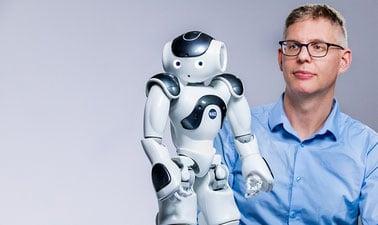
How do you feel about robots? Learn how robotics is used today and explore how it might help solve the big issues of our time. Once only found in fiction, robots are being applied in an increasing array of ways in society, from mechanisation of industrial tasks to exploring places humans can’t go. This course starts with your perceptions of robotics, describes different types of robots, and leads into a discussion of the future: knowing we can use robots, should we?

Class Deals by MOOC List - Click here and see FutureLearn's Active Discounts, Deals, and Promo Codes.

We will use case studies to show how robotics is being applied to help solve key issues facing society today: food production, aging populations, transport, and environmental change.

Get an introduction to robots
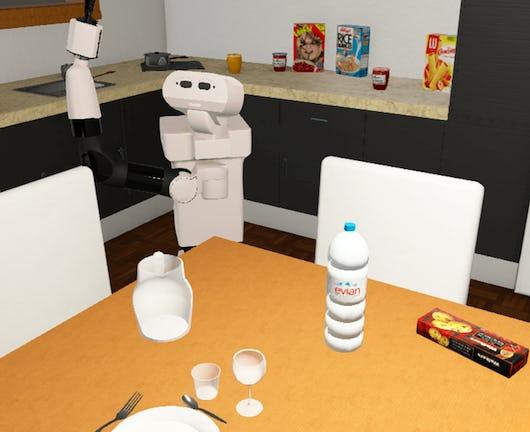
What’s your favourite robot? We explore how books, movies and television have influenced our perceptions of robotics and ask you to define a robot. From our shared understanding, we’ll then discuss how and why robotics impacts society and the ethics of using robots.

Learn about different types of robots
You might be surprised to learn where and how robots are used in our society today. You’ll explore examples of real robots – from manufacturing to the military – before considering what the future might hold for humans and robots alike.

Understand how robotics is solving world challengesOur world is facing some serious challenges and the pressures are only increasing as the population grows and ages. You’ll consider the practicalities and ethics of using robotics to address four of these big issues and learn how the usefulness of robots is limited only by the capacity of human intelligence.

Go to Class
MOOC List is learner-supported. When you buy through links on our site, we may earn an affiliate commission.

Related Courses

Robotics: Mobility (Coursera) Coursera
University of Pennsylvania

Robotics: Mobility (Coursera)

How can robots use their motors and sensors to move around in an unstructured environment? You will understand how to design robot bodies and behaviors that recruit limbs and more general appendages to apply physical forces that confer reliable mobility in a complex and dynamic world. We develop an approach to composing simple dynamical abstractions that partially automate the generation of complicated sensorimotor programs.

Jan 6th 2025
4 Weeks
Computational Geometry (Coursera) Coursera
Saint Petersburg State University

Computational Geometry (Coursera)

This course represents an introduction to computational geometry – a branch of algorithm theory that aims at solving problems about geometric objects. Its application areas include computer graphics, computer-aided design and geographic information systems, robotics, and many others. You will learn to apply to this end various algorithmic approaches, and asses their strong and weak points in a particular context, thus gaining an ability to choose the most appropriate method for a concrete problem.

May 16th 2022
5-12 Weeks
Introducing Robotics: Build a Robot Arm (FutureLearn) FutureLearn
Queensland University of Technology

Introducing Robotics: Build a Robot Arm (FutureLearn)

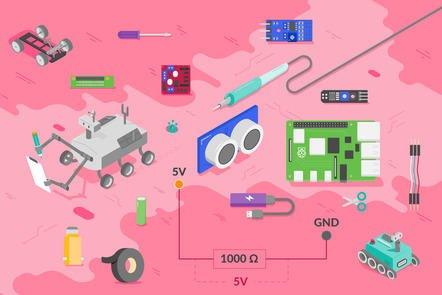
Design, build and program a simple robot and share it with other learners. Here’s your chance to build a simple robot. Robotics is all about integrating hardware and software. In this course, you’ll design, build and program a simple robot, with at least two joints, that can carry a pen or pencil and draw a coordinated line on a sheet of a paper.

No sessions available
5-12 Weeks
Basic Robotic Behaviors and Odometry (Coursera) Coursera
University of Colorado Boulder

Basic Robotic Behaviors and Odometry (Coursera)

"Basic Robotic Behaviors and Odometry" provides you with an introduction to autonomous mobile robots, including forward kinematics (“odometry”), basic sensors and actuators, and simple reactive behavior. This course is centered around exercises in the realistic, physics-based simulator, “Webots”, where you will experiment in a hands-on manner with simple reactive behaviors for collision avoidance and line following, state machines, and basic forward kinematics of non-holonomic systems.

Aug 10th 2026
5-12 Weeks
Modern Robotics, Course 4: Robot Motion Planning and Control (Coursera) Coursera
Northwestern University

Modern Robotics, Course 4: Robot Motion Planning and Control (Coursera)

Do you want to know how robots work? Are you interested in robotics as a career? Are you willing to invest the effort to learn fundamental mathematical modeling techniques that are used in all subfields of robotics? If so, then the "Modern Robotics: Mechanics, Planning, and Control" specialization may be for you. This specialization, consisting of six short courses, is serious preparation for serious students who hope to work in the field of robotics or to undertake advanced study. It is not a sampler.

Aug 17th 2026
4 Weeks
Robotic Mapping and Trajectory Generation (Coursera) Coursera
University of Colorado Boulder

Robotic Mapping and Trajectory Generation (Coursera)

In this second course of the Introduction to Robotics specialization, "Robotic Mapping and Trajectory Generation", you will learn how to perform basic inverse kinematics of (non-)holonomic systems using a feedback control approach. You will also learn how to process multi-dimensional sensor signals such as laser range scanners for mapping. Additionally, you will apply the overarching focus of mechanisms and sensors as sources of uncertainty and gain techniques to how to model and control them.

Aug 10th 2026
5-12 Weeks
Collaborative Robot Safety: Design & Deployment (Coursera) Coursera
University at Buffalo,The State University of New York

Collaborative Robot Safety: Design & Deployment (Coursera)

As robots evolve and increasingly interact with humans, enhancing the safety of personnel working with these “collaborative robots” (cobots) is vital. This course equips you to assess the safety of a collaborative robot workcell and prevent the chances of injury or harm. It imparts industry-endorsed safety standards, technical report recommendations and best practices from the International Organization for Standardization (ISO), Robotic Industries Association (RIA) and Occupational Safety and Health Administration (OSHA).

Aug 31st 2026
4 Weeks