Introducción a los modelos de demanda de transporte (Coursera)

Introducción a los modelos de demanda de transporte (Coursera)

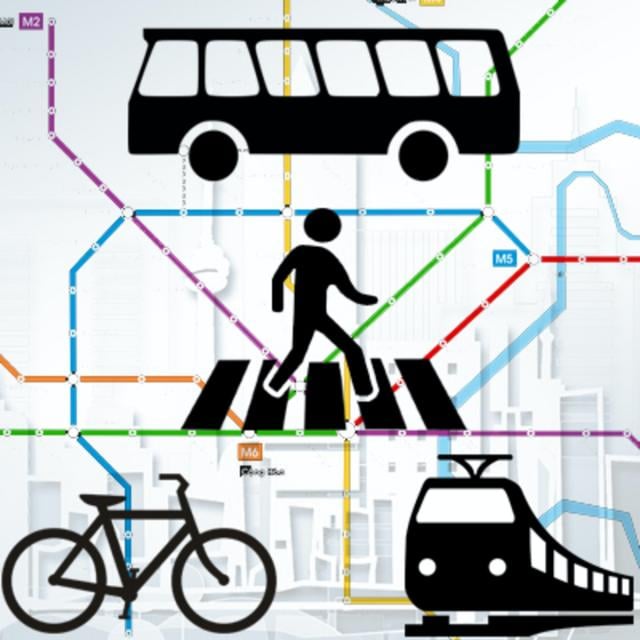
¿Cuántos viajan? ¿Por dónde? ¿En qué modo? En general, los proyectos de transporte (tanto de infraestructura como gestión) poseen plazos y costos de realización sumamente elevados. Por estos motivos, la evaluación de este tipo de proyectos requiere de una adecuada estimación de la demanda para su correcto dimensionamiento.

Class Deals by MOOC List - Click here and see Coursera's Active Discounts, Deals, and Promo Codes.

En este curso aprenderás:

  • Las técnicas básicas (estadísticas y de trabajo en terreno) necesarias para recolectar información adecuada, corregirla y expandirla, para su utilización en modelar la demanda por transporte.
  • Los principios básicos y las técnicas clásicas utilizadas en la práctica para modelar la demanda de transporte a través del “modelo clásico” de cinco etapas: generación de viajes, distribución de viajes, elección de horario, elección de modo de transporte, y elección de ruta de viaje.
  • Las herramientas básicas disponibles para calibrar los principales modelos agregados de demanda por transporte y aplicarlos para efectuar predicciones.
  • Las herramientas estadísticas y computacionales básicas para estimar dos modelos paradigmáticos de elección discreta (Logit Multinomial y Logit Jerárquico) utilizando información a nivel desagregado, y aplicarlos para efectuar predicciones.

Syllabus

WEEK 1
Introducción a los Modelos de Demanda de Transporte
En este módulo presentaremos las problemáticas de transporte urbano, los distintos enfoques de solución, el impacto de otras políticas externas al transporte, una estructura general de modelación de transporte, la planificación y seguimiento de estos modelos.

WEEK 2
Metodologías de Recolección de Información
En este módulo presentaremos las distintas metodologías para la recolección de información.

WEEK 3
Modelos de Generación y Atracción de Viajes
En este módulo estudiaremos los modelos de generación y atracción de viajes.

WEEK 4
Modelos Agregados de Elección de Destino y Modo de Viaje
En este módulo aprenderás sobre los modelos agregados de elección de destino y modo de viaje.

WEEK 5
Modelos Desagregados de Elección Discreta
En este módulo aprenderás sobre los modelos desagregados de elección discreta.
Go to Class
MOOC List is learner-supported. When you buy through links on our site, we may earn an affiliate commission.

Related Courses

Análisis de Sistemas de Transporte (Coursera) Coursera
Pontificia Universidad Católica de Chile

Análisis de Sistemas de Transporte (Coursera)

Este curso es una introducción a las metodologías fundamentales para la gestión, planificación y evaluación de sistemas de transporte de pasajeros. Se aprenderán técnicas usadas en la práctica para estimar la demanda, modelar la operación y realizar análisis económicos de proyectos de transporte.

May 18th 2026
5-12 Weeks
Planet Earth ... and You! (Coursera) Coursera
University of Illinois at Urbana-Champaign

Planet Earth ... and You! (Coursera)

Earthquakes, volcanoes, mountain building, ice ages, landslides, floods, life evolution, plate motions—all of these phenomena have interacted over the vast expanses of deep time to sculpt the dynamic planet that we live on today. Planet Earth presents an overview of several aspects of our home, from a geological perspective. We begin with earthquakes—what they are, what causes them, what effects they have, and what we can do about them. We will emphasize that plate tectonics—the grand unifying theory of geology—explains how the map of our planet's surface has changed radically over geologic time, and why present-day geologic activity—including a variety of devastating natural disasters such as earthquakes—occur where they do. We consider volcanoes, types of eruptions, and typical rocks found there.

Jun 1st 2026
5-12 Weeks
Advanced Manufacturing Enterprise (Coursera) Coursera
University at Buffalo,The State University of New York

Advanced Manufacturing Enterprise (Coursera)

Enterprises that seek to become proficient in advanced manufacturing must incorporate manufacturing management tools and integrate data throughout the supply chain to be successful. This course will make students aware of what a digitally connected enterprise is, as they learn about the operational complexity of enterprises, business process optimization and the concept of an integrated product-process-value chain.

Jun 1st 2026
4 Weeks
Systems Engineering (Coursera) Coursera
MathWorks

Systems Engineering (Coursera)

Systems Engineering provides a broad overview of how systems engineering helps you develop complex projects that meet program objectives in an efficient way. You will learn how system architectures are developed and described, how to communicate the needs, requirements, and constraints throughout the project, how to optimize the design through trade studies, and how to know the system does what it’s supposed to in the end.

Jun 5th 2026
1 Week
GIS Data Formats, Design and Quality (Coursera) Coursera
University of California, Davis

GIS Data Formats, Design and Quality (Coursera)

In this course, the second in the Geographic Information Systems (GIS) Specialization. What you will learn: design data tables and use separating and joining data in a relational database; write query strings to subset data; create and work with raster data; create web maps.

Jun 1st 2026
4 Weeks
Cyber Security in Manufacturing (Coursera) Coursera
University at Buffalo,The State University of New York

Cyber Security in Manufacturing (Coursera)

The nature of digital manufacturing and design (DM&D), and its heavy reliance on creating a digital thread of product and process data and information, makes it a prime target for hackers and counterfeiters. This course will introduce students to why creating a strong and secure infrastructure should be of paramount concern for anyone operating in the DM&D domain, and measures that can be employed to protect operational technologies, systems and resources.

Jun 1st 2026
4 Weeks
MRI Fundamentals (Coursera) Coursera
Korea Advanced Institute of Science and Technology - KAIST

MRI Fundamentals (Coursera)

Welcome! In this course learners will develop expertise in basic magnetic resonance imaging (MRI) physics and principles and gain knowledge of many different data acquisition strategies in MRI. In particular, learners will get to know what is magnetic resonance phenomenon, how magnetic resonance signals are generated, how an image can be formulated using MRI, how soft tissue contrast can change with imaging parameters.

Jun 1st 2026
5-12 Weeks
Introduction to Physical Chemistry (Coursera) Coursera
University of Manchester

Introduction to Physical Chemistry (Coursera)

Chemical reactions underpin the production of pretty much everything in our modern world. But, what is the driving force behind reactions? Why do some reactions occur over geological time scales whilst others are so fast that we need femtosecond-pulsed lasers to study them? Ultimately, what is going on at the atomic level? Discover the answers to such fundamental questions and more on this course in introductory physical chemistry.

Jun 1st 2026
5-12 Weeks