FUN

Innate Immunity (FUN)

Offered by Institut Pasteur,
Innate Immunity (FUN)

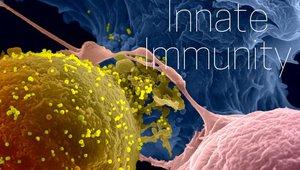
More than a century ago, Elie Metchnikoff established the bases of cellular innate immunity when he discovered the mechanism of phagocytosis. However, during most of the XXth century, adaptive immunity (also known as specific immunity) focused most of the interest of the researchers, until Charles Janeway and Polly Matzinger revisited the definition of immunology. What was called “non-specific immunity” was renamed “innate immunity”, and the understanding of the sensing of the exogenous or endogenous dangers signals, and their identification revolutionized our understanding of the early mechanism aimed to defend the integrity of the host against any type of attacks including pathogens.

Nowadays, how bacteria, viruses, parasites and fungi are sensed by the infected host, have been mostly deciphered. Similarly, the mechanisms of the host involved to defend its integrity against infectious process have been decoded. This MOOC describes the players and the whole orchestra involved in innate immunity against pathogens.

Prerequisites
This MOOC targets people with a medical or scientific training background who are interested in all aspects of innate immunity: medical students, scientific Master II and PhD students (Immunology, Bacteriology, Parasitology, Virology…), post-doc, physicians, pharmacists, veterinarians, and all scientists working on bacteria, viruses, fungi and parasites, interested to learn more about the defense mechanism of the host against their favored bug.

Course Syllabus

Week 1: Cellular players - part 1
Macrophages
Neutrophils
NK cells
NKT cells
Innate lymphoid cells

Week 2: Cellular players - part 2
T γ/δ lymphocytes
Th17 lymphocytes
Treg lymphocytes
Dentritic cells
Mast cells

Week 3: Molecular players - part 1
PAMPs
DAMPs (alarmins)
PRRs : TLR
PRRs : NLR
PRRs : RLR

Week 4: Molecular players - part 2
The complement system
Cytokines
Chemokines
Anti-microbial peptides

Week 5: Host-pathogen interactions
Anti-infectious role of cytokines
Innate immunity and bacterial infection
Innate immunity and viral infection
Innate immunity and parasitic infection
Innate immunity against fungal infection
Microbial strategies against the immune system
Mucosal innate immunity

Week 6: Regulation of innate immune response
Sepsis/ an overwhelmed innate immune response
Regulation of the immune system by the central and peripheral nervous system
Links between innate and adaptive immunity
Evolutionary genetics of the human innate immune system
Trained innate immunity
Parameters influencing immune responses

Suggested Readings
Toll-Like Receptors (TLRs) and Innate Immunity
Mouse Models of Innate Immunity: Methods and Protocols
Go to Class
MOOC List is learner-supported. When you buy through links on our site, we may earn an affiliate commission.

Related Courses

Environnement et santé : un homme sain dans un environnement sain (FUN) FUN
Université Paris Descartes

Environnement et santé : un homme sain dans un environnement sain (FUN)

Ce MOOC en toxicologie, environnement et santé aborde les principaux mécanismes d'exposition aux polluants environnementaux ainsi que les enjeux de la réglementation actuelle. La question des effets des environnements sur la santé est une préoccupation majeure. Les crises sanitaires récurrentes mettent en évidence les relations étroites entre l’homme et son environnement et les conséquences parfois dramatiques d’une mauvaise évaluation du risque sanitaire.

No sessions available
5-12 Weeks
Eléments de santé au travail pour les ingénieurs et managers (FUN) FUN
le cnam

Eléments de santé au travail pour les ingénieurs et managers (FUN)

Le MOOC éléments de santé au travail pour les ingénieurs et managers, ne vise pas à former des spécialistes de la santé au travail. Son but est de fournir des éléments permettant aux cadres ou futurs cadres d’intégrer cette dimension dans leur pratique professionnelle. Pour cela, le contenu du cours s’articule autour de trois axes.

No sessions available
5-12 Weeks
The New Nordic Diet - from Gastronomy to Health (Coursera) Coursera
University of Copenhagen

The New Nordic Diet - from Gastronomy to Health (Coursera)

The New Nordic Diet is a new food culture developed in 2009-13 with key emphasis on gastronomy, health, and environment. Major research in its effect on acceptability, behaviour and learning skills, and disease prevention have been conducted by the OPUS centre at the University of Copenhagen and the people behind the award-winning restaurant Noma in Copenhagen. This course will give the participants the opportunity to experience a healthy and palatable new food and eating concept diet “The New Nordic Diet” and an understanding of how food and diets can affect mental and physical health and ensure the foundation for a healthier life style for future generations with a regional based diet and food culture.

Jun 8th 2026
5-12 Weeks
Santé sexuelle pour tous (partie 1) (FUN) FUN
Université Sorbonne Paris Cité

Santé sexuelle pour tous (partie 1) (FUN)

Ce MOOC s’inscrit dans une stratégie nationale de santé sexuelle agenda 2030 pour la France et l’international. De plus il s’inscrit dans les Objectifs du Développement Durable 2030 des N.U. notamment les cibles 3.3 Mettre fin aux épidémies du VIH/sida et des IST, 3.4 Promouvoir la santé mentale et le bien être sexuel, 3.7 Assurer l’accès, pour tous, aux services de soins de santé sexuelle et procréative, à l’information et à l’éducation, en lien avec les 16 autres objectifs.

No sessions available
5-12 Weeks
"Care for carers" Aider une personne âgée : un rôle à part entière. Conseils et soutien (FUN) FUN
Université Fédérale Toulouse Midi-Pyrénées

"Care for carers" Aider une personne âgée : un rôle à part entière. Conseils et soutien (FUN)

This course is entended for anyone engaged in a care relationship with older people in disability or dependency situations, whether formal or informal caregivers. This module is part of Care Campus, a unique partner ship of academic institutions companies cities and governemental agencies that aim to improve the quality of care of older citizens in Europe.

No sessions available
5-12 Weeks
Maladie de Parkinson (FUN) FUN
Université de Nantes

Maladie de Parkinson (FUN)

Le MOOC maladie de Parkinson vise à mieux faire connaître cette maladie qui, en France, touche environ 1% des personnes âgées de plus 70 ans. Cette seconde session, totalement remaniée et enrichie de nouveaux contenus s’adresse au grand public, aux patients et à leurs aidants, ainsi qu’aux étudiants en biologie/santé et aux soignants.

No sessions available
5-12 Weeks
Paleontology: Early Vertebrate Evolution (Coursera) Coursera
University of Alberta

Paleontology: Early Vertebrate Evolution (Coursera)

Paleontology: Early Vertebrate Evolution is a four-lesson course teaching a comprehensive overview of the origin of vertebrates. Students will explore the diversity of Palaeozoic lineages within a phylogenetic and evolutionary framework .This course examines the evolution of major vertebrate novelties including the origin of fins, jaws, and tetrapod limbs. Students also explore key Canadian fossil localities, including the Burgess Shale (British Columbia), Miguasha (Quebec), and Man On The Hill (Northwest Territories).

Jun 10th 2026
4 Weeks
Sit Less, Get Active (Coursera) Coursera
University of Edinburgh

Sit Less, Get Active (Coursera)

Physical inactivity and sedentariness are “silent killers”. Do you feel like you spend too much time sitting? Do you feel like you would like to be more active? Are you unsure about how to incorporate physical activity into your daily life? We are here to help. Join us on a journey to learn about how to sit less and become more active. Use this FREE course to learn how to monitor your own activity and set physical activity goals.

Jun 14th 2026
3 Weeks
HIV Science (FUN) FUN
Institut Pasteur

HIV Science (FUN)

Since the start of the epidemic HIV has infected over 75 million people and provoked more than 35 million deaths. Today, although HIV replication can be controlled by antiretroviral treatment, HIV infection remains an outstanding global health issue, with 36.7 million infected people and 1 million HIV-related deaths in 2016, according to WHO. Half of the infected population does not have access to antiretroviral treatment and 2 million new infections are registered every year. In addition there is currently no cure for HIV and antiretroviral treatment needs to be maintained for life. In this MOOC we will review different aspects of HIV infection: from its biological origin and its identification as the causative agent of AIDS to the perspectives of eradication.

No sessions available
5-12 Weeks