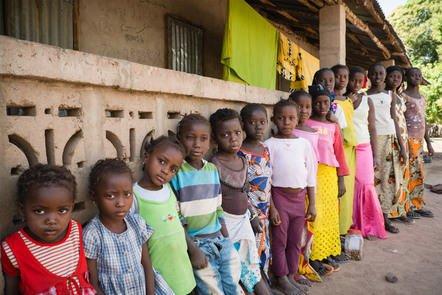
Improving the Health of Women, Children and Adolescents: from Evidence to Action (FutureLearn)

Improving the Health of Women, Children and Adolescents: from Evidence to Action (FutureLearn)

Consider the latest data, priorities and debates about the health of mothers, children and adolescents in this free online course. At a time of global concern over emerging infectious and chronic diseases, it is important to remember that millions of women and children continue to die every year from conditions that are easily preventable and treatable.

Class Deals by MOOC List - Click here and see FutureLearn's Active Discounts, Deals, and Promo Codes.

This free online course presents the latest data, priorities and debates about the health of adolescents, mothers, newborns and children in an accessible way, so that everyone has the opportunity to engage with the issues.

Explore the lifecycle from birth to adulthood
The course will run over six weeks, exploring the lifecycle from birth to adulthood, to look at adolescent, reproductive, maternal, newborn and child health.
Each week will focus on a different area, inviting you to discuss the most recent data, and the current policy, programme and research debates that inform action to improve health outcomes.
At the end of the course we will reflect on the importance of lifecycle thinking for women, children and adolescents in the context of the Sustainable Development Goals for 2030.

Get multiple perspectives on maternal and child health
The Centre for Maternal, Adolescent, Reproductive, and Child Health (MARCH) is the central hub for women’s and children’s health at the London School of Hygiene & Tropical Medicine and comprises more than 150 academics working around the world in 100 countries, from Afghanistan to Zimbabwe. In this course, you will hear from MARCH Centre experts in a range of disciplines, including epidemiology, demography, anthropology, medicine and public health.
Contributors include:
Professor Joy Lawn, Director of the MARCH Centre
Professor David Ross from the World Health Organisation Department of Maternal, Newborn, Child and Adolescent Health.

Understand case studies from around the globe
Through the use of case studies, multimedia content and discussions with other learners from around the globe, we will consider the latest evidence about how to improve the health of women, children and adolescents in the context of different country settings.

What will you achieve?
By the end of the course, you'll be able to...

  • Investigate health across the lifecycle, from newborn to child, to adolescents and women, in areas of the world where the burden of disease is highest
  • Engage with how different stages of the lifecycle affect each other
  • Evaluate the evidence on what causes poor health outcomes and what is known about how to prevent them
Go to Class
MOOC List is learner-supported. When you buy through links on our site, we may earn an affiliate commission.

Related Courses

Introduction to Critical Care Medicine (FutureLearn) FutureLearn
University of Glasgow

Introduction to Critical Care Medicine (FutureLearn)

Learn how to handle complex issues faced in Critical Care Units when other options on the ward have been exhausted. Learn how to manage common presentations seen in Critical Care Units. Critical care is an emerging specialty in hospitals and, with an increasing population living with multiple co-morbidites, the burden on Critical Care Units is rising. In this course, find out about the common presentations seen in a Critical Care Unit and how to manage them effectively.

Self Paced
3 Weeks
Causes of Human Disease: Understanding Causes of Disease (FutureLearn) FutureLearn
University of Leeds

Causes of Human Disease: Understanding Causes of Disease (FutureLearn)

Learn the epidemiological methods used to understand the causes of diseases and how social factors influence their development. What causes human disease? Why do some people get a disease but others don’t? Through this course, you’ll learn how epidemiologists are helping to find answers to these complex questions and how the health of a population is measured and analysed.

Self Paced
2 Weeks
Nutrition and Disease Prevention (FutureLearn) FutureLearn
Taipei Medical University

Nutrition and Disease Prevention (FutureLearn)

Learn about the relationship between diet and disease and discover the role a nutrient-rich diet can play in disease prevention. Understand how good nutrition can prevent disease. Diet-related diseases and obesity levels are rising. On this course you will explore the relationship between diet and disease and the role diet plays in weight management. You will examine the latest research studies to consider how poor nutrition can lead to ill health, and whether what we eat can help to prevent the onset of common diseases, such as cancer.

Self Paced
4 Weeks
Liver Disease: Looking After Your Liver (FutureLearn) FutureLearn
University of Birmingham

Liver Disease: Looking After Your Liver (FutureLearn)

Learn about how your liver works, ways to look after it and how liver damage is caused, studied and treated around the world. We are currently experiencing an international explosion of liver disease that continues to have enormous impact upon healthcare systems and global health. In the UK we have seen a 20% increase in deaths related to liver disease since 2000 and this pattern reflects the global situation.

Self Paced
3 Weeks
Dysphagia: Swallowing Difficulties and Medicines (FutureLearn) FutureLearn
University of East Anglia

Dysphagia: Swallowing Difficulties and Medicines (FutureLearn)

This course will enhance the knowledge of any person involved in the administration of medicines to patients with dysphagia. The course offers an opportunity to network with other learners and with the creators of the course through discussions, graphs and social networking features and to share knowledge with other learners and professionals.

Self Paced
5-12 Weeks
Introduction to Health Technology Assessment (FutureLearn) FutureLearn
University of Glasgow

Introduction to Health Technology Assessment (FutureLearn)

Learn about health technology assessment (HTA) and quality of life (QoL), and how they’re used to decide which treatments to fund. Get an introduction to health technology assessment (HTA). This online course provides a short, interactive introduction to health technology assessment (HTA), based on the University of Glasgow’s successful online distance-learning programme, the MSc in HTA.

Self Paced
3 Weeks
Understanding Anxiety, Depression and CBT (FutureLearn) FutureLearn
University of Reading

Understanding Anxiety, Depression and CBT (FutureLearn)

Improve your understanding of depression and anxiety and find out more about an effective and evidence-based treatment: CBT. Anxiety and depression are terms discussed widely, in different media and amongst family and friends. But what do those labels actually mean? On this five week course, from the University of Reading, you will explore what it means to have anxiety or depression and how they are identified.

Self Paced
5-12 Weeks
Understanding Autism (FutureLearn) FutureLearn
University of Kent

Understanding Autism (FutureLearn)

Understand more about autism, including diagnosis, the autistic spectrum and life with autism, with this online course. First identified over 70 years ago, autism is a lifelong developmental disability affecting how a person communicates with and relates to others, and how they make sense of the world. It is a spectrum condition; all people on the spectrum share certain difficulties, but their condition will affect them in different ways.

Self Paced
4 Weeks
Why Do We Age? The Molecular Mechanisms of Ageing (FutureLearn) FutureLearn
University of Groningen,University Medical Center Groningen - UMCG

Why Do We Age? The Molecular Mechanisms of Ageing (FutureLearn)

Why do we age? Is there a limit to human lifespan? Can we prolong our lives? Find out with this free online course. Discover the science behind the ageing process. The “why” and “how” of ageing has puzzled mankind ever since it questioned its place in the universe.

Self Paced
5-12 Weeks