idea 2 IMPACT: An Introduction to Translating Assistive Health Technologies and Other Products (Coursera)

idea 2 IMPACT: An Introduction to Translating Assistive Health Technologies and Other Products (Coursera)

idea 2 IMPACT (i2I) is an online, 6-week course that will guide you step by step through the experience of developing an innovative and entrepreneurial idea in the area of assistive technology (AT). Each week, you will focus on a stage of the translational process as you work in teams to identify a problem, analyze stakeholders, define a solution, describe its benefits, research the competition, articulate differentiators, and create an action plan.

Class Deals by MOOC List - Click here and see Coursera's Active Discounts, Deals, and Promo Codes.

Syllabus

WEEK 1
Introduction
Welcome to Idea 2 IMPACT: Translating Assistive Health Technologies and Other Products, where you'll learn how to translate scientific research to innovations that benefit humankind. idea 2 IMPACT (i2I) is an online, 6-week course that will guide you step by step through the experience of developing an innovative and entrepreneurial idea in assistive technology (AT), biomedical technology, and other types of technologies. The course is for academic research scientists, early-stage entrepreneurs, clinicians, and practitioner-researchers (rehabilitation engineers, OTs, PTs, MDs, PhDs, fellows, medical or other graduate-level students, undergraduates, faculty, and post-docs) who are new to entrepreneurship, and interested in translating research into practical applications to get their product or ideas to the intended audience. Each week, you will focus on a stage of the translational process to identify a problem, analyze stakeholders, define a solution, describe its benefits, research the competition, articulate differentiators and create an action plan.

WEEK 2
The Problem and Stakeholders
What is the problem you're solving? Who does it affect, and how do they view it? Are you sure the problem needs to be solved? How do you know? These are some of the questions we'll be asking in this module. In addition, who is impacted by the problem you've identified and the solution you'd like to propose? How do different stakeholders experience the problem differently? Have you identified all of the relevant stakeholders?

WEEK 3
Solution and Benefits
What solution are you proposing to address the problem you've identified? Is it a medical device? a drug? an app? Why is it important to be very precise in identifying what your solution is, how it works, and how it solves the problem? Find out in this module.

WEEK 4
Competition
You've identified a problem. You've identified stakeholders. You've outlined a solution and articulated its benefits. Now it's time to dig more deeply into who (or what) is offering a competing solution. Do you know who your competition is? Are you sure? Find out how to identify and analyze competitors in this module.

WEEK 5
Differentiation
What sets your solution apart? What makes it different? In this module, you'll learn to think beyond features and functionality to explore all aspects of potential differentiation.

WEEK 6
Regulation and Reimbursement
The marketing and sale within the United States of the healthcare product you are developing will require complying with various regulatory bodies including the U.S. Food and Drug Administration (FDA) and other industrial standards. A regulatory strategy describes the approach that will be used to meet these standards. This strategy also includes understanding and designing for requirements that third-party payors or insurers may have. Determining who will pay for the product, whether it can be reimbursed by public or private payers, or if it must be paid for out-of-pocket is important for reducing risk in your commercialization plan.

WEEK 7
Action Plan
Now it's time to put it all together into a final presentation pitch: problem, stakeholders, solution, benefits, competition, and differentiation. How can you make it compelling? Also, what milestones will you need to reach to take your project forward? In this module, we'll review some of the next steps as you plan your final presentation.


Go to Class
MOOC List is learner-supported. When you buy through links on our site, we may earn an affiliate commission.

Related Courses

Everyday Chinese Medicine 2 (Coursera) Coursera
The Chinese University of Hong Kong

Everyday Chinese Medicine 2 (Coursera)

This course, Everyday Chinese Medicine II offered by the Chinese University of Hong Kong, aims to show to the public, as well as the healthcare professionals about the basic principles of Chinese medicine. Our primary goal is to empower healthcare choices by promoting awareness and practical application on Chinese medicine diagnostic and therapeutic approaches, and to facilitate interprofessional education between Chinese and conventional clinicians.

Oct 5th 2026
5-12 Weeks
Global Sodium Reduction Strategies (Coursera) Coursera
Johns Hopkins University

Global Sodium Reduction Strategies (Coursera)

This course will help guide policy makers, advocates, and program managers as they design, plan, and implement sodium reduction interventions to protect public health. We invite you to see what interventions have been proven at scale, what shows promise, and what lessons have been learned along the way from the implementation of sodium reduction strategies all around the globe.

Oct 5th 2026
3 Weeks
Autism Spectrum Disorder (Coursera) Coursera
University of California, Davis

Autism Spectrum Disorder (Coursera)

Understanding the characteristics of autism spectrum disorder (ASD) and their implications for behavior, learning and the ability to process information is critical for anyone working or interacting with those on the spectrum -- educators, clinicians, counselors, therapists, medical staff, family and employers. This course will give you a fundamental understanding of what ASD is, how it is diagnosed, the primary areas of impairment, and why prevalence is increasing.

Oct 5th 2026
5-12 Weeks
Community Awareness Course: Sexuality and Disability (Coursera) Coursera
University of Minnesota

Community Awareness Course: Sexuality and Disability (Coursera)

This community awareness course from the University of Minnesota Program on Human Sexuality will provide you with a solid introduction to human sexuality for those living with disabilities. Often there are assumptions that the disabled or differently abled people are not sexual, do not have sexual needs, or cannot be involved sexually. In this professionally produced one-hour course, you'll learn about the basics of disabilities and human sexuality.

Oct 5th 2026
5-12 Weeks
Population Health: Alternative Payment Models (Coursera) Coursera
Leiden University

Population Health: Alternative Payment Models (Coursera)

The way we currently pay our care providers lead to suboptimal outcomes and unnecessary spending. Consequently, we fail to maximize the value of our health care services. We need to change provider payment models in order to keep health care systems financial sustainability. Doing nothing is not an option. But the question is, how do we do it?

Oct 5th 2026
4 Weeks
Global Health Policy (Coursera) Coursera
The University of Tokyo

Global Health Policy (Coursera)

In this course, learners will become familiar with principles and theories of global health problems, and major challenges and controversies in improving global population health as well as practical applications of quantitative methods to analyze and interpret issues and challenges for policy. Topics will include health and foreign policy, health governance, acute disease surveillance, non-communicable diseases, burden of disease, universal health coverage, health systems strengthening, health financing, and human resources for health and ageing.

Oct 5th 2026
4 Weeks
Data and Health Indicators in Public Health Practice (Coursera) Coursera
Johns Hopkins University

Data and Health Indicators in Public Health Practice (Coursera)

Epidemiology is often described as the cornerstone science in public health. Epidemiology in public health practice uses study design and analyses to identify causes in an outbreak situation, guides interventions to improve population health, and evaluates programs and policies. In this course, we'll define the role of the professional epidemiologist as it relates to public health services, functions, and competencies. With that foundation in mind, we'll introduce you to the problem solving methodology and demonstrate how it can be used in a wide variety of settings to identify problems, propose solutions, and evaluate interventions.

Oct 5th 2026
4 Weeks
The Oral Cavity: Portal to Health and Disease (Coursera) Coursera
University of Pennsylvania

The Oral Cavity: Portal to Health and Disease (Coursera)

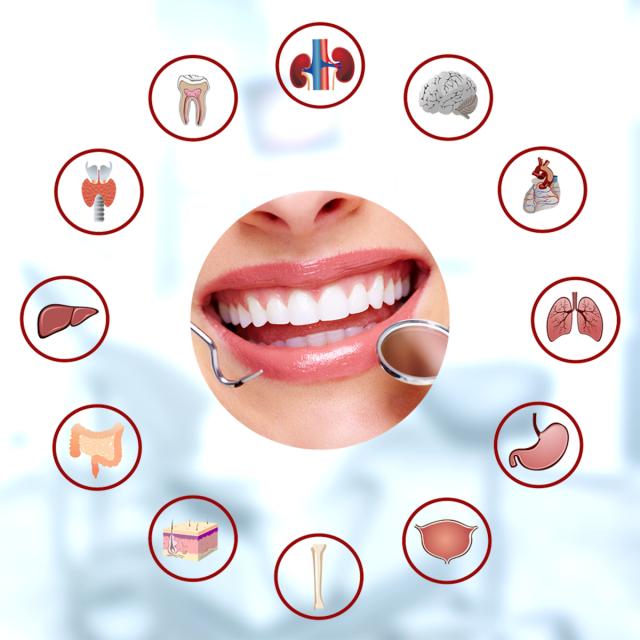
This course will focus on the interprofessional realtionship of dentistry and medicine. For each session, the medical specialist will present a broad overview of specific disease entity which will be followed by a dental educator discussing the relevant oral manifestations and implications. The final module of each session will be devoted to the interaction between the dental and other health care professionals.

Oct 5th 2026
5-12 Weeks
Air Pollution – a Global Threat to our Health (Coursera) Coursera
University of Copenhagen

Air Pollution – a Global Threat to our Health (Coursera)

We all have to breathe to live. But the air we breathe is polluted both outdoors and indoors. Each year, this pollution costs 7 million lives across the globe – and a lot of suffering. 1 in 8 deaths is due to air pollution. This course will provide you with an introduction to the most recent research in the field of health effects of air pollution as well as a broader understanding of sources and spread of air pollution and what we should do about it.

Oct 5th 2026
3 Weeks
Ecosystems of California (Coursera) Coursera
University of California, Santa Cruz

Ecosystems of California (Coursera)

This course surveys the diversity, structure and functioning of California’s ecosystems through time and the ways they have influenced and responded to human activities and stewardship. Topics include ecosystem drivers such as climate, soils, and land use history; human and ecological prehistory of the state; comparative marine, freshwater, and terrestrial ecosystem dynamics; and managed ecosystems such as range, fisheries and agriculture in California.

Oct 5th 2026
5-12 Weeks
Whole genome sequencing of bacterial genomes - tools and applications (Coursera) Coursera
Technical University of Denmark - DTU

Whole genome sequencing of bacterial genomes - tools and applications (Coursera)

This course will cover the topic of Whole genome sequencing (WGS) of bacterial genomes which is becoming more and more relevant for the medical sector. WGS technology and applications are high on international political agenda, as the classical methods are being replaced by WGS technology and therefore bioinformatic tools are extremely important for allowing the people working in this sector to be able to analyze the data and obtain results that can be interpreted and used for different purposes.

Oct 5th 2026
5-12 Weeks