How Do We Stack Up? Using OECD’S PISA to Drive Progress in U.S. Education (Canvas Network)

How Do We Stack Up? Using OECD’S PISA to Drive Progress in U.S. Education (Canvas Network)

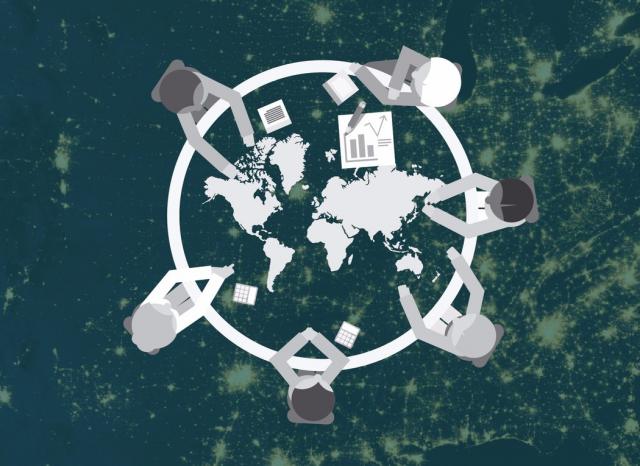
This course will take a deep dive into OECD’s Programme for International Student Assessment (PISA). It will explore how the United States performs relative to other countries and the shared education trends of top performing countries. Participants will gain insight into the implications of these results on U.S. education.

The course will also explore the OECD Test for Schools (PISA), which allows individual schools to compare themselves to the highest performing schools around the world. With these results, education leaders and teachers can identify the actions required to prepare all students to succeed in today’s global economy.
The course is a combined cohort and self-paced experience. The course has 7 modules in which you will have 15 weeks to complete. Live webinars will be offered for the first seven weeks to encourage collaboration and to deepen the learning experience.
Upon course completion, participants will:

  • Understand what PISA is and how the U.S. ranks in comparison to other countries.
  • Identify specific ways in which PISA data can be used to identify strengths and weaknesses of the U.S. education system and support policy actions designed to improve student outcomes.
  • Explore the OECD Test for Schools (based on PISA) and how the results can be used by schools, districts, and charter systems to improve teaching and learning
Go to Class
MOOC List is learner-supported. When you buy through links on our site, we may earn an affiliate commission.

Related Courses

e-Learning Ecologies: Innovative Approaches to Teaching and Learning for the Digital Age (Coursera) Coursera
University of Illinois at Urbana-Champaign

e-Learning Ecologies: Innovative Approaches to Teaching and Learning for the Digital Age (Coursera)

For three decades and longer we have heard educators and technologists making a case for the transformative power of technology in learning. However, despite the rhetoric, in many ways and at most institutional sites, education is still relatively untouched by technology. Even when technologies are introduced, the changes sometimes seem insignificant and the results seem disappointing. If the print textbook is replaced by an e-book, do the social relations of knowledge and learning necessarily change at all or for the better?

Oct 5th 2026
4 Weeks
Parenting in the Digital Age (Canvas.net) Canvas Network
Noblesville School District

Parenting in the Digital Age (Canvas.net)

Technology use among children and adolescents is growing at an astronomical rate. Think about how many parents purchase their children smartphones, gaming systems, iPads, or other digital devices. With access to the internet, these devices allow children to connect to other in ways we never could have imagined. With the proliferation of devices comes concerns regarding cyberbullying, screentime, digital citizenship, media literacy and exposure to inappropriate content. For parents, keeping up with their children's use of technology can be a daunting challenge. The question then becomes, what can parents do to help kids use these devices responsibility? When online, how can parents make sure their children are safe? What can parents do prevent the sharing of personally identifiable information? This course provides an introduction to strategies for successfully parenting in the digital age.

No sessions available
No Information
ICT in Primary Education: Transforming children's learning across the curriculum (Coursera) Coursera
University of London

ICT in Primary Education: Transforming children's learning across the curriculum (Coursera)

Why and how are teachers integrating ICT (Information and Communication Technology) into primary education? In this course we analyse examples from schools in different parts of the world, and bring professional teachers, headteachers and policymakers together to share their best ideas and inspiring stories. The materials in the course are based on studies carried out for the UNESCO Institute of IT in Education, Moscow.

Oct 5th 2026
5-12 Weeks
Serious Gaming (Coursera) Coursera
Erasmus University Rotterdam

Serious Gaming (Coursera)

Have you ever wondered how playing games can help us to train people, deal with societal challenges or raise awareness of contemporary social issues? In this MOOC you will learn the ins and outs of games that are designed with exactly those purposes in mind: serious games. We will define serious games and discuss the different types that have been developed. We will explain why people like to play them and what impact they may have.

Oct 12th 2026
5-12 Weeks
Tinker, Make & Learn (Canvas.net) Canvas Network
Canvas Network

Tinker, Make & Learn (Canvas.net)

Making can be a powerful catalyst for building skills and understanding across a wide range of subjects. Intended for educators from all disciplines, Tinker, Make & Learn builds upon the experiential approach to learning through a blended model. It delves into activity-based strategies that will help empower participants in their own learning. The course is not just to teach making, but is an exemplar of an exciting blended learning course.

Dec 15th 2014
13-24 Weeks
Mission Possible: Developing and Implementing a Comprehensive K-3 Reading Policy (Canvas net) Canvas Network
Foundation for Excellence in Education

Mission Possible: Developing and Implementing a Comprehensive K-3 Reading Policy (Canvas net)

Data shows that nearly ninety percent of students who fail to graduate high school were struggling readers in third grade. A Comprehensive K-3 Reading Policy establishes intensive reading intervention for K-3 students who are at risk of reading failure to help ensure they read on grade level by the end of third grade. This course will provide participants with the tools and resources necessary to develop and implement a Comprehensive K-3 Reading Policy by taking a deep dive into why reading by the end of third grade is critical to student success, understanding supporting research, and exploring effective implementation practices.

Self Paced
Self-Paced
Don’t Panic! The Professor’s Guide to Teaching: Course Design (Canvas.net) Canvas Network
University of South Dakota

Don’t Panic! The Professor’s Guide to Teaching: Course Design (Canvas.net)

Don't panic! Teaching is an incredibly difficult endeavor, but its foundation is great course design, which is something you can master. Participants in this course will explore (and teach each other!) how to design interesting, engaging classes that will provide students with opportunities for truly significant learning.

Sep 8th 2014
4 Weeks
Helping Adults Learn by Using Appropriate Instructional Methods (Canvas net) Canvas Network
Institute for Adult Learning

Helping Adults Learn by Using Appropriate Instructional Methods (Canvas net)

As an adult trainer, are you sick of the “Death by Powerpoint” style? Are you thinking of using different ways to engage your learners? Do you toss and turn at night wondering if your materials have been effective and useful for your learners? Enroll in this short course to pick up some tips on using a range of instructional methods to engage your adult learners and make their learning relevant and meaningful.

Apr 20th 2015
3 Weeks
Critical Thinking Skills for University Success (Coursera) Coursera
The University of Sydney

Critical Thinking Skills for University Success (Coursera)

In this course, you will learn how to develop your Critical Thinking Skills to help you achieve success in your university studies. After completing this course, you will be able to: 1. Use critical thinking and argumentation in university contexts to improve academic results ; 2. Understand the importance and function of critical thinking in academic culture ; 3. Use a variety of thinking tools to improve critical thinking ; 4. Identify types of argument, and bias within arguments, in order to better evaluate the strength of arguments; 5. Use evidence to support claims in arguments ; 6. Apply critical thinking and argumentation to real world problems and issues

Oct 5th 2026
5-12 Weeks