History of Russia: from Ancient Rus to the Time of Troubles (Coursera)

History of Russia: from Ancient Rus to the Time of Troubles (Coursera)

This course offers unique lectures by the leading professors of St. Petersburg State University, interesting assignments, interactive maps and much more. The online course «History of Russia» follows the tradition of teaching Russian history at St. Petersburg State University, which is distinguished by its approach to the analysis of historical problems and the scientific understanding of events, periods, epochs in their historical relationship. Thoroughly selected factual material serves as the basis that enables learners to conduct an independent analysis of the history of Russian state.

Class Deals by MOOC List - Click here and see Coursera's Active Discounts, Deals, and Promo Codes.

The course covers the history of the Russian state throughout its entire length (from the 9th to the 21st century) and the learners are welcome to join the discussion on the topical issues of Russian history. Upon completion of the course, learners will shape a structured understanding of the main stages of Russian history, based on facts and concepts that are established and acknowledged in historiography.
Course program:

  1. Ancient Russia.
  2. Russia and the Mongols. Moscow Russia.
  3. The Russian State at the end of the 15th — 16th centuries.

4.The Time of Troubles in Russia.

What You Will Learn

  • Assimilate factual, chronological and terminological material
  • You will form an idea of the main trends in the development of Russian society and the state
  • Learn to apply knowledge in practice
  • You will acquire the skill of analyzing modern processes in Russian society

Course 1 of 3 in the History of Russia Specialization.

Syllabus

WEEK 1
Ancient Russia
The course traditionally begins with the history of Ancient Russia and one of the most remarkable historians of this era, Doctor of Historical Sciences, Professor Andrei Yurievich Dvornichenko, will introduce you to it.

WEEK 2
Russia and the Mongols. Moscow Russia
The second module is devoted to the history of Russia from the 13th century to 1462. Lecturer - Doctor of Historical Sciences, Professor Roman Aleksandrovich Sokolov.

WEEK 3
The Russian State at the end of the 15th — 16th Centuries
The third module of the course is devoted to the history of Russia from 1462 - from the reign of Ivan III Vasilyevich in 1462 to 1598 - during the reign of Tsar Fyodor Ivanovich. Lecturer - Doctor of Historical Sciences, Professor Vyacheslav Valentinovich Shaposhnik.

WEEK 4
The Time of Troubles in Russia
The fourth module of the course is devoted to the history of Russia in the 17th century. The main events of this period were the Time of Troubles, the way out of the deepest economic and political crisis and the birth of a new royal dynasty of the Romanovs.
Lecturer - Doctor of Historical Sciences, Professor Vyacheslav Valentinovich Shaposhnik.

Go to Class
MOOC List is learner-supported. When you buy through links on our site, we may earn an affiliate commission.

Related Courses

Intellectual Change in Early China: Warring States and Han (Coursera) Coursera
The Chinese University of Hong Kong

Intellectual Change in Early China: Warring States and Han (Coursera)

This sequence of four courses will propose a multi-disciplinary approach to the study of Chinese cultural history conceived of as a succession of modes of rationality (philosophical, bureaucratic, and economic). The focus will be on the moments of paradigm shift from one mode of rationality to another. For each of these moments, cultural facts and artifacts—thought, literature, ritual—will be examined in relationship to changing social, political, and economic systems.

Nov 30th 2026
5-12 Weeks
A Journey through Western Christianity: from Persecuted Faith to Global Religion (200 - 1650) (Coursera) Coursera
Yale University

A Journey through Western Christianity: from Persecuted Faith to Global Religion (200 - 1650) (Coursera)

This course follows the extraordinary development of Western Christianity from its early persecution under the Roman Empire in the third century to its global expansion with the Jesuits of the early modern world. We explore the dynamic and diverse character of a religion with an enormous cast characters. We will meet men and women who tell stories of faith as well as of violence, suppression, and division.

Nov 30th 2026
5-12 Weeks
Understanding EU-Russia Relations: Foreign Policy Actors, Institutions and Policy-Making (UT) Other Providers
University of Tartu,Johan Skytte Institute of Political Studies

Understanding EU-Russia Relations: Foreign Policy Actors, Institutions and Policy-Making (UT)

The main aim of the course is to give students an introduction to and overview of the EU’s and Russia’s foreign policy actors, institutions and frameworks of both entities’ interactions. The course combines various formats of e-learning possibilities (video lectures, short audio podcasts, guest video interviews, skills workshops, etc.). Students will have the possiblity to complete weekly quizzes, participate in the course forum and also complete a short mini-project at the end of the course.

No sessions available
5-12 Weeks
Russian as a Foreign Language (A2). Read, Listen and Speak! (edX) EdX
RUDN University,RUDNx

Russian as a Foreign Language (A2). Read, Listen and Speak! (edX)

This course is about Reading, Listening and Speaking in Russian as a Foreign Language at A2 level. You will learn the grammar contents of A2 level of Russian language and the way of using it in communication. The main difference and advantage of this course is that it combines a systematic view of Russian grammar for A2 level with training and illustrative material for reading, listening and speaking.

Self Paced
Self-Paced
Visualizing Women's Work: Using Art Media for Social Justice (Coursera) Coursera
University of Michigan

Visualizing Women's Work: Using Art Media for Social Justice (Coursera)

Discover the historical erasure of women’s work through social justice art. Public art has often ignored the work and legacy of minorities and women, but recently there has been a welcome reappraisal of publicly displayed visual monuments and art media. This course dives into the artistic process, exploring how art has the power to address issues of social justice and gender equality and answer historic injustices.

Nov 30th 2026
4 Weeks
The Modern and the Postmodern (Part 2) (Coursera) Coursera
Wesleyan University

The Modern and the Postmodern (Part 2) (Coursera)

This course examines how the idea of "the modern" develops at the end of the 18th century in European philosophy and literature, and how being modern (or progressive, or hip) became one of the crucial criteria for understanding and evaluating cultural change. Are we still in modernity, or have we moved beyond the modern to the postmodern?

Nov 30th 2026
5-12 Weeks
Understanding Russians: Contexts of Intercultural Communication (Coursera) Coursera
Higher School of Economics - HSE University

Understanding Russians: Contexts of Intercultural Communication (Coursera)

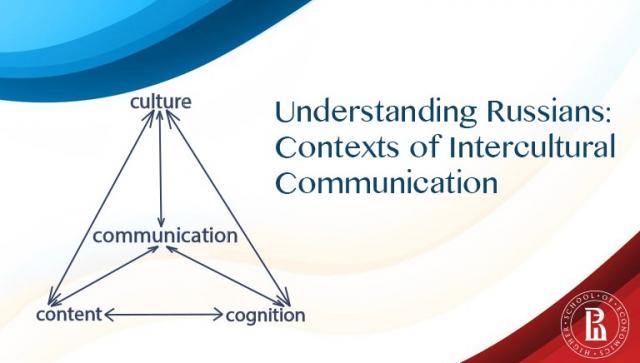
In the course “Understanding Russians: Contexts of Intercultural Communications": we will: build skills in the analysis of the intercultural communication process using Russian-Western communication as an example; apply the knowledge of interrelations between different contexts of communication (cultural, institutional, professional, social, interpersonal, etc, to the cultural history and national psychology of Russians. The purpose of the course is to provide the students with a broad overview of the basic principles governing the past, the present and the future interactions between Russia and the West, with a focus on the culture and national psychology of Russians and Western Europeans.

Aug 1st 2022
5-12 Weeks
Legal aspects of conducting business in Russia (Coursera) Coursera
Saint Petersburg State University

Legal aspects of conducting business in Russia (Coursera)

This course is designed for people who intend to perform business in Russia. The entrepreneur constantly functions in the legal field: creates his enterprise, acquires property, concludes transactions, interacts with control and supervisory state bodies and bodies of the judicial system. Success of business and fate of the entrepreneur himself depend on the choice of the form of entrepreneurial activity, knowledge of his or her rights and obligations, on the correct response to legal and illegal actions of employees of government and management.

Aug 1st 2022
5-12 Weeks
Religious Transformation in Early China: the Period of Division (Coursera) Coursera
The Chinese University of Hong Kong

Religious Transformation in Early China: the Period of Division (Coursera)

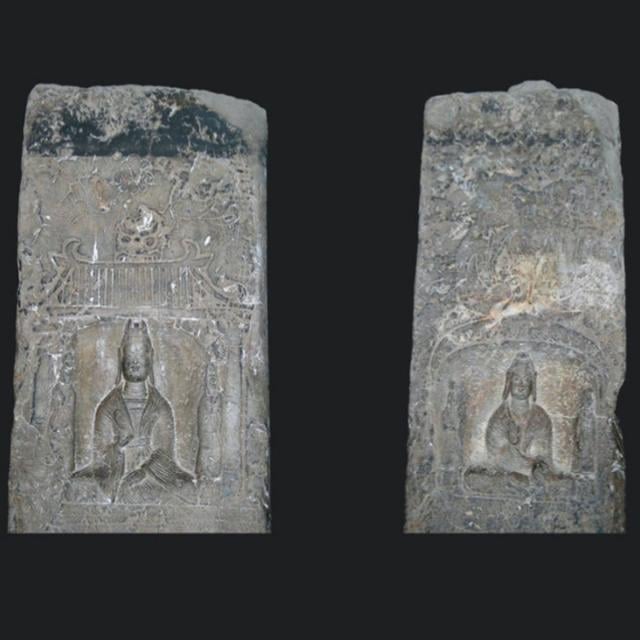
This sequence of four courses will propose a multi-disciplinary approach to the study of Chinese cultural history conceived of as a succession of modes of rationality (philosophical, bureaucratic, and economic). The focus will be on the moments of paradigm shift from one mode of rationality to another. For each of these moments, cultural facts and artifacts—thought, literature, ritual—will be examined in relationship to changing social, political, and economic systems.

Nov 30th 2026
5-12 Weeks
The Holocaust - An Introduction (II): The Final Solution (Coursera) Coursera
Tel Aviv University,Yad Vashem

The Holocaust - An Introduction (II): The Final Solution (Coursera)

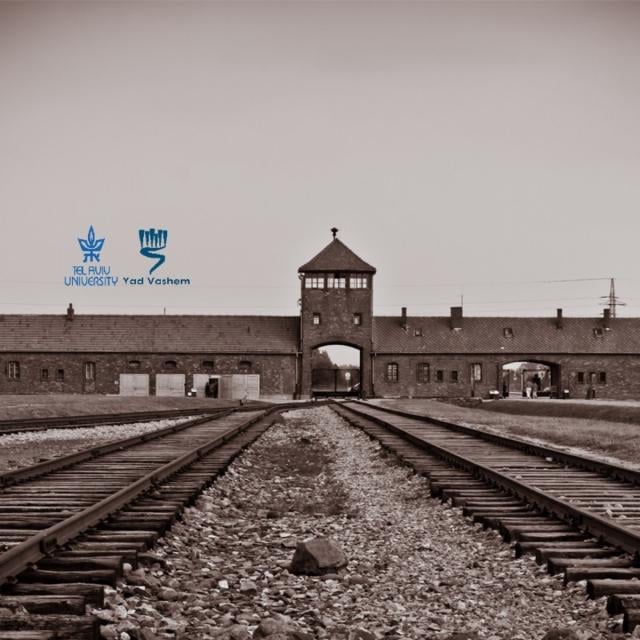
The Holocaust was an inconceivable historical event, which forever robbed Western culture of its innocence. As civilized human beings, we fail to understand how events of such horror could have taken place, and how an idea so inhumanly warped could have spread like wildfire through an entire continent, instigating the systematic annihilation of millions of Jews.

Nov 30th 2026
3 Weeks
The Emergence of the Modern Middle East - Part II (Coursera) Coursera
Tel Aviv University

The Emergence of the Modern Middle East - Part II (Coursera)

This course will discuss the developments in the Middle East from the early 20th century to the present. It will discuss the rise and retreat of Arab nationalism, the problems of internal cohesion of the Arab states, issues of religion and state, and the evolution of Islamist politics. It will also focus on the evolution of the Arab-Israeli conflict and its impact on the region and will conclude with an in depth analysis of the “Arab Spring” by placing these contemporary revolutionary events in their historical context.

Nov 30th 2026
5-12 Weeks