EdX

Healthy Ageing in 6 Steps. Let your environment do the work. (edX)

Healthy Ageing in 6 Steps. Let your environment do the work. (edX)

Learn how to make healthy choices and adjustments to your lifestyle and environment to help you live a healthier, happier and longer life. Many health complaints, such as cardiovascular disease, diabetes or joint problems seem inescapable diseases of old-age, but originate mostly from our lifestyle. A lifestyle that is dictated much in part by our environment. The mismatch between our 'old' genes - our evolutionary heritage - and the 'modern' environment is the reason that we cannot resist the constant stimuli that seduce us to make unhealthy choices. Do's and don'ts cannot help us.

Class Deals by MOOC List - Click here and see EdX's Active Discounts, Deals, and Promo Codes.

This health course will take a radically different approach to showing you how to secure a lifestyle, which will keep you healthy through the ages. We have to let the environment do the work for us. By making small changes at our home, work, school or neighborhood, healthier choices can become easier or even unconscious.
Practical assignments will give you the skills to re-design your daily environments to promote healthy, longer lives for you and your family, colleagues and neighbors with whom you share your re-designed environments. You will learn how to create your own healthy living zone!
We will take you on excursions to Copenhagen, Denmark and to Ghent, Belgium to show you hands-on how the environment can help you live longer, healthier and happier lives!

What you'll learn:

  • Understand how the current ageing process is different from the ageing process of the past
  • Gain insights on how your lifestyle and environment is influencing your health and ageing process
  • Understand the importance of the environment in the ageing process
  • Re-design your daily environment to nudge yourself and other people to healthy choices
  • How to advise policy makers on the health impact of day-to-day public environments

Syllabus

Week 1. Old genes in a new environment
In this week we will first look at how people used to age in the past. We will share the insights of our 9 years of field work in rural Africa, in the upper east region in Northern Ghana. Next we will look at how different people age in our modern environment, characterised by low levels of physical activity, high levels of calorie-rich food, by chronic stress from our 24 hour economy and the changed rhythm of wake and sleep that accompanies that. Our modern environment makes us ill.

Week 2. The medical reflex and the alternative
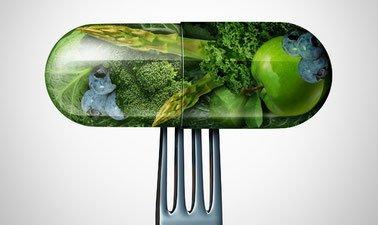
And when we become ill, we visit the medical doctor. In what we call the medical reflex, he or she treats the symptoms of our unhealthy lifestyle with pills. This seems like putting the cart before the horse. Why wait till our lifestyle makes us sick and then correct the symptoms with pills instead of fixing the problem, the lifestyle? We will view ageing and age-related diseases as emergencies in slowmotion: Just as deadly as acute emergencies, but they take twenty years instead of twenty seconds from the first symptoms to death. This means there is a window of opportunity to steer away. But not by telling people what to do

Week 3. From conscious to unconscious health behaviours
We have been told for thirty years that what we should and should not do to remain healthy up to higher ages. The trick is to maintain the healthy behaviour in the long term by integrating it into daily routine. We have been told what to do, but our bodies don’t want to and never will. We can try to control our body with our brain, by telling it not to eat too much chocolate every day. But this is not very fun nor very effective, especially in the long run. In this module we consider an alternative, what if these healthy options could become easier, maybe even automatic, unconscious. We will review how, although we like to think of ourselves as conscious, rational individuals, many of our choices our much more influenced by the environment than we think.

Week 4. Hacking everyday environments
In this module we look at some common environments. We will start with the home environment and review how redesigning our kitchen can change the way we eat. We will study how changes in the bedroom can make us sleep better. Next, we will look at working environments. How can you convert your office into a place from which you gain health instead of one that increases your risk of cardiovascular disease and diabetes? And how can the workers canteen be employed as a place to promote a healthy diet?

Week 5. In the neighbourhood, public environments and transits: the case of Copenhagen
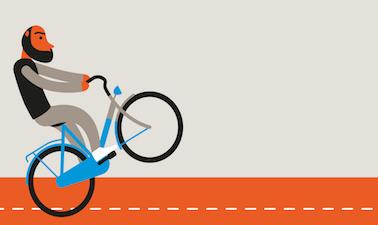
In this module, we will look at the neighbourhood and the public environment and transits, How can small changes in the neighbourhood promote social contact with neighbours? How can a city seduce its inhabitants to use the bike more instead of the car? And how do we get more people on bikes to work? We will take an in depth look into Copenhagen, a city that has dedicated itself to become to cycling capital of the world. They have not told anyone that they should bike more often, instead they have created an environment in which biking is the most easy, cheap, fun, accessible and fastest way to get from A to B in town.

Week 6. A new public health
In the previous module we studied the case of Copenhagen. When promoting health in a radical different way, not by building hospitals and employing doctors but by converting a city in a cycling city, large investments have to be made in infrastructure. This requires a holistic view on public health, health that is not delivered only by doctors and hospitals financed by the ministry of health but also by the train company that facilitates commuting part of the trip by bike by providing easy bike-access to platforms and facilities for taking bikes on trains. Although such investments do not pay themselves back directly through increased revenues from train tickets, their substantial health benefits and reduced sick leave benefits create a net positive return on these investments. In this module we consider a new public health, one that emphasizes healthy populations instead of sick individuals.

Go to Class
MOOC List is learner-supported. When you buy through links on our site, we may earn an affiliate commission.

Related Courses

Well and Able - Improving the Physical Health of People with Intellectual Disability (edX) EdX
University of Queensland,UQx

Well and Able - Improving the Physical Health of People with Intellectual Disability (edX)

Learn how to help those with intellectual disability achieve better health. This health course will examine the specific physical health issues that affect people with an intellectual disability including, oral health, syndrome specific health issues, health communication, especially for non-verbal patients, sexual health, and interactions between tertiary and primary healthcare systems. There is a special section on complex care including issues associated with aging and spasticity, and the health impacts of epilepsy.

Self Paced
Self-Paced
Essential Human Biology: Cells and Tissues (edX) EdX
University of Adelaide,AdelaideX

Essential Human Biology: Cells and Tissues (edX)

An introduction to the human body's most fundamental building blocks and their behaviours in health and disease. Are you preparing for a health-related career, or planning to study in the health sciences? Perhaps you're just keen to learn more about the wonders of the human body? Our bodies are amazing but complex biological machines. This course will provide you with an outstanding foundation of knowledge in human anatomy and physiology.

Self Paced
Self-Paced
Your Body Inside and Out: Using Exercise Physiology to Slow Aging (edX) EdX
Stanford University,StanfordOnline

Your Body Inside and Out: Using Exercise Physiology to Slow Aging (edX)

This online class will present the latest scientific information on the interaction between aging and physical activity. In an approachable style, you will learn how your physiology changes with age and how different types of movement can impact that trajectory of aging. Physical activity is a powerful medicine and you will learn how to harness its benefits to improve your health and wellness throughout the lifespan. Whether you are new to exercise or a life-long athlete, this class will open your eyes to the amazing systems within your body and help you strategize on activities that fit your goals for a healthy life.

Self Paced
5-12 Weeks
Through my Eyes – Intellectual Disability Healthcare around the World (edX) EdX
University of Queensland,UQx

Through my Eyes – Intellectual Disability Healthcare around the World (edX)

Learn, from personal stories, the daily life and challenges faced by those with intellectual disabilities. This health course focuses on the stories of people with intellectual disabilities around the world, as well as their families and supporters. You will learn about the challenges and aid received in healthcare for people with intellectual disabilities, including their experience of specific syndromes and communication difficulties, and how they stay healthy.

Self Paced
Self-Paced
Identificación de dispositivos médicos (UDI) (edX) EdX
LOGYCAX

Identificación de dispositivos médicos (UDI) (edX)

Dentro de los servicios de salud, existe todo un gran proceso de logística, con el fin que lleguen los insumos a manos del paciente en el momento correcto, en perfecto estado y con la confianza de poder utilizarlo. Para lograrlo, hemos desarrollado un proceso de estandarización que permita generar la trazabilidad de los dispositivos médicos e identificarlos para evitar cualquier falsificación o manejo inadecuado del mismo.

Self Paced
Self-Paced
Planeación estratégica para el desarrollo de organizaciones saludables (edX) EdX
Universidad Anáhuac,AnahuacX

Planeación estratégica para el desarrollo de organizaciones saludables (edX)

Se analizan los elementos necesarios para elaborar un plan de gestión de organizaciones saludables orientado a la reducción de factores de riesgo psicosocial. En el desarrollo de capital humano, la gestión de organizaciones saludables permite a las empresas identificar y analizar los factores de riesgo psicosocial, así como evaluar los entornos organizacionales de trabajo en el que los colaboradores desarrollan sus actividades con la finalidad de generar acciones de prevención e intervención en beneficio de la organización y sus miembros.

Self Paced
Self-Paced
Menstruation in a Global Context: Addressing Policy and Practice (edX) EdX
Columbia University,ColumbiaX

Menstruation in a Global Context: Addressing Policy and Practice (edX)

Recently, menstruation has attracted attention as an important public health issue, resulting in the proliferation of new research, programs, and policies aimed at tackling menstrual health and hygiene (MHH) challenges faced by girls, women, and others who menstruate. Advocates are directly combating ongoing menstrual stigma and calling for an end to period poverty.

Self Paced
Self-Paced
Music For Wellness (edX) EdX
Berklee College of Music,BerkleeX

Music For Wellness (edX)

Learn how music can help reduce stress and improve your health, and well-being. You love music. You listen to music all the time. Maybe you sing, play an instrument, or compose music. You don’t need to have musical talent to use music to enhance your well being, and even your health.

Self Paced
Self-Paced
Conscious Grocery Shopping: Sustainability, Nutrition, Health and Law (edX) EdX
University of Bayreuth,BayreuthX

Conscious Grocery Shopping: Sustainability, Nutrition, Health and Law (edX)

Would you consider yourself a conscious decider when it comes to food grocery shopping? Do you really buy healthy and sustainably? Enroll in this course for a journey through the grocery store with multidisciplinary scientific insights that will empower you to make better food choices. Our professors will give you insights into the fascinating scientific world of food commodities highlighting the aspects of sustainability, nutrition, health and law.

Self Paced
Self-Paced
Mental Health and Nutrition (edX) EdX
University of Canterbury,UCx

Mental Health and Nutrition (edX)

Learn what foods and nutrients should and should not be consumed to improve mental wellbeing and explore the fundamental role that nutrition plays in our mental health. Whether you are a health professional working with people with mental health challenges; someone who struggles daily with low mood, anxiety or stress; someone who supports others who face mental health struggles, or you are simply interested in the fascinating interface between food and brain health, this course is for you!

Self Paced
Self-Paced