Haptics: Introduction to Haptics (Stanford Online)

Offered by Stanford University,
Haptics: Introduction to Haptics (Stanford Online)

Participants in this class will learn how to build, program, and control haptic devices, which are mechatronic devices that allow users to feel virtual or remote environments. In the process, participants will gain an appreciation for the capabilities and limitations of human touch, develop an intuitive connection between equations that describe physical interactions and how they feel, and gain practical interdisciplinary engineering skills related to robotics, mechanical engineering, electrical engineering, bioengineering, and computer science.

To participate in lab assignments (which is not strictly required to receive a Statement of Accomplishment), the participant will need to acquire/build the components of a Hapkit, and assemble and program the device. Laboratory assignments using Hapkit will give participants hands-on experience in assembling mechanical systems, making circuits, programming Arduino-based micro-controllers, and testing their haptic creations. After the class, we hope that you will continue to use and modify your Hapkit, and let us know about your haptic creations. Please note that you can still participate in the online course without the Hapkit and receive a Statement of Accomplishment, but you will not be able to do most of the laboratories.
This is a self-paced course, so you can complete the videos, quizzes, and lab assignments on your own schedule. Grading is automated. However, we suggest spending about one week on each of the 5 modules in the course, with each module taking about 10 hours of your time (depending on your background/experience). At the start of the course, we will release the modules once a week.
Go to Class
MOOC List is learner-supported. When you buy through links on our site, we may earn an affiliate commission.

Related Courses

Fundamentals of Audio and Music Engineering: Part 1 Musical Sound & Electronics (Coursera) Coursera
University of Rochester

Fundamentals of Audio and Music Engineering: Part 1 Musical Sound & Electronics (Coursera)

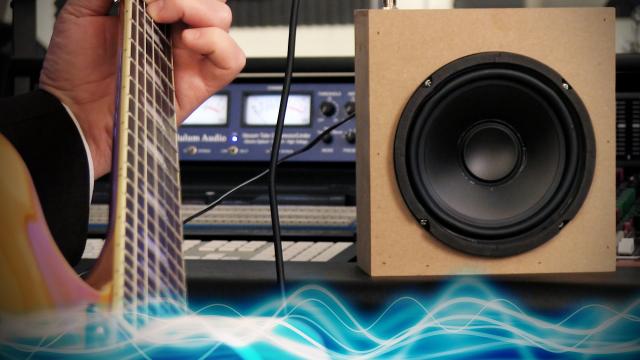
In this course students learn the basic concepts of acoustics and electronics and how they can applied to understand musical sound and make music with electronic instruments. Topics include: sound waves, musical sound, basic electronics, and applications of these basic principles in amplifiers and speaker design.

Sep 28th 2026
5-12 Weeks
Introduction to Semiconductor Devices 2 (Coursera) Coursera
Korea Advanced Institute of Science and Technology - KAIST

Introduction to Semiconductor Devices 2 (Coursera)

This course aims to provide a general understanding of semiconductor devices. This coures covers the Metal-Semiconductor Contact, Metal-Oxide-Semiconductor (MOS) capapcitor, Metal-Oxide-Semiconductor Field Effect Transistors(MOSFETs), CMOS, Metal-Semiconductor Field Effect Transistors(MESFETs), Memory and Bipolar Junction Transistor (BJT) to improve the overall knowledge of semiconductor industry.

Sep 21st 2026
5-12 Weeks
Physics 102 - Electric Charges and Fields (Coursera) Coursera
Rice University

Physics 102 - Electric Charges and Fields (Coursera)

This course serves as an introduction to the physics of electricity and magnetism. Upon completion, learners will have an understanding of how the forces between electric charges are described by fields, and how these fields are related to electrical circuits. They will gain experience in solving physics problems with tools such as graphical analysis, algebra, vector analysis, and calculus. The course follows the typical progression of topics of a first-semester university physics course: charges, electric forces, electric fields potential, magnetic fields, currents, magnetic moments, electromagnetic induction, and circuits.

Sep 14th 2026
4 Weeks
Physics 102 - Electric Potential and DC Circuits (Coursera) Coursera
Rice University

Physics 102 - Electric Potential and DC Circuits (Coursera)

This course serves as an introduction to the physics of electricity and magnetism. Upon completion, learners will have an understanding of how the forces between electric charges are described by fields, and how these fields are related to electrical circuits. They will gain experience in solving physics problems with tools such as graphical analysis, algebra, vector analysis, and calculus.

Sep 14th 2026
3 Weeks
Introdução ao Controle Moderno (Coursera) Coursera
Instituto Tecnológico de Aeronáutica

Introdução ao Controle Moderno (Coursera)

Este curso lhe dará a base necessária para entender técnicas mais avançadas de controle moderno. Você aprenderá como representar a dinâmica de um sistema no espaço de estados, como analisar um sistema no espaço de estados, como projetar uma realimentação de estado e como projetar um observador de estado.

Sep 21st 2026
5-12 Weeks
Particle Dynamics (Coursera) Coursera
Korea Advanced Institute of Science and Technology - KAIST

Particle Dynamics (Coursera)

This course teaches dynamics, one of the basic mechanics subjects of Mechanical Engineering. Students would be able to organize their knowledge about force and motion, work-energy, impulse-momentum in view of Newton's 2nd law and its integration over time and displacement. The Engineering Dynamics consists of two parts: particle dynamics and rigid body dynamics.

Sep 14th 2026
13-24 Weeks
Materials Science: 10 Things Every Engineer Should Know (Coursera) Coursera
University of California, Davis

Materials Science: 10 Things Every Engineer Should Know (Coursera)

We explore “10 things” that range from the menu of materials available to engineers in their profession to the many mechanical and electrical properties of materials important to their use in various engineering fields. We also discuss the principles behind the manufacturing of those materials. By the end of the course, you will be able to: recognize the important aspects of the materials used in modern engineering applications; explain the underlying principle of materials science: “structure leads to properties,”; identify the role of thermally activated processes in many of these important “things” – as illustrated by the Arrhenius relationship; relate each of these topics to issues that have arisen (or potentially could arise) in your life and work.

Sep 28th 2026
5-12 Weeks
Intro to Acoustics (Part 1) (Coursera) Coursera
Korea Advanced Institute of Science and Technology - KAIST

Intro to Acoustics (Part 1) (Coursera)

This course introduces acoustics by using the concept of impedance. In the previous part, the course starts with vibrations and waves, demonstrating how vibration can be envisaged as a kind of wave, mathematically and physically. They are realized by one-dimensional examples, which provide mathematically simplest but clear enough physical insights. Then the part 1 ends with explaining waves on a flat surface of discontinuity, demonstrating how propagation characteristics of waves change in space where there is a distributed impedance mismatch.

Sep 21st 2026
5-12 Weeks
Quantum Mechanics (Coursera) Coursera
University of Colorado Boulder

Quantum Mechanics (Coursera)

Course 2 of Statistical Thermodynamics presents an introduction to quantum mechanics at a level appropriate for those with mechanical or aerospace engineering backgrounds. Using a postulatory approach that describes the steps to follow, the Schrodinger wave equation is derived and simple solutions obtained that illustrate atomic and molecular structural behavior. More realistic behavior is also explored along with modern quantum chemistry numerical solution methods for solving the wave equation.

Sep 14th 2026
3 Weeks
Machine Design Part I (Coursera) Coursera
Georgia Institute of Technology

Machine Design Part I (Coursera)

“Machine Design Part I” is the first course in an in-depth three course series of “Machine Design.” The “Machine Design” Coursera series covers fundamental mechanical design topics, such as static and fatigue failure theories, the analysis of shafts, fasteners, and gears, and the design of mechanical systems such as gearboxes. Throughout this series of courses we will examine a number of exciting design case studies, including the material selection of a total hip implant, the design and testing of the wing on the 777 aircraft, and the impact of dynamic loads on the design of an bolted pressure vessel. In this first course, you will learn robust analysis techniques to predict and validate design performance and life.

Sep 14th 2026
5-12 Weeks