Hacer negocios con multinacionales y empresas en América Latina (Coursera)

Hacer negocios con multinacionales y empresas en América Latina (Coursera)

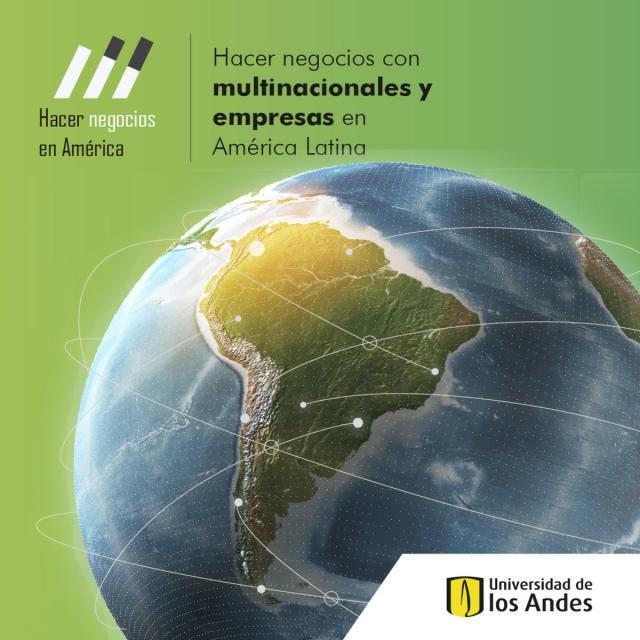
Acompáñanos en el curso Hacer negocios con multinacionales y empresas en América Latina. En este curso, conocerás las características de las multilatinas más grandes, comprenderás cómo han construido su ventaja competitiva doméstica e internacional, e identificarás cuáles son los desafíos e innovaciones para lograr sostener su desempeño económico superior.

Class Deals by MOOC List - Click here and see Coursera's Active Discounts, Deals, and Promo Codes.

Este curso incluye videos de presentación y explicación de los temas; actividades de aprendizaje y evaluación; entrevistas; reseñas de lecturas; informes y bibliografía adicional. La evaluación está diseñada para que recibas realimentación que queda registrada en la plataforma, de manera que puedas continuar con tu progreso al conectarte nuevamente.
Nuestra apuesta educativa busca un aprendizaje significativo y práctico, donde el estudiante construye conocimiento a partir de su propia reflexión, de su experiencia y la colaboración auténtica con otros.
Estos principios guiaron el diseño de las actividades de aprendizaje que realizarás dentro del curso. Te conduciremos a través de una serie de videos y ejercicios prácticos que te permitirán reflexionar y comprender cuáles son los retos y oportunidades económicas, sociales y ambientales que han permitido a las multilatinas construir su liderazgo desde la región de América Latina.
Este curso está dirigido a todas aquellas personas que quieren avanzar en su conocimiento sobre los negocios de las empresas de América Latina. En particular, este curso está pensado para todos los interesados en comprender cómo se construyen historias internacionales de éxito empresarial desde la región y cómo muchos retos se han convertido en oportunidades para el sector empresarial. Este curso no requiere conocimientos específicos previos y por esto es especialmente relevante para personas en formación, que quieren complementar sus estudios o tener un espacio de reflexión e interacción con otras personas interesadas en el tema y que tienen experiencia en el mismo. Finalmente, este curso puede ser de utilidad para docentes en el ámbito de los negocios internacionales y estrategia que quieran conocer las especificidades de las multilatinas y las empresas de América Latina.
Al finalizar este curso, tendrás dominio de los conceptos más importantes a tener en cuenta en temas de internacionalización. Entenderás las oportunidades de negocio que brinda el contexto latinoamericano, que ha llevado a las multilatinas a ganar resiliencia y crear nuevas propuestas de valor en sus actividades y muchas veces repensar su rol en los territorios donde operan. Finalizando el curso grabarás un video en el cual resumirás las ventajas de hacer negocios en la región de América Latina, a partir de tus reflexiones y aprendizajes, dando muestra de tu habilidad de formar una opinión concisa, informada y reveladora sobre esta temática.
Este curso está diseñado para que puedas terminarlo en 4 semanas con una dedicación de 6-7 horas por semana, pero puedes tomarte el tiempo que estimes conveniente. Toda la información sobre tu participación y avance en el curso estará siempre disponible y actualizada en Coursera. Podrás continuar con las actividades que dejes pendientes. Por ejemplo, podrás ver un video las veces que quieras, pausarlo para tomar tus notas o posponerlo mientras consultas algo de la bibliografía adicional que te proporcionamos.
Por último, este curso hace parte del programa especializado Hacer negocios en América Latina, creado por la Universidad de los Andes, el Tecnológico de Monterrey y la Pontificia Universidad Católica de Chile, te invitamos a realizar los otros dos cursos si aún no los has hecho.

Course 1 of 3 in the Hacer negocios en América Latina Specialization

Syllabus

WEEK 1
¿Cómo las multilatinas crean ventaja competitiva?
¡Bienvenido! En este curso vas a conocer las características más distintivas de las empresas multilatinas y entenderás cómo crean su ventaja competitiva. Tradicionalmente se ha pensado que las multilatinas crean su ventaja competitiva en costos, pero en los últimos años varias multilatinas, además de lograr eficiencia han buscado una ventaja competitiva por diferenciación.

WEEK 2
Impulsores del desarrollo empresarial en América Latina
En este módulo conocerás el rol de los recursos naturales en el desarrollo de las economías latinoamericanas. Conocerás el poder de los grupos empresariales y su aporte al desarrollo del sector empresarial latinoamericano. Entenderás el rol del estado en las políticas de industrialización.

WEEK 3
Multilatinas: Estrategias para la internacionalización
¡Bienvenido! En este módulo comprenderás cómo el éxito doméstico de las multilatinas apalanca su proceso de internacionalización y condiciona tres decisiones claves de su estrategia de internacionalización: selección de mercados, rapidez y modos de entrada.

WEEK 4
Innovación y emprendimiento en América Latina
¡Bienvenido! En este módulo conocerás el potencial del impacto de las nuevas tecnologías en el desarrollo empresarial y económico en América Latina. La reconocerás como una región de gran talento y habilidad creativa, y entenderás las oportunidades y retos que presenta el contexto para los emprendedores de alto impacto.


Go to Class
MOOC List is learner-supported. When you buy through links on our site, we may earn an affiliate commission.

Related Courses

International Business II (Coursera) Coursera
University of New Mexico

International Business II (Coursera)

This course, Introduction to the Global Business Environment II, focuses on managing organizations in the international economy. Building on Introduction to the Global Business Environment I, this second course focuses on organizational level and management issues in international settings. The course prepares students with practical as well as research-based knowledge and skills necessary to successfully operating an organizational across borders.

Sep 21st 2026
5-12 Weeks
Surviving Disruptive Technologies (On Demand) (Coursera) Coursera
University of Maryland, College Park

Surviving Disruptive Technologies (On Demand) (Coursera)

The purpose of this course is to help individuals and organizations survive when confronted with disruptive technologies that threaten their current way of life. We will look at a general model of survival and use it to analyze companies and industries that have failed or are close to failing. Examples of companies that have not survived include Kodak, a firm over 100 years old, Blockbuster and Borders.

Sep 21st 2026
4 Weeks
Managing Responsibly: Practicing Sustainability, Responsibility and Ethics (Coursera) Coursera
University of Manchester

Managing Responsibly: Practicing Sustainability, Responsibility and Ethics (Coursera)

Managers are increasingly confronted with issues of sustainability, responsibility and ethics. Managing responsibly is an integrative approach to sustainability, responsibility and ethics, which allows you as a manager to deal competently with such challenges. This course will facilitate your learning process to engage in changing practices to make them more sustainable, responsible, and ethically informed.

Sep 21st 2026
5-12 Weeks
Introducción a la Calidad (Coursera) Coursera
Universidad Nacional Autónoma de México

Introducción a la Calidad (Coursera)

En este curso conoceremos la importancia que tiene implementar estándares de calidad y procesos productivos eficientes, para el desarrollo y continuidad de nuestra empresa o idea de negocio y así mantener su máxima capacidad productiva y seguir ofertando productos con los más altos estándares de calidad, para mantenernos siempre en la preferencia del público.

Sep 21st 2026
5-12 Weeks
Local Economic Development (Coursera) Coursera
Erasmus University Rotterdam

Local Economic Development (Coursera)

Welcome to this MOOC on Local Economic Development (LED). Local economic development refers to the processes by which local governments, businesses, and civil society groups get together to raise income sustainably and improve their lives in a well-defined area. It’s about creating jobs, securing livelihoods, improving infrastructure and managing local resources.

Sep 21st 2026
5-12 Weeks
Finance for Everyone: Markets (Coursera) Coursera
McMaster University

Finance for Everyone: Markets (Coursera)

Markets begins with one of the most common and important elements of the financial system – interest rates. You will learn why interest rates have always been a key barometer in determining the value of everything. You will explore the changing influence of interest rates; the impact of interest rates on consumption, investment and economic growth; and the bizarre realities of negative interest rates. Markets explains how interest rates change the value of all financial instruments, highlighting the role of the bond and stock markets that have toppled empires

Sep 21st 2026
4 Weeks
Process Mining: Data science in Action (Coursera) Coursera
Eindhoven University of Technology

Process Mining: Data science in Action (Coursera)

Process mining is the missing link between model-based process analysis and data-oriented analysis techniques. Through concrete data sets and easy to use software the course provides data science knowledge that can be applied directly to analyze and improve processes in a variety of domains. Data science is the profession of the future, because organizations that are unable to use (big) data in a smart way will not survive. It is not sufficient to focus on data storage and data analysis. The data scientist also needs to relate data to process analysis.

Sep 21st 2026
5-12 Weeks
Driving business towards the Sustainable Development Goals (Coursera) Coursera
Erasmus University Rotterdam

Driving business towards the Sustainable Development Goals (Coursera)

Extreme weather events, wars, famine and environmental destruction are just a few of the wicked problems faced by humanity. That’s why in 2015 the United Nations adopted the 2030 Agenda for Sustainable Development. This agenda includes 17 Sustainable Development Goals (SDGs) that target the big challenges such as how to eliminate poverty, how to protect the environment and how to bring about peace. Every member state committed to achieving these goals by 2030. What can businesses do to counter climate change and create a sustainable business culture? Why is this relevant for business anyway? Explore how business can contribute to a better future for people AND the planet without giving up profits.

Sep 21st 2026
5-12 Weeks
Interest Rate Models (Coursera) Coursera
École Polytechnique Fédérale de Lausanne

Interest Rate Models (Coursera)

This course gives you an easy introduction to interest rates and related contracts. These include the LIBOR, bonds, forward rate agreements, swaps, interest rate futures, caps, floors, and swaptions. We will learn how to apply the basic tools duration and convexity for managing the interest rate risk of a bond portfolio. We will gain practice in estimating the term structure from market data. We will learn the basic facts from stochastic calculus that will enable you to engineer a large variety of stochastic interest rate models. In this context, we will also review the arbitrage pricing theorem that provides the foundation for pricing financial derivatives.

Sep 21st 2026
5-12 Weeks
Introduction to Learning Transfer and Life Long Learning (3L) (Coursera) Coursera
University of California, Irvine

Introduction to Learning Transfer and Life Long Learning (3L) (Coursera)

Learn how to identify the enablers and barriers to learning transfer. Use your own experience to categorise the processes and activities involved in learning and transferring that learning into practice. There are many criteria against which the success of training and development activities can be judged.

Sep 21st 2026
3 Weeks
On Strategy : What Managers Can Learn from Philosophy - PART 1 (Coursera) Coursera
CentraleSupélec

On Strategy : What Managers Can Learn from Philosophy - PART 1 (Coursera)

In the expression “creative thinking”, the keyword is not creativity; the keyword is thinking. With the help of great philosophers, you will rediscover the art of thinking. To help leaders to be rigorous even without figures, great philosophers have lots of ideas. Managers are invited to rediscover the art of thinking. They should understand the role of mental models, realize the importance of cognitive bias, agree on clear definitions and efficient criteria etc. Creativity demands the ability to unshackle ourselves from conventional ways of thinking, to "think outside the box".

Sep 21st 2026
5-12 Weeks
How to finance your venture ? (Coursera) Coursera
École Polytechnique

How to finance your venture ? (Coursera)

The course aims at providing knowledge and experience to entrepreneurs and would-be entrepreneurs. Entrepreneurs generally start with a mission, a new idea that they want to bring to the world. If the idea is original, it is probably not expected by the market, which has to be educated. This is a very costly experience. Entrepreneurs need to gather capital at the start of the journey.

Sep 21st 2026
5-12 Weeks