I. Missões jesuíticas nos territórios guaranis: história (Coursera)

I. Missões jesuíticas nos territórios guaranis: história (Coursera)

Conhecer a história não é uma exigência para eruditos ou especialistas, mas é um recurso necessário para o exercício da cidadania e a valorização da dignidade humana em suas diversas dimensões. Através de dois cursos, propomos o conhecimento da história das Missões Jesuíticas na região guaranítica. Este processo ocorreu desde os inícios do século XVII a meados do século XVIII, envolvendo ampla área geográfica correspondente aos atuais estados de Paraguai, Argentina (Misiones), Brasil (Rio Grande do Sul, Paraná, Santa Catarina), Uruguai e Bolívia.

Class Deals by MOOC List - Click here and see Coursera's Active Discounts, Deals, and Promo Codes.

Trata-se de eventos históricos que foram muito importantes para a história latino-americana e para o Brasil, mas que são pouco conhecidos e aprofundados em currículos escolares, manuais de história e de modo geral fogem ao conhecimento da maioria da população brasileira. Apresentaremos uma visão da história das Missões Jesuíticas nos territórios guaranis visando focar sua importância do ponto de vista da formação da identidade latino-americana e abordando os diferentes aspectos geográficos, sociais, religiosos, políticos e econômicos dessa experiência.
Neste primeiro curso abordaremos a visão da história das Missões jesuíticas nos territórios guaranis, numa perspectiva histórica e antropológica.
O curso visa oferecer um primeiro nível de conhecimento histórico deste tema, de modo a propiciar aos alunos:
➔ Subsídios acerca dos aspectos mais relevantes da formação das Missões Jesuíticas, considerando os atores envolvidos, as principais circunstâncias que levaram à criação das Missões nos referidos territórios e os diversos posicionamentos das populações guaranis que os ocupavam
➔ Análise da experiência social definida pelo termo Reduções em suas diversas dimensões: política, econômica, social, religiosa e antropológica.
➔ Subsídios para a utilização deste conhecimento em sua área de atuação profissional (ensino, gestão de patrimônio, turismo, relações internacionais, pedagogia, etc.).
➔ Instrumentos para possíveis ações de resgate, valorização, preservação do patrimônio histórico material (monumental e documental) e imaterial, ligado a tais acontecimentos históricos.
➔ Subsídios para possíveis ações voltadas à compreensão e valorização das redes de relações existentes entre povos latino-americanos ligados à história das Reduções

What You Will Learn

  • História das Reduções; principais atores envolvidos: guaranis e missionários jesuítas

Syllabus

WEEK 1

  1. A proposta das Reduções: caracterização do espaço e atores envolvidos

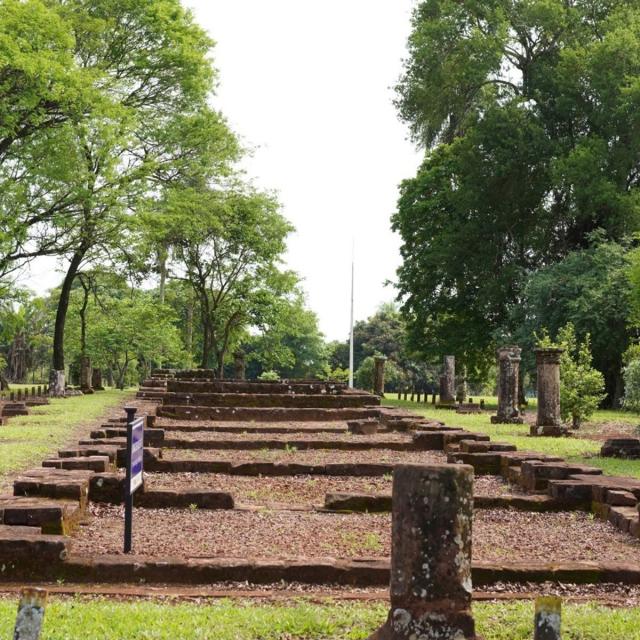
Este módulo aborda o panorama geral das Reduções jesuíticas na América Latina (Trinta Povos das Missões). Apresenta a cronologia histórica do processo de formação das Reduções na América em suas sucessivas gerações. Descreve o espaço geográfico das Reduções na América e as relações estabelecidas entre elas na ocupação dos territórios. Caracteriza os principais atores envolvidos nessa experiência: os jesuítas e os guaranis. Quanto aos jesuítas, apresenta a organização, os objetivos e a expansão missionária da Companhia de Jesus nos séculos XVII e XVIII. Discute a inserção da Companhia de Jesus no contexto da colonização portuguesa e espanhola e a participação e envolvimento dos jesuítas nas Reduções. Já sobre os Guarani, trata de quem eram eles: visão de mundo, identidade, organização social e cultural nos séculos XVII e XVIII. Busca compreender as formas pelas quais os indígenas se apropriaram do espaço urbano das Reduções e como ocorreu, nos aldeamentos, o sincretismo cultural. Descreve a organização espacial das Reduções, a estrutura e o ordenamento urbano; identifica elementos arquitetônicos das Missões e interpreta seus significados.

WEEK 2
Jesuítas e Guaranis: Conflitos, ataques, êxodos e guerras nas Reduções
Este modulo se refere a conflitos, violências e guerras existentes no contexto das Reduções; aborda o problema da captura e escravidão dos indígenas, relacionado às Bandeiras; descreve a Guerra Guaranítica e suas implicações para os Guaranis e para os Jesuítas; trata das estratégias de sobrevivência empregadas diante da destruição da experiência das Missões e a experiência de êxodo e de deslocamentos dos povos indígenas; descreve o movimento de expulsão dos jesuítas.

Go to Class
MOOC List is learner-supported. When you buy through links on our site, we may earn an affiliate commission.

Related Courses

Contexto de Negocios en LATAM: Factores Políticos, Sociales y Económicos (Coursera) Coursera
Pontificia Universidad Católica de Chile

Contexto de Negocios en LATAM: Factores Políticos, Sociales y Económicos (Coursera)

Latinoamérica resulta ser muy atractiva al momento de decidir realizar nuevos negocios, pero en algunos casos este proceso se considera algo distinto a cómo opera el mercado mundial, por lo que es importante conocer algunos elementos que permitan entender de mejor manera este contexto y así definir estrategias más efectivas cuando se piensa comenzar un negocio en esta región.

Sep 14th 2026
4 Weeks
The Emergence of the Modern Middle East - Part I (Coursera) Coursera
Tel Aviv University

The Emergence of the Modern Middle East - Part I (Coursera)

This course will review the emergence of the modern Middle East from the fall of the Ottoman Empire, at the end of the First World War to the present. We will discuss the Ottoman legacy in the region and the Western imperial impact on the creation of the Arab state system. The course will review the rise and retreat of Arab nationalism, the problems of internal cohesion of the Arab states, issues of religion and state, and the evolution of Islamist politics. We will also focus on the evolution of the Arab-Israeli conflict and its impact on the region and will conclude with an in depth analysis of the “Arab Spring” by placing these contemporary revolutionary events in their historical context.

Sep 21st 2026
4 Weeks
Gestión de Proyectos de Desarrollo (edX) EdX
Inter-American Development Bank - IDB,IDBx

Gestión de Proyectos de Desarrollo (edX)

“Un MOOC desarrollado en colaboración con el Project Management Institute Educational Foundation (PMI-EF)”. Aprende mejores prácticas para gestionar proyectos que promuevan el desarrollo económico y social en América Latina y el Caribe. Si buscas obtener una titulación sobre Gestión de Proyectos reconocida internacionalmente ¡Este es tu curso! Además de aprender las mejores prácticas para gestionar proyectos de desarrollo, podrás lograr hasta 35 PDUs en el área técnica, avalados por el Project Management Institute Educational Foundation (PMI- EF).

Self Paced
Self-Paced
Inequalities in Latin America and the Caribbean: Research, Policy and Management for Social Transformations (FutureLearn) FutureLearn
UNESCO

Inequalities in Latin America and the Caribbean: Research, Policy and Management for Social Transformations (FutureLearn)

Find out how to promote informed policies towards equity and social transformation in Latin America and the Caribbean. Use strategies to fight against social issues. Inequality is one of the main challenges facing Latin America and the Carribean and is a constant concern for their governments. Faced with these increasingly complex scenarios, a fluid dialogue between social research and public policy is essential.

No sessions available
4 Weeks
Road safety in the Caribbean region: safe infrastructure (edX) EdX
Inter-American Development Bank - IDB,IDBx

Road safety in the Caribbean region: safe infrastructure (edX)

Learn and explore the good practices and methodologies for a safer road design for all users. You know that 18% of road crashes could be related to the quality of road infrastructure? Studies pointed that unlocking the potential of USD $1.4 trillion in targeted investment in safer roads would achieve 467 thousand lives saved a year. In this course you will learn more about the importance of road safety audits and inspections (RSAs and RSIs) for a safer road infrastructure. The course will explore the RSAs’ methodologies and good practices around the world and, specially, in Latin America and the Caribbean.

Self Paced
Self-Paced
Arts of Latin America (saylor.org) Saylor Academy
Saylor.org

Arts of Latin America (saylor.org)

A chronological and thematic survey of the major themes and developments in the history of Latin American art, this course traces the evolution of visual culture over approximately four millennia. Organized into three parts, the course begins with the pre-Columbian period (1800 BC to AD 1492), moves into the years of European contact and conquest (AD 1492 to 1800), and concludes with an overview of modern and contemporary art across the Americas.

Legacy Course
Self-Paced
Desigualdades en América Latina y el Caribe: Investigación, Políticas y Gestión para las Transformaciones Sociales (FutureLearn) FutureLearn
UNESCO,CLAD

Desigualdades en América Latina y el Caribe: Investigación, Políticas y Gestión para las Transformaciones Sociales (FutureLearn)

Explore nuevas estrategias de producción y gestión de conocimiento para mejorar las políticas frente a las desigualdades. Las desigualdades representan uno de los principales desafíos que enfrenta América Latina y el Caribe, y constituyen una constante preocupación para sus gobiernos. Frente a estos escenarios cada vez más complejos, el diálogo fluido entre investigación social y políticas públicas resulta urgente y estratégico. Este curso aborda el actual panorama regional de las desigualdades, alerta sobre sus dramáticas consecuencias, y ofrece estrategias transformadoras que pueden diseñarse para mejorar las políticas sociales y la gestión pública.

No sessions available
4 Weeks
Introduction to Ancient Egypt and Its Civilization (Coursera) Coursera
University of Pennsylvania

Introduction to Ancient Egypt and Its Civilization (Coursera)

Colossal pyramids, imposing temples, golden treasures, enigmatic hieroglyphs, powerful pharaohs, strange gods, and mysterious mummies are features of Ancient Egyptian culture that have fascinated people over the millennia. The Bible refers to its gods, rulers, and pyramids. Neighboring cultures in the ancient Near East and Mediterranean wrote about its god-like kings and its seemingly endless supply of gold. The Greeks and Romans describe aspects of Egypt's culture and history.

Sep 21st 2026
5-12 Weeks
Introduction to Who Wrote Shakespeare (Coursera) Coursera
University of London,Goldsmiths, University of London

Introduction to Who Wrote Shakespeare (Coursera)

This free course from the University of London explores critical thinking, and the interpretation of texts, through the Shakespeare authorship question. Using doubt about Shakespeare’s authorship as our playground, we will explore the key concept of authorship attribution, while developing skills in literary analysis, interpretation, and argument. Through forensic exploration of key texts, you will learn why Shakespeare’s authorship is questioned, and what evidence is cited on both sides of the debate.

Sep 21st 2026
4 Weeks
The Bible's Prehistory, Purpose, and Political Future (Coursera) Coursera
Emory University

The Bible's Prehistory, Purpose, and Political Future (Coursera)

With its walls razed to ground by Babylon’s armies, Jerusalem joined a long line of ancient vanquished cities—from Ur and Nineveh and Persepolis to Babylon itself. While some recovered from the destruction, others did not. But none responded to political catastrophe by fashioning the kind of elaborate and enduring monument to their own downfall that we find in the Bible. Most conquered populations viewed their subjugation as a source of shame. They consigned it to oblivion, opting instead to extol the golden ages of the past. The biblical authors in contrast reacted to loss by composing extensive writings that acknowledge collective failure, reflect deeply upon its causes, and discover thereby a ground for collective hope.

Sep 21st 2026
5-12 Weeks
The Talmud: A Methodological Introduction (Coursera) Coursera
Northwestern University

The Talmud: A Methodological Introduction (Coursera)

The Talmud is one of the richest and most complicated works of literature the world has ever known. Since being composed around 1500 years ago it has inspired not only religious reverence but significant intellectual engagement. In this course learners will be introduced to the unique characteristics of this text and the challenges that inhere in studying it while studying a chapter of the Talmud.

Sep 21st 2026
5-12 Weeks