Green Building Assessment & Certification (Coursera)

Offered by L&T EduTech,
Green Building Assessment & Certification (Coursera)

The course delves into sustainability, addressing the environmental impact of construction materials and advocating for the use of green products. Various green certifications and sustainable alternatives for building materials are discussed, emphasizing the importance of reducing the environmental footprint in construction. Life cycle assessment (LCA) is explained in four phases: goal and scope definition, life cycle inventory, life cycle impact assessment, and interpretation of results.

Class Deals by MOOC List - Click here and see Coursera's Active Discounts, Deals, and Promo Codes.

Green project management, focusing on positive environmental, social, and economic impacts, is detailed across phases: project definition, design integration, construction implementation, and commissioning. The module also highlights the significant environmental impacts of buildings and introduces global green building rating systems, with a specific focus on India's GRIHA and IGBC systems and their role in promoting sustainable design practices.
This course is part of the Sustainable Design Practices in Building Design Specialization.

What you'll learn

  • Analyze and adopt sustainable building materials by gaining knowledge on sustainability features and green certifications on building materials
  • Understand the concept of Life Cycle assessment and employ it in building and energy analysis
  • Implement green construction practices by integrating sustainable practices in project management

Syllabus

Sustainable Building Materials
Sustainability is the major talking point of every industry and construction materials that we use causes great harm to environment and human health. In order to reduce the footprint of a building the materials that we use should be sustainable with minimum impact. Here we will be discussing about what is a green product and understand green certifications such as Green pro, Eco mark, EPD (Environmental Product Declaration), FSC (Forest Stewardship Council), BEE energy star rating, etc. and processes involved in these certifications. Next, we will discuss what is a sustainable building material, key features for evaluating sustainability of a building material and sustainable alternatives of building materials.

Building life cycle assessment
Life cycle assessment (LCA) is a systematic analysis of potential impact of a product or service during its entire life span from raw material extraction and acquisition to energy and material production and manufacturing, consumption, end-of-life treatment, and final disposal. Here we will discuss about the four phases of LCA that are Goal and scope definition which defines the purpose of the study, Life Cycle inventory (LCI) which is quantification of resources consumed and substances emitted into environment, Life Cycle Impact Assessment (LCIA) which is the evaluation of potential impacts and Interpretation of results. Next, we will discuss how LCA for a whole building is being done and its life cycle energy analysis with an example.

Green project management
Green project management is a holistic approach that encompasses the utilization of methods and practices to generate a net positive impact on the environment, society, and the economy. In this module, we will explore the various stages of green project management. The initial phase involves defining the project and setting goals, encompassing activities such as information gathering, preliminary assessments, and the formulation of a certification plan. The second phase focuses on integrating design, encompassing processes like schematic design, design development, and the creation of construction documents. The third phase, construction implementation, entails the actual application of green construction practices on-site, along with documenting construction credits for the final Green Building Certification Construction Review. The ultimate stage in green project management is the commissioning phase, which is a systematic process ensuring that a building's intricate systems are constructed and tested to operate in line with the design intent and operational requirements.

Sustainable Rating systems
Buildings exert substantial direct and indirect influences on the environment throughout their life cycle, from construction and occupancy to renovation, repurposing, and eventual demolition. These structures consume energy, water, and raw materials, produce waste, and release potentially harmful atmospheric emissions. To address these environmental challenges, the incorporation of green concepts and techniques in the building sector has become essential. Consequently, various green building rating systems have been established globally, aiming to mitigate the environmental impact of buildings through sustainable design practices. In the upcoming modules, we will delve into the discussion of these international green rating systems and a detailed examination will be conducted on the green rating systems implemented in India, such as GRIHA (Green Rating for Integrated Habitat Assessment) and IGBC (Indian Green Building Council).
Go to Class
MOOC List is learner-supported. When you buy through links on our site, we may earn an affiliate commission.

Related Courses

Paths to a Sustainable Future (Coursera) Coursera
ESSEC Business School

Paths to a Sustainable Future (Coursera)

This MOOC is an introduction to social and ecological transition. Ecological issues (climate change, loss in biodiversity, scarcity of resources, etc.) and their social consequences (growing inequalities, poverty, conflicts, forced migrations, etc.) call upon us to promote a paradigm shift, to redesign our production and consumption patterns, as well as our lifestyles. This is what transition is all about.

Sep 28th 2026
4 Weeks
Sustentabilidad y Economías Sociales (Coursera) Coursera
Universidad de Chile

Sustentabilidad y Economías Sociales (Coursera)

En los últimos años el fenómeno del Emprendimiento con Sentido, la Innovación Social y la relevancia de la Sustentabilidad dan cuenta de la imperiosa necesidad de modernizar los esquemas de gestión de empresas y adaptarlos a una realidad cambiante, modificando paradigmas hacia las nuevas economías enfocadas en un desarrollo sustentable.

Sep 21st 2026
5-12 Weeks
Herramientas de la Economía Circular (Coursera) Coursera
Universidad de los Andes

Herramientas de la Economía Circular (Coursera)

La Economía Circular representa una perspectiva de mejoramiento continuo para la transformación de sistemas de producción y consumo sostenibles. Aprender de sus herramientas, agrega un valor agregado concreto, a las competencias de profesionales interesados en la sostenibilidad ambiental y social. El presente curso ofrece aprender de la importancia de la Economía Circular a través de sus herramientas, útiles para el diseño de proyectos.

Sep 28th 2026
5-12 Weeks
Sustainable Business Enterprises (Coursera) Coursera
University of Illinois at Urbana-Champaign

Sustainable Business Enterprises (Coursera)

This course will explore current challenges and opportunities facing firms in the area of environmental sustainability. It will begin with an introduction to sustainability, with a particular focus on how environmental sustainability is relevant to business. Topics such as unsustainable consumption/consumer behavior, market research sustainable product design, sustainable value chains and communications will be covered. The bottom-up approach in terms of immersion, emersion, and design as applied to sustainable business enterprise will be covered.

Sep 14th 2026
4 Weeks
Natural Attenuation of Groundwater Contaminants: New Paradigms, Technologies, and Applications (Coursera) Coursera
Rice University

Natural Attenuation of Groundwater Contaminants: New Paradigms, Technologies, and Applications (Coursera)

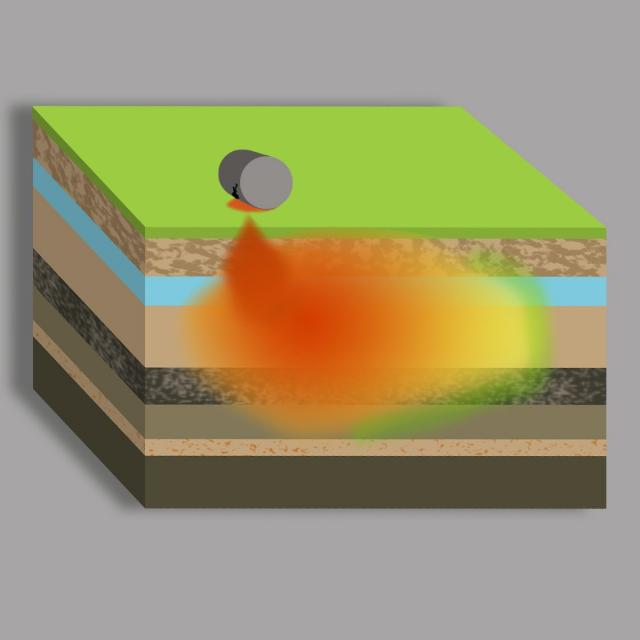
Cleaning up the large number of groundwater contamination sites is a significant and complex environmental challenge. The environmental industry is continuously looking for remediation methods that are both effective and cost-efficient. Over the past 10 years there have been amazing, important developments in our understanding of key attenuation processes and technologies for evaluating natural attenuation processes, and a changing institutional perspective on when and where Monitored Natural Attenuation (MNA) may be applied.

Sep 28th 2026
5-12 Weeks
Villes africaines: Environnement et enjeux de développement durable (Coursera) Coursera
École Polytechnique Fédérale de Lausanne

Villes africaines: Environnement et enjeux de développement durable (Coursera)

Le cours propose une lecture de l’environnement urbain en Afrique à travers les thématiques les plus pertinentes pour mesurer le niveau de développement d’un pays : eau et vie urbaine, assainissement (eaux usées et pluviales), gestion des déchets solides, agriculture urbaine. Après avoir analysé les différents enjeux de celles-ci, nous aborderons les liens entre environnement urbain et santé.

Sep 21st 2026
5-12 Weeks
New paradigms in wastewater management (Coursera) Coursera
Politecnico di Milano

New paradigms in wastewater management (Coursera)

This MOOC is aimed at providing key elements in relation to the management of the urban water cycle, including both conventional goals and the challenges of the smart cities of the future. This MOOC presents a full picture, although very concise, of present and emerging technologies for wastewater treatment, presented by professors teaching at Politecnico di Milano.

Sep 21st 2026
4 Weeks
Principles of Sustainable Finance (Coursera) Coursera
Erasmus University Rotterdam

Principles of Sustainable Finance (Coursera)

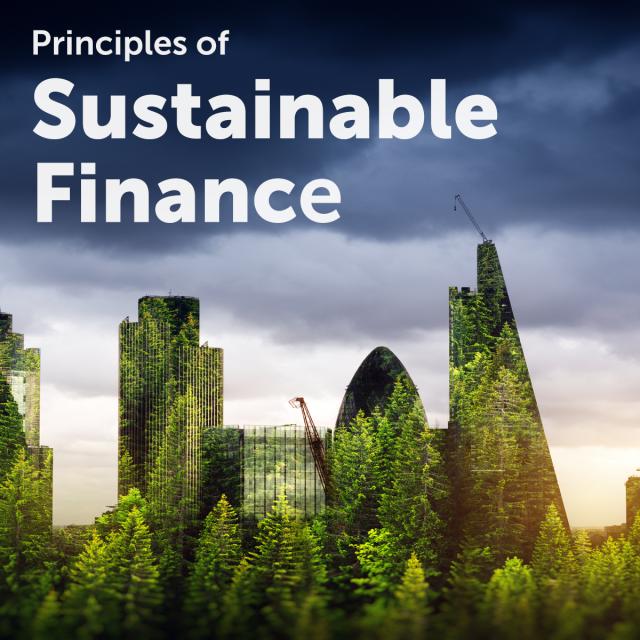
Finance is widely seen as an obstacle to a better world. Principles of Sustainable Finance explains how the financial sector can be mobilized to counter this. Using finance as a means to achieve social goals we can divert the planet and its economy from its current path to a world that is sustainable for all. Throughout this course, you will learn about the UN Sustainable Development Goals, how social and environmental factors should not be regarded as externalities, you will learn more about sustainable banking and asset management, about effective engagement, sustainable scenario analysis and long-term value creation.

Sep 28th 2026
5-12 Weeks
Management of Urban Infrastructures – part 1 (Coursera) Coursera
École Polytechnique Fédérale de Lausanne

Management of Urban Infrastructures – part 1 (Coursera)

Sustainability, Resilience and Efficiency are fundamental considerations for city managers in managing urban infrastructures. Today, more than 3.9 billion people, making up more than 54% of the global population, live in cities. Urbanization is expected to continue in the coming years, raising the urban population to 6.0 billion by 2045. This dramatic increase in urban populations will inevitably increase the demand for energy, mobility (transportation), water, and other urban services in every city around the world. Without functional governance and management structures that ensure efficient, resilient and sustainable performance in cities, the current urbanization growth might become a catastrophic risk threatening the quality of life of the humanity.

Sep 14th 2026
5-12 Weeks
Introduction to the Arctic: Climate (Coursera) Coursera
University of Alberta

Introduction to the Arctic: Climate (Coursera)

The University of Alberta, the University of Tromso and the University of the Arctic invite you to explore this four week course that examines the environment and climate of the circumpolar North. This course is the result of an international collaboration and provides you with an insight into our planet's North. Following an overview of regional geography, we will focus on the cryosphere (ice), as well as the atmosphere and ocean of the region.

Sep 21st 2026
4 Weeks